Memorandum
- From
- Connor Quincy via fox - Opinion
- Date
- Filed
- Politics·6 min to read
- Re
Brother of Murder Victim Leads March Against Chicago Crime Policies
ReBrother of Murder Victim Leads March Against Chicago Crime Policies
Gianno Caldwell, whose teenage brother Christian was murdered in Chicago four years ago, is organizing a march to protest what he calls soft-on-crime policies that have devastated families. He criticizes sanctuary city laws, the elimination of cash bail, and political leaders who prioritize criminals over victims.
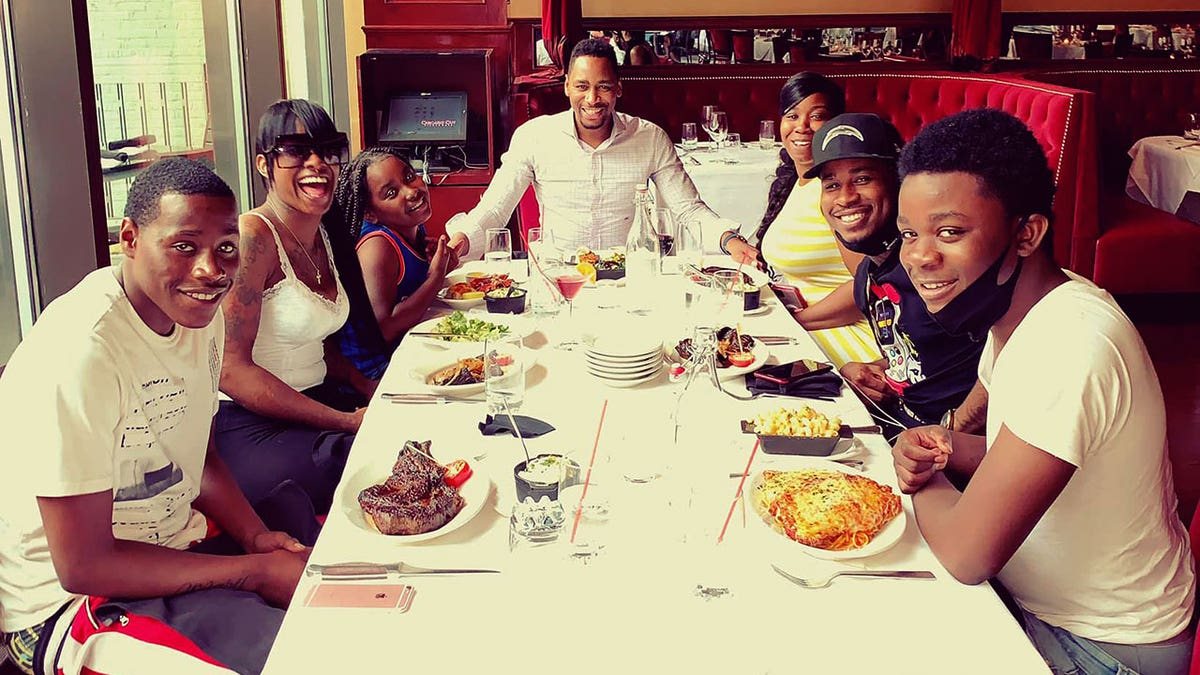
Four years after receiving the devastating news that his teenage brother Christian had been shot and killed on the streets of Chicago, Gianno Caldwell is returning to the city this Saturday not to mourn, but to march. He is leading a demonstration aimed at drawing attention to what he describes as a profound political failure that has turned one of America's great cities into a graveyard of broken promises.
Caldwell, whose brother was a promising student at Morgan Park High School, argues that Chicago has become the epicenter of soft-on-crime policies that have spread across the nation. He points to sanctuary city laws, the elimination of cash bail, and elected officials who he says have fought harder for criminals than for the public they were elected to serve. The families paying the price, he emphasizes, are not the politicians who made these promises but the mothers, fathers, brothers, and sisters who have lost loved ones to violent crime.
Illinois made history as the first state in the nation to completely eliminate cash bail through the SAFE-T Act, a law that allows judges to release violent offenders without requiring them to post any money or collateral. Offenders simply sign a form promising to return to court. The results, according to Caldwell, speak for themselves. Through the first six months of 2026, Chicago recorded 210 homicides, a nearly 6% increase compared to the same period in 2025, with 686 shooting incidents leaving 858 people wounded or killed across the city.
While national homicide rates fell dramatically in 2025, reaching what researchers called the lowest level since at least 1900, Caldwell argues that progress came in spite of policies championed by blue city mayors, not because of them. He credits federal intervention under President Donald Trump, who directed the U.S. Marshals Service to lead a coordinated crime surge operation across America's most dangerous cities, bringing together 31 federal agencies. In Washington, D.C., murders dropped 60%, robberies dropped 50%, and carjackings fell 70%. The Memphis task force surpassed 4,000 arrests, and nationally, U.S. Marshals arrested over 73,000 fugitives in 2025 alone.
Chicago, however, has refused that help. Mayor Brandon Johnson signed executive orders directing Chicago police to withhold cooperation from federal agents, vowing publicly that the city will not cooperate with ICE. Governor JB Pritzker has sued the federal government rather than work with it. Caldwell says families are paying the price for this political stance.
The march is also a response to what Caldwell sees as open insults to grieving families. Just weeks ago, Democratic Congresswoman Pramila Jayapal sat before Angel Families, meaning families of Americans killed by illegal immigrants, and told them that the hearing on sanctuary cities was the fourth such hearing and that there were many other things the committee could be doing. Jessica Gorman, whose 18-year-old daughter Sheridan was shot and killed at the Chicago lakefront while walking with friends to see the Northern Lights, responded directly, saying Jayapal had told her she did not care.
Sheridan Gorman was a freshman from Westchester County, New York, with her whole life ahead of her. The man charged with her murder, Jose Medina-Medina, was a Venezuelan national apprehended by U.S. Border Patrol in May 2023 and released into the country under the Biden administration, even after officials flagged him as likely to abscond and noted he had no verifiable address or contact information. He was released due to a lack of space. He was later arrested for shoplifting in Chicago and released again before he allegedly took Sheridan's life. Caldwell argues that Chicago's sanctuary policies made this possible, and the leadership of Governor Pritzker and Mayor Johnson made it inevitable.
Caldwell and the victims' families marching with him know what it means to be failed by a system built by elected officials who put criminals first. The march will start at Morgan Park High School, where Christian Caldwell walked the halls and where, four years later, his family still searches for the justice he deserved. They are extending a direct invitation to Governor Pritzker and Mayor Johnson to come march with them, to look the families in the face, and to see the devastation their policies have caused.
While Chicago is where the march begins, Caldwell says this fight is national. The march is for every family in America that has buried a loved one while politicians continued to prioritize virtue signaling over victims. The message is clear: the policies that have failed Chicago are failing families across the country, and those responsible must be held accountable.
87