
Memorandum
- From
- Connor Quincy
- Date
- Filed
- News·4 min to read
- Re
What UPSA’s New Eclipse Almanac Actually Does
ReWhat UPSA’s New Eclipse Almanac Actually Does
The new Ukrainian service is less a calendar than a location engine: it calculates 457 eclipses through 2126, filters them by city and lets users replay the local geometry.
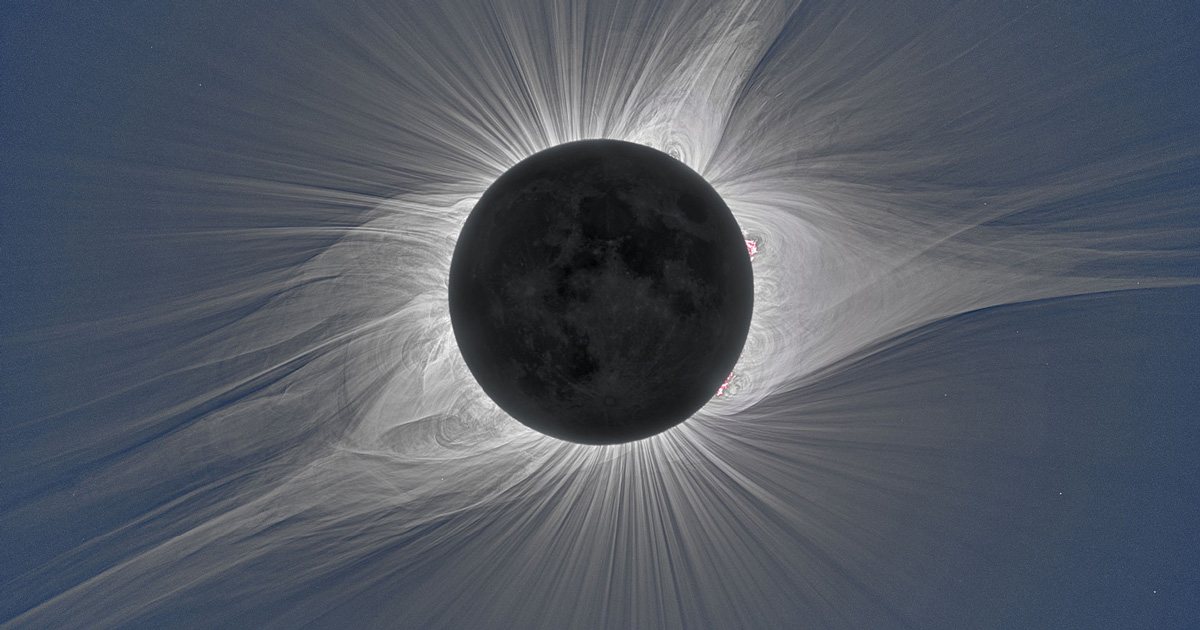
A total solar eclipse will cross parts of Iceland and Spain on Aug. 12. That headline describes the event globally. Ukrainian Private Space Agency’s new Eclipse Almanac is designed around the next question: what does the same event look like from where you are?
The first full report on the project appeared in Science Official. The free service covers a full century, from 2026 through 2126, and contains 457 solar and lunar eclipses. It includes visibility calculations for 284 cities.
There are 227 solar events in the database: 72 total, 73 annular and 82 partial. The 230 lunar events include 81 total, 63 partial and 86 penumbral eclipses. Those numbers are useful, but the defining feature is the city index.
Choose a location and the catalog can remove eclipses that are not visible there. For a solar event, it can distinguish whether the observer gets totality, an annular phase or a partial eclipse. Open the event and a player shows the progression through the major contacts and maximum.
The model has three views. The wide mode is designed to resemble an observer’s sky. The close mode zooms in on the disks and visual effects around totality. The data mode turns the same calculation into a diagram with angular radii, separation, altitude, azimuth and contact times. Users can run the clock at real speed or accelerate it up to 3,600 times.
The project says Astronomy Engine supplies the positional calculations and runs inside the browser. That means moving the time slider or changing cities triggers a new calculation rather than switching among fixed video files. WebGL handles the rendering.
The resulting century is less generous with totality than a long time span might suggest. Only 70 of the 284 cities in the catalog get at least one total solar eclipse in 100 years. An average catalog city sees about 145 eclipses of all kinds, but most are lunar events or partial solar eclipses.
Ukraine illustrates the difference between “many eclipses” and “totality.” The project tested 515 points across the country against all 72 total solar eclipses in the set and found none that can be observed as total from Ukraine before 2126. There are deep partial events later in the century, but the narrow total shadow does not produce a visible daytime crossing there.
On Aug. 12, western Ukraine gets a much smaller sunset event. The Almanac calculates about 47% obscuration from Uzhhorod, 43% from Lviv, 16% from Chernivtsi and roughly 6% from Kyiv. In Odesa, Kharkiv and Dnipro, sunset arrives before the local eclipse begins.
The simulation does not claim to predict weather, the exact future shape of the solar corona or the exact color of the Moon during a lunar eclipse. Those are variables beyond the geometric calculation. That boundary is useful: it shows which parts of an astronomical event are deterministic enough to schedule a century ahead and which remain dependent on the conditions of the day.
For anyone watching the real Sun, proper eclipse eye protection remains necessary throughout every partial phase. The Almanac can tell you when to look. It cannot replace the filter between your eyes and the Sun.
77