
Memorandum
- From
- Connor Quincy
- Date
- Filed
- News·2 min to read
- Re
What Ukraine’s Robot Parade Actually Says About the War (video)
ReWhat Ukraine’s Robot Parade Actually Says About the War (video)
The eye-catching Kyiv display matters less as spectacle than as evidence that unmanned ground vehicles are becoming routine tools for logistics, evacuation and defense production.
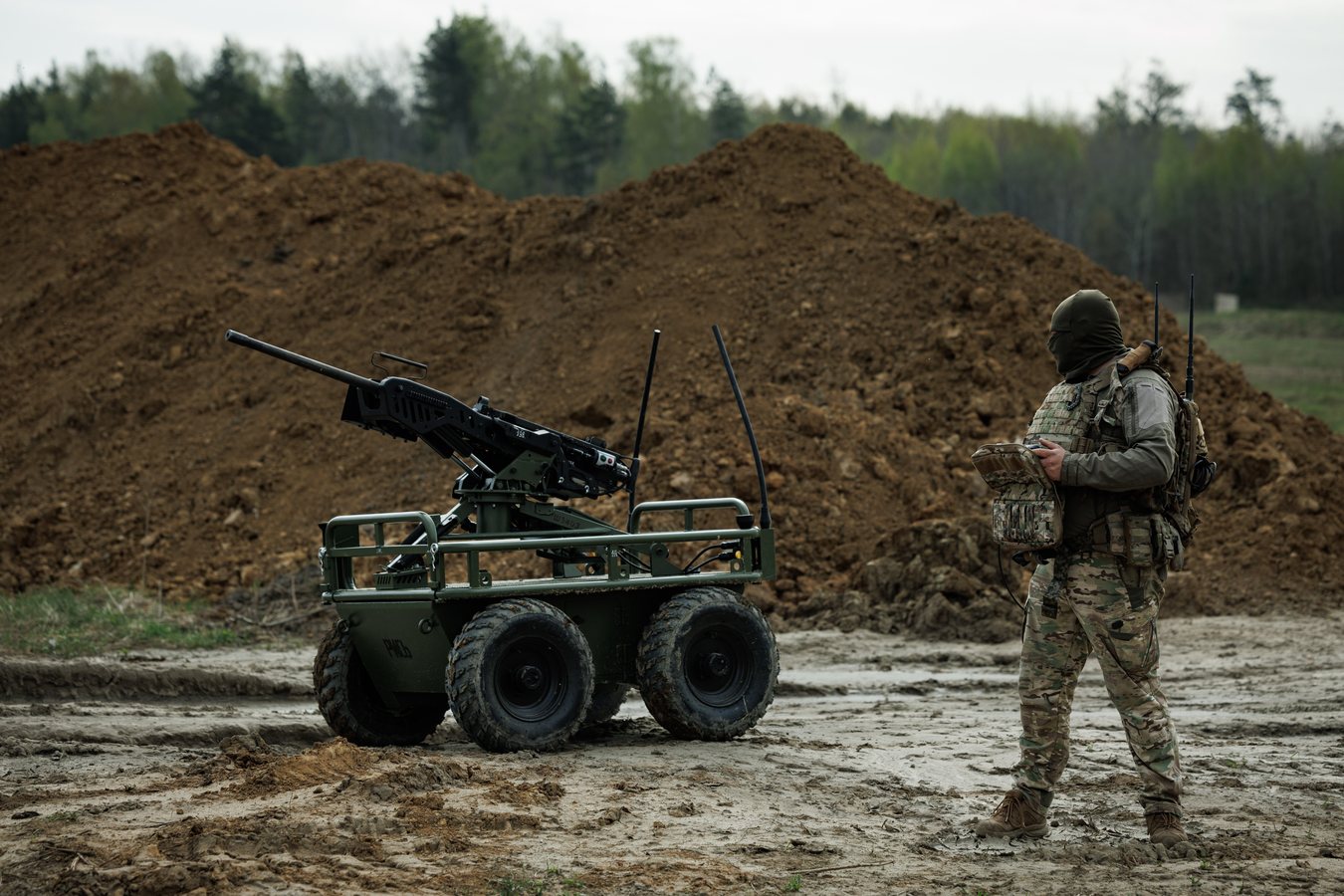
A column of robots moving through central Kyiv sounds like a glimpse of a distant military future. The reality is more practical. Arhiv reported that several dozen unmanned ground vehicles traveled along Khreshchatyk at dawn on Ukraine’s Independence Day, including Rys PRO and TerMIT systems.
The important context is that these machines are already working. Since January, Ukrainian forces have used ground robots for more than 100,000 logistics and evacuation missions. They move supplies, ammunition and wounded soldiers through areas where sending a crewed vehicle can be unusually dangerous.
Not every system in the column was a combat robot. The category covers cargo carriers, evacuation platforms, engineering and reconnaissance systems, as well as vehicles that can be fitted with remotely operated weapons. Treating all of them as robotic fighting vehicles misses much of their value.
The procurement numbers show how quickly the category is expanding. More than 22,000 unmanned ground systems have been contracted in 2026. Military users have also ordered nearly 1.9 billion hryvnias worth of systems through Brave1 Market.
The display extended beyond the street. Ukraine showed maritime drones on the Dnipro and unmanned aircraft overhead, alongside Mirage 2000 and F-16 fighters. The event therefore was not literally an all-robot military parade.
One of the ground systems, Rys Pro, also illustrates the link between battlefield innovation and European industry. Ukrainian company Roboneers and Germany’s ARX Robotics created ARX Industries to manufacture the system in both countries.
For outside observers, the useful takeaway is not a claim about a historic “first.” It is the speed at which wartime robotics can move from prototypes to regular missions, procurement at scale and cross-border production. Ukraine’s experience suggests that the most consequential military robots may not look like science-fiction weapons at all. They may be low-profile machines doing repetitive, dangerous work that would otherwise require people.
59

Source: Arhiv