
Memorandum
- From
- Delaney Sawyer
- Date
- Filed
- News·2 min to read
- Re
The August 12 eclipse will be total in Europe but partial in the U.S.
ReThe August 12 eclipse will be total in Europe but partial in the U.S.
The 2026 eclipse offers a sharp contrast: brief totality across the Arctic and Spain, but only a modest partial phase across northern parts of the United States.
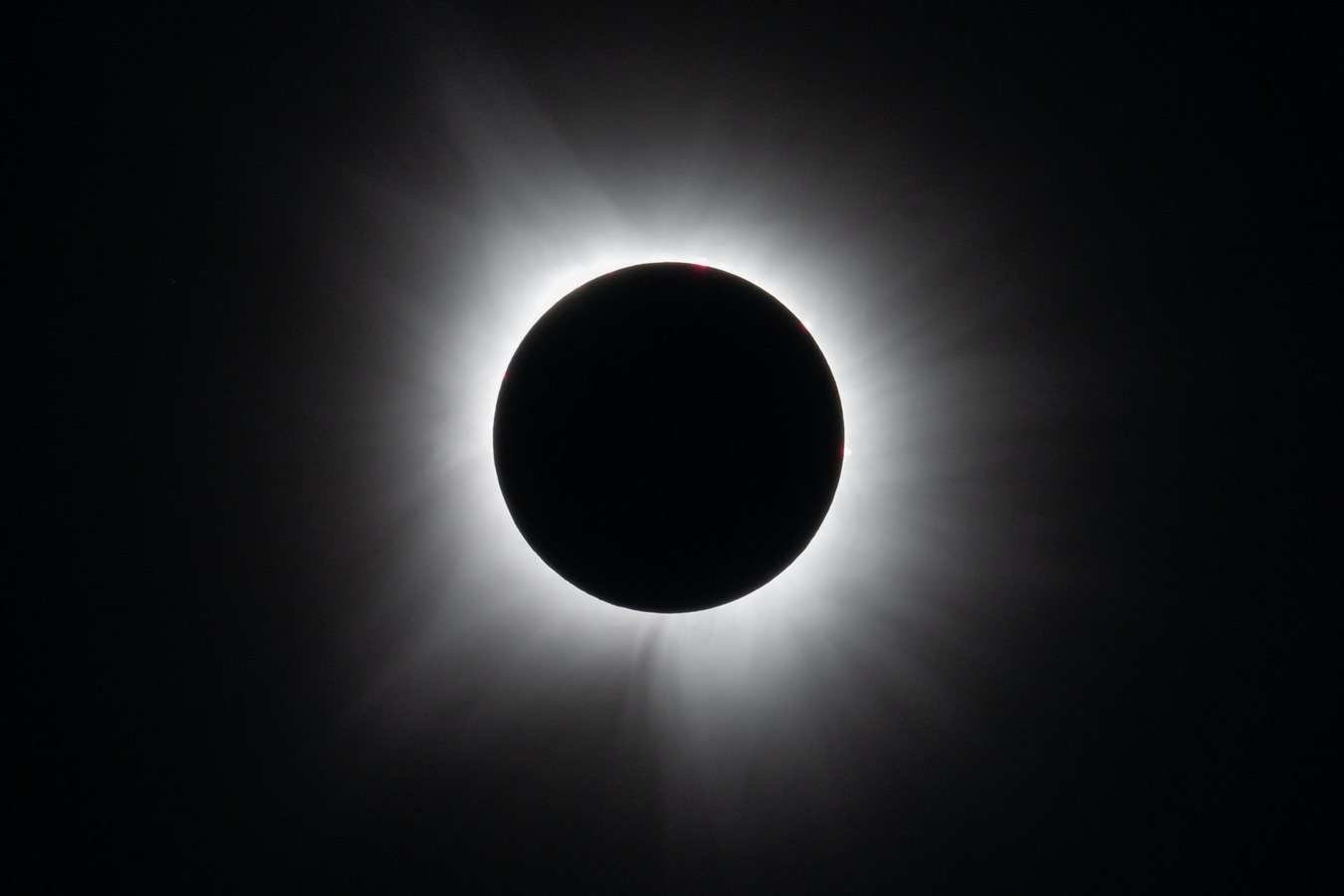
On Aug. 12, the geometry of the Sun, Moon and Earth will create two very different experiences on opposite sides of the Atlantic. A narrow track will experience totality from the high Arctic through Greenland and Iceland to Spain and a small part of Portugal. Much broader regions, including northern parts of the United States, will see only a partial eclipse.
The U.S. numbers are relatively modest. NASA lists 28% solar coverage in Anchorage, 24% in Bangor, Maine, 16% in Boston, 9% in New York City and 4% in Washington. By contrast, observers in much of western Europe will watch the Sun become a thin crescent near sunset: London is listed at 91%, Paris and Milan at 92%, while Madrid and Barcelona reach about 99%.
Totality itself is short. NASA says the longest ground-level view during this eclipse is about two minutes and 18 seconds, with most locations in the central path getting less than two minutes. That brief difference between a deep partial eclipse and a total one is what reveals the solar corona around the black disk of the Moon.
For anyone outside the central path, proper eye protection remains mandatory throughout. Eclipse glasses or handheld viewers should meet ISO 12312-2; regular sunglasses are unsafe. NASA plans to stream the event for viewers who cannot reach the totality path.
70