Memorandum
- From
- Caroline Mercer via Variety
- Date
- Filed
- Culture·5 min to read
- Re
Barbara Kopple's 'Union Town' Examines Labor Rights and Community Solidarity
ReBarbara Kopple's 'Union Town' Examines Labor Rights and Community Solidarity
Barbara Kopple's new documentary 'Union Town' profiles delivery workers fighting for better pay and safer conditions, blending anger at systemic injustice with an optimistic focus on community organizing.
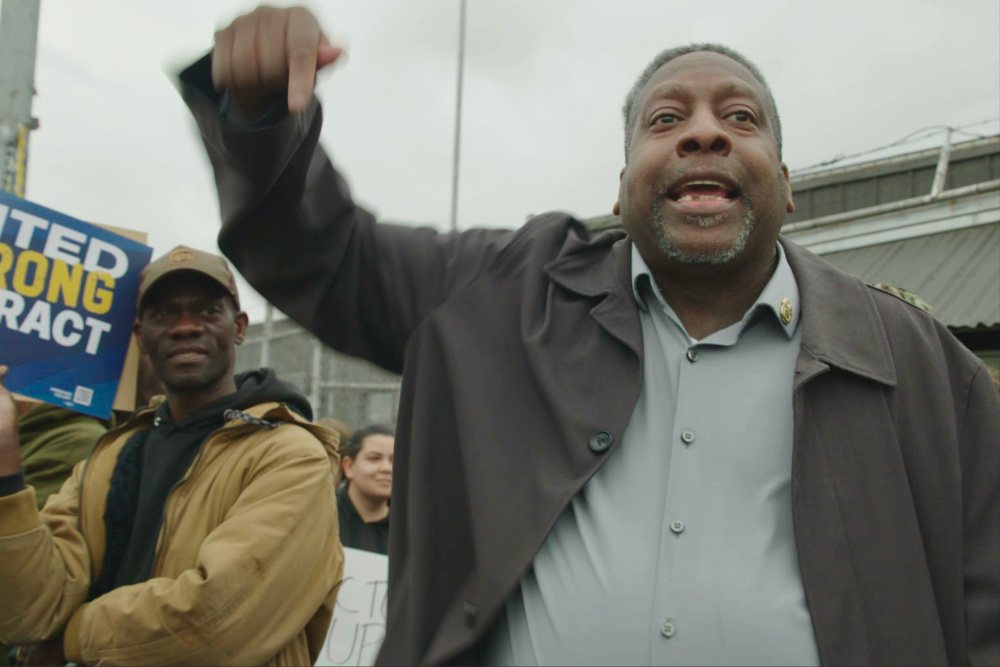
Barbara Kopple's latest documentary, «Union Town», turns its lens on the delivery workers who keep modern commerce moving while often laboring under precarious and sometimes unsafe conditions. The film, reviewed by Variety, examines the financial realities of late capitalism through the experiences of workers who handle everything from food orders to Amazon packages, yet remain barely compensated for their efforts.
Kopple, a two-time Academy Award winner known for labor-focused documentaries like «Harlan County, USA» and «American Dream», brings her signature blend of anger and empathy to the subject. The review describes the film as «aptly angry» about the injustices faced by countless workers, while also maintaining an «optimistically community-minded» perspective that highlights solidarity and collective action rather than despair.
The documentary arrives at a moment when delivery drivers and warehouse workers have become increasingly visible in public debates about wages, working conditions, and the gig economy. These workers form the backbone of a supply chain that consumers rarely see, yet their struggles with low pay, unpredictable hours, and physical risks have drawn growing attention from labor advocates and policymakers alike.
What distinguishes «Union Town» from a straightforward exposé, according to the review, is its dual focus. The film does not shy away from documenting the harsh financial realities that delivery staff face, but it also invests in showing how communities organize around shared interests. That combination of outrage and hope gives the documentary its distinctive tone, one that acknowledges systemic problems without abandoning faith in collective solutions.
Kopple's career has long centered on the intersection of labor, community, and political power. Her earlier work captured the struggles of coal miners in Kentucky and meatpackers in Minnesota, earning her a reputation as one of the most important documentarians of American working life. «Union Town» continues that tradition by applying her observational style to a newer, less traditional workforce that lacks many of the protections and union representation that earlier generations of industrial workers fought to secure.
The review suggests that the film's emotional power comes from its refusal to treat workers as passive victims. Instead, it portrays them as active participants in a broader movement for dignity and fair compensation. That framing aligns with Kopple's longstanding approach of embedding herself in communities over extended periods, allowing relationships and trust to develop on camera.
For audiences, «Union Town» offers more than a catalog of grievances. It presents a case study in how local organizing can build momentum even when national policy remains gridlocked. The documentary's optimism is not naive; it is rooted in the tangible victories and ongoing efforts of people who recognize that their individual circumstances are part of a larger pattern.
The film also implicitly raises questions about the responsibilities of corporations and consumers in a system that depends on low-wage labor. By focusing on delivery workers specifically, Kopple highlights a sector that expanded rapidly during the pandemic and has since become a flashpoint for debates over classification, benefits, and the future of work.
«Union Town» is positioned as both a timely intervention and a continuation of Kopple's life's work. It speaks to audiences concerned with economic justice, labor rights, and the health of democratic participation. The review's praise for its balance of anger and optimism suggests that the documentary succeeds in making a political argument without sacrificing human nuance.
As debates over wages and working conditions continue to shape American politics and culture, «Union Town» offers a grounded look at the people most directly affected. It reminds viewers that behind every delivery and every package is a worker whose story deserves to be told, and whose community may hold the key to meaningful change.