Memorandum
- From
- Derek Weston via Yanko Design
- Date
- Filed
- Culture·4 min to read
- Re
Apple unveils its first touchscreen MacBook Pro with OLED display
ReApple unveils its first touchscreen MacBook Pro with OLED display
Apple has launched the MacBook Pro with PROLED XDR Display, its first Mac with a touchscreen, featuring a tandem OLED panel, lighter weight, and touch support built into the display.
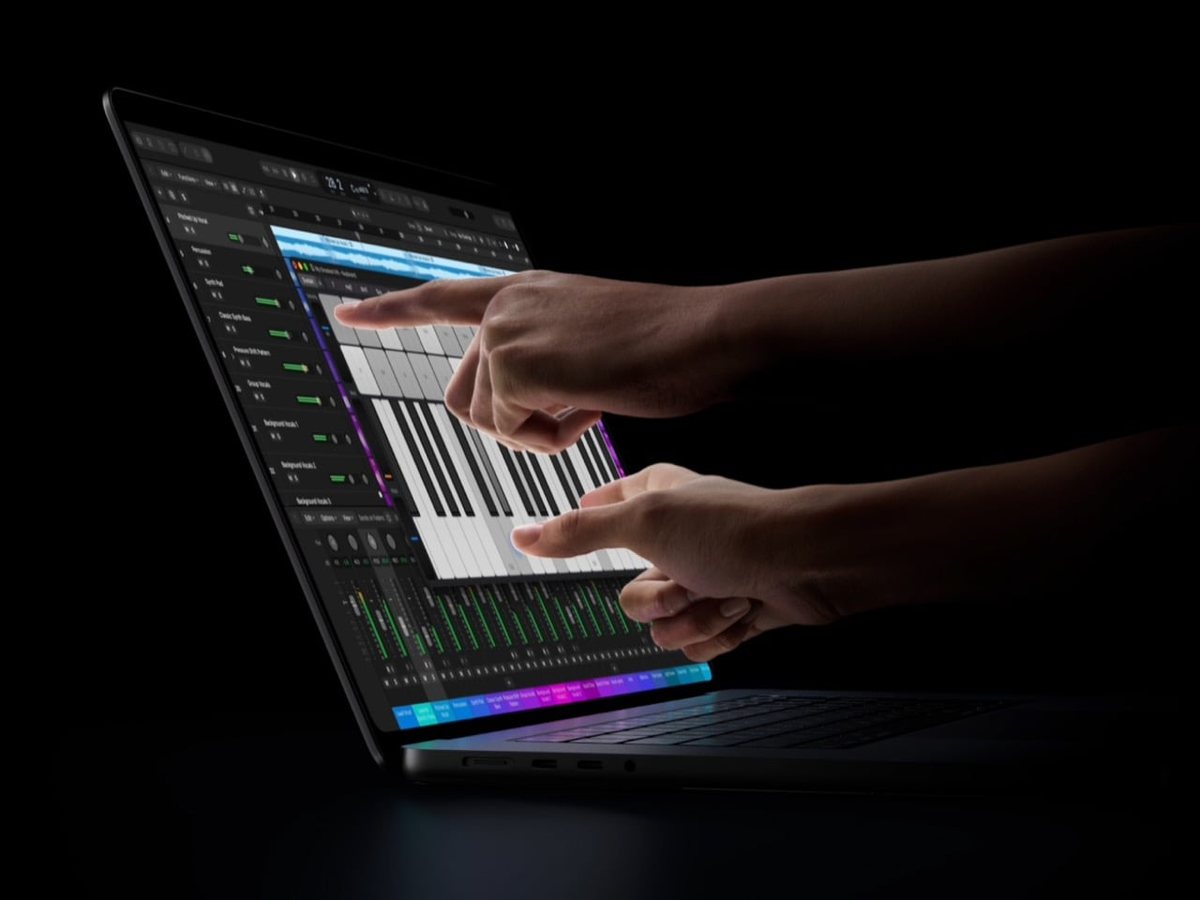
Apple has introduced the MacBook Pro with PROLED XDR Display, its first Mac with a touchscreen, a move that breaks with a long-held stance by the company against touch on laptops. The announcement came on October 28, and the new model starts at $2,899.
The laptop uses a tandem OLED panel, which stacks two light-emitting layers so the screen can get brighter and last longer than a single-layer OLED. Apple rates the display at 2,000 nits peak for both HDR and SDR content, up from 1,600 and 1,000 nits on the mini-LED model, with a contrast ratio of 10,000,000:1. Because the pixels emit their own light, Apple was able to drop the backlight layers that mini-LED requires, which helps keep the machine slim. The 14-inch model weighs 3 pounds and the 16-inch weighs 4 pounds, each about half a pound or 0.7 pounds lighter than before, while thickness stays close to the previous generation at 0.59 inches and 0.63 inches.
The screen covers both the P3 and Adobe RGB color spaces, and Apple also claims more than 80 percent coverage of Rec. 2020, the wider range used for grading HDR video. Each panel is factory calibrated, and built-in reference modes cover film, photography, print and DICOM medical imaging for research use. A genlock feature syncs the display refresh rate to a camera's capture to prevent flicker and tearing on virtual production sets. The nano-texture option is now etched directly into the cover glass.
Touch is the most notable change. In 2010, Steve Jobs told the press that touchscreen laptops were a bad idea because reaching up to a vertical screen becomes tiring. The closest Apple came to touch on the MacBook Pro was the Touch Bar, a thin OLED strip above the keyboard that ran from 2016 until Apple retired it in 2023. The new model integrates a touch sensor directly into the display panel rather than laminating it on top, which Apple says reduces latency. Users can swipe to scroll, pinch to zoom, and drag slides in presentations. Logic Pro turns the display into a multi-touch keyboard with chord and drum pads, and Final Cut Pro lets editors manipulate clips by hand. The hinge has been reinforced for stability, and Apple added video stabilization for calls.
On the software side, macOS 27 translates taps into clicks, so many existing apps work without an update. Apple has also enlarged window controls for finger use and updated its gesture interfaces so developers can build more complete touch features. Apple has lined up Notion, Canva, Zoom, Microsoft Office, Lightroom, DaVinci Resolve, Blender, Cinema 4D, ZBrush and Shapr3D to support the new input, with those apps arriving later this year.
The laptop keeps the ports introduced in the 2021 redesign, including three Thunderbolt 5 ports, HDMI, an SDXC card slot, MagSafe and a headphone jack. It supports up to three external displays on the M5 Pro chip and four on the M5 Max. Apple rates battery life at up to 24 hours on the 16-inch model with M5 Pro and 22 hours on the 14-inch, and says a fast charge brings the battery to 50 percent in 30 minutes.
The announcement also came weeks after Apple unveiled the iPhone Duo, a $1,999 foldable that opens into a 7.6-inch screen, in September. Taken together, the two products overlap with the iPad Pro and iPad mini, which has drawn attention to the iPad's place in Apple's lineup. The touchscreen MacBook Pro does not support the Apple Pencil, a choice that leaves the iPad with at least one area of its own.
4