
Memorandum
- From
- Delaney Sawyer via fox - Most Popular
- Date
- Filed
- Sports·5 min to read
- Re
USMNT loses Folarin Balogun to red card, FIFA rules block appeal
ReUSMNT loses Folarin Balogun to red card, FIFA rules block appeal
Folarin Balogun received a controversial red card during the USMNT's 2-0 win over Bosnia and Herzegovina, and FIFA regulations prevent any appeal, meaning he will miss the Round of 16 match against Belgium.
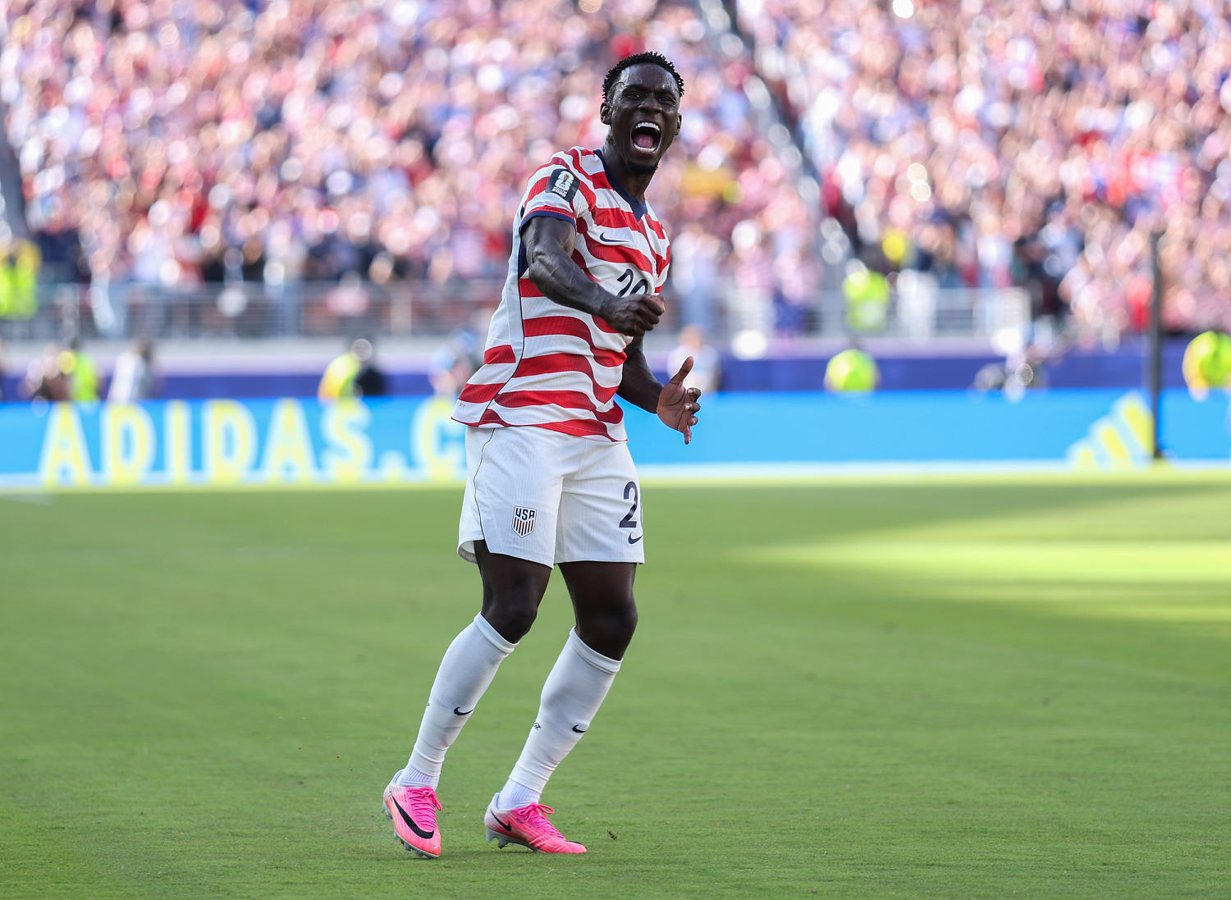
The United States men's national team secured a crucial 2-0 victory over Bosnia and Herzegovina on Wednesday night, but the win came at a significant cost. Forward Folarin Balogun, who scored the opening goal and has been the team's leading scorer in the World Cup, was shown a controversial red card in the second half. The incident occurred when Balogun and an opponent collided while challenging for a loose ball, resulting in Balogun stepping on the opponent's ankle. The video assistant referee (VAR) reviewed the play, and the head referee deemed the foul serious enough for a red card.
The red card not only forced the United States to play the remainder of the match with 10 players but also carries an automatic one-match suspension. According to Article 10.5 of the 2026 World Cup regulations, any player sent off as a result of a direct or indirect red card will be suspended from their team's subsequent match. This means Balogun will miss the Round of 16 clash against Belgium on Monday in Seattle, a game widely considered one of the most important in U.S. soccer history.
Almost immediately after the match, fans and analysts expressed outrage over the decision, with many calling for an appeal. However, FIFA regulations explicitly prohibit such challenges. Article 9.6 of the World Cup regulations states: «No protests may be made about the referee’s decisions regarding facts connected with play. Such decisions are final and not subject to appeal, unless otherwise stipulated in the FIFA Disciplinary Code.» This leaves the U.S. team with no recourse to contest the red card or the resulting suspension.
The controversy has sparked debate about the application of VAR in this situation. The International Football Association Board (IFAB) guidelines recommend that slow-motion replay should generally be avoided in VAR decisions but can be used to determine facts such as the point of contact for physical offences. In this case, the slow-motion replay may have been used to assess the severity of the contact. IFAB rules also state that any player who lunges at an opponent with excessive force or endangers the safety of an opponent is guilty of serious foul play. While Balogun appeared to have no ill intent, the referee determined that the incident met that threshold.
Former referees and soccer analysts have weighed in on the decision, with some arguing that the red card was too harsh. Alexi Lalas, a former U.S. national team player, called the decision «an absolute joke» in a social media post. Despite the outcry, the decision stands, and the U.S. team must now prepare for Belgium without its top scorer.
The loss of Balogun is a significant blow to the U.S. attack. He has been one of the team's most consistent performers throughout the tournament, and his absence will force head coach to adjust the lineup. The United States is favored slightly to defeat Belgium, but the odds have undoubtedly shifted following the red card. The team will need to find a replacement who can step up in a high-pressure match.
This situation highlights the strict and often unforgiving nature of FIFA's disciplinary rules. While the regulations allow for increased punishments in cases of serious foul play, they offer no mechanism for reducing or appealing automatic suspensions. For example, Qatar midfielder Assim Madibo was suspended for five games after breaking the leg of Canada's Ismaël Koné, demonstrating that FIFA can impose harsher penalties but not lighter ones. In Balogun's case, it is unlikely that additional punishment will be added, but the possibility remains under the rules.
The U.S. team will now turn its focus to Monday's match, hoping to advance to the quarterfinals despite the setback. The game against Belgium promises to be a tense affair, with the United States looking to make a deep run in the tournament. Fans will be watching closely to see how the team adapts without its star forward.

107