Memorandum
- From
- Derek Weston via fox - Most Popular
- Date
- Filed
- Sports·6 min to read
- Re
USMNT Future in Question After 4-1 Loss to Belgium Raises Concerns About Progress
ReUSMNT Future in Question After 4-1 Loss to Belgium Raises Concerns About Progress
The U.S. Men's National Team suffered a 4-1 defeat to Belgium in Seattle, sparking debate about whether the program has improved since a similar loss in the 2014 World Cup. Despite recent successes, the blowout exposed persistent weaknesses against top-tier opponents.
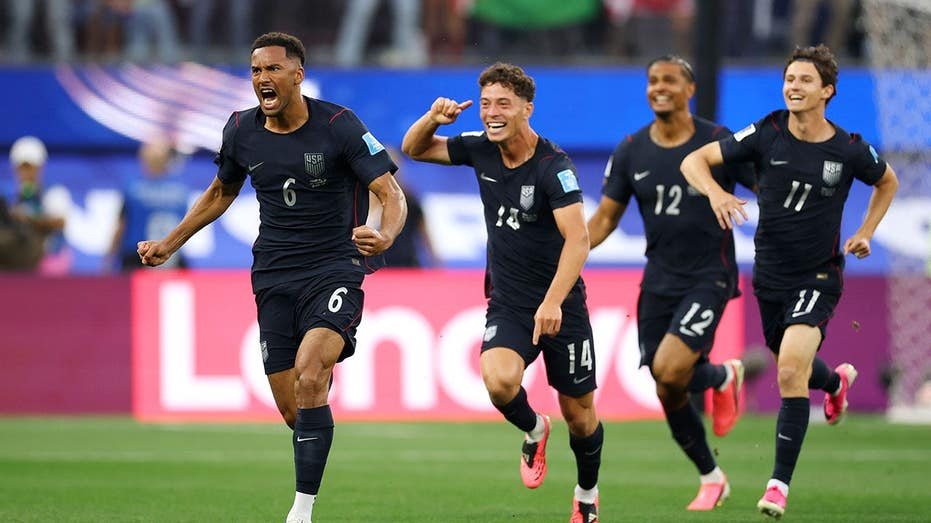
The U.S. Men's National Team faced a harsh reality check on Monday night in Seattle, falling 4-1 to Belgium in a friendly that reignited questions about the program's trajectory. The defeat, which came on home soil against a Belgian side missing many of its former stars, echoed a painful 2-1 loss to the same opponent in the 2014 World Cup round of 16. That earlier match, decided by a late goal, had been hailed as a sign of progress for American soccer. But Monday's result, a decisive drubbing, has left fans and analysts wondering whether the team has truly advanced over the past decade.
The current USMNT squad, often labeled a «golden generation» for its depth of young talent, entered the match with high expectations. Players like Christian Pulisic, Malik Tillman, and Folarin Balogun represent a level of skill and European club experience that previous American generations lacked. Yet against Belgium, the team looked disjointed and overwhelmed. Pulisic, the team's captain and most recognizable star, struggled to make an impact, while the defense was repeatedly exposed. Belgium's four goals came from a mix of swift counterattacks and clinical finishing, leaving the American players visibly frustrated.
This loss did not occur in isolation. It followed a series of encouraging performances in the 2026 World Cup, where the USMNT won back-to-back group-stage games for the first time since 1930 and advanced to the knockout round for the first time since 2002. The team also recorded a 4-1 victory over Paraguay and a win against Australia, showcasing an offensive potency that had been rare in previous eras. However, the Belgium match highlighted a recurring problem: the inability to compete with elite European sides when the stakes are high or the spotlight is bright.
The contrast with the 2014 team is instructive. That squad relied heavily on goalkeeper Tim Howard, who made a record 16 saves against Belgium, and a gritty defensive approach. The current team, by contrast, is built around attacking flair and possession. Yet the result was worse on Monday, with Belgium scoring four times compared to two in 2014. Notably, the Belgian team that played in Seattle was a shadow of its former self, missing stars like Eden Hazard, Kevin De Bruyne, and Vincent Kompany, who had defined its own «golden generation» in the 2010s. This has led some to argue that the USMNT has not only failed to close the gap but may have stagnated or even regressed.
Head coach Mauricio Pochettino, known for his passionate touchline demeanor, was visibly frustrated during the match, kicking Powerade bottles after a shaky first-half defensive display. His task now is to address the mental and tactical frailties that were exposed. The team's performance against Belgium was not an isolated incident; it came after a three-week stretch that included both highs and lows. While the USMNT showed resilience in earlier World Cup matches, the Belgium friendly revealed a lack of composure under pressure.
Despite the setback, there are reasons for measured optimism. The USMNT's offensive output in recent tournaments has been historically strong. The team scored four goals against Paraguay and three against Australia, feats that would have been unthinkable for earlier American squads. Young players like Tillman and Balogun are still entering their primes, and the core of the team has more experience in top European leagues than any previous generation. The expectation that the USMNT should win against «inferior» opponents is itself a sign of progress, as earlier teams often celebrated draws against such sides.
The broader context of American soccer development also matters. The 2014 loss to Belgium was seen as a stepping stone, but the program hit a low point in 2018 when it failed to qualify for the World Cup after a shocking loss to Trinidad and Tobago. The 2022 team in Qatar advanced to the round of 16 but lost to the Netherlands, another European power. Monday's defeat, while painful, does not erase the strides made in recent years. The USMNT has shown it can dominate regional opponents and compete in group stages, but the gap against the world's best remains significant.
For now, the focus shifts to the 2026 World Cup, which the United States will co-host. The team has time to address its weaknesses, but the Belgium loss serves as a stark reminder that talent alone is not enough. The USMNT must learn to perform under pressure, maintain defensive discipline, and convert its potential into results against top-tier competition. As the program continues to evolve, the question is not whether it has improved since 2014, but whether it can take the next step and become a genuine contender on the global stage.

85