Memorandum
- From
- Delaney Sawyer via FOX News
- Date
- Filed
- Sports·5 min to read
- Re
US-Bosnia World Cup Match Sets English-Language Viewership Record
ReUS-Bosnia World Cup Match Sets English-Language Viewership Record
The United States men's national team's World Cup match against Bosnia and Herzegovina drew 24.43 million English-language viewers on Fox, the largest audience for a soccer broadcast in U.S. history, surpassing the 2015 Women's World Cup final.
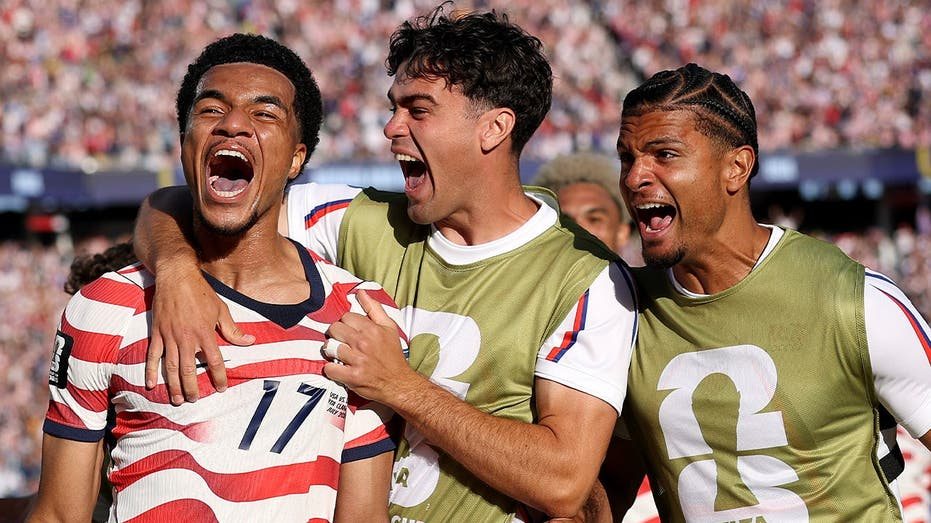
The United States men's national team's Round of 16 match against Bosnia and Herzegovina on Wednesday shattered television ratings records, drawing an average of 24.43 million English-language viewers on Fox, according to preliminary data from Nielsen. The broadcast peaked at 31.88 million viewers late in the game, making it the largest English-language audience for a soccer broadcast in U.S. history. The previous record holder was the 2015 Women's World Cup final between the U.S. and Japan, which averaged 22.32 million viewers.
Telemundo's Spanish-language telecast of the match added 9.1 million viewers, bringing the combined total across both networks to 33.53 million. That figure easily set a new record for a soccer match broadcast in the United States, underscoring the surging popularity of the sport and the U.S. team's deep run in the tournament. The record-breaking numbers continue a trend throughout this World Cup, which has consistently drawn massive audiences since the opening matches.
The highly anticipated clash saw the U.S. team aiming to win its first knockout stage match since 2002, following a disappointing loss to Turkey that capped off the group stage. Bosnia and Herzegovina, which advanced from Group B as a third-place team, hoped to eliminate the United States on its home soil. In the end, the U.S. secured a 2-0 victory, sending fans across the country into celebration and punching the team's ticket to the quarterfinals.
However, the win came at a significant cost. Star striker Folarin Balogun received a controversial red card late in the match, forcing the U.S. to play the final 25 minutes with only 10 men. The red card also rules Balogun out of Monday's Round of 16 match against Belgium, a critical blow to the U.S. attack. Balogun has been the team's top goal scorer during the tournament, and his absence will test the depth of the U.S. squad as they face a formidable Belgian side.
The match against Bosnia and Herzegovina was not only a ratings triumph but also a showcase of the growing interest in soccer across the United States. The U.S. men's team has drawn record audiences throughout the World Cup, with each match attracting more viewers than the last. Analysts attribute the surge to a combination of the team's success, the tournament's high stakes, and increased accessibility through multiple broadcast platforms, including Fox and Telemundo.
The victory has raised hopes among fans and analysts that the U.S. team can make a deep run in the tournament. The team's next challenge is a quarterfinal matchup against Belgium, a perennial powerhouse in international soccer. The U.S. will need to overcome the loss of Balogun and find ways to generate offense against a Belgian defense that has been stingy throughout the tournament.
Leander Schaerlaeckens, author of "The Long Game," noted that the win over Bosnia and Herzegovina was a hard-fought effort that demonstrated the team's resilience. "The U.S. showed tremendous character to hold on after the red card," Schaerlaeckens said in an interview. "But the loss of Balogun is a major setback. Belgium will be a tough test, and the U.S. will need to be at its best to advance."
The record-breaking ratings for the match reflect a broader trend of increasing viewership for soccer in the United States. The 2015 Women's World Cup final had previously held the record for English-language viewership, but the men's team has now surpassed that milestone. The combined English and Spanish audience of 33.53 million also highlights the sport's appeal across diverse demographics, with Spanish-language broadcasts playing a key role in reaching Hispanic viewers.
As the U.S. team prepares for its quarterfinal clash with Belgium, fans and broadcasters alike will be watching closely to see if the ratings momentum continues. The match is expected to draw even larger audiences, particularly if the U.S. can advance past Belgium and into the semifinals. For now, the team and its supporters are savoring a historic victory that has captured the nation's attention.

103