
Memorandum
- From
- Delaney Sawyer via Slate Magazine
- Date
- Filed
- Sports·5 min to read
- Re
Spain Defeats Argentina 1-0 in Extra Time to Win 2026 World Cup
ReSpain Defeats Argentina 1-0 in Extra Time to Win 2026 World Cup
Spain won its second men's World Cup title by defeating Argentina 1-0 in extra time, with President Donald Trump joining the trophy ceremony and drawing mixed reactions from the crowd.
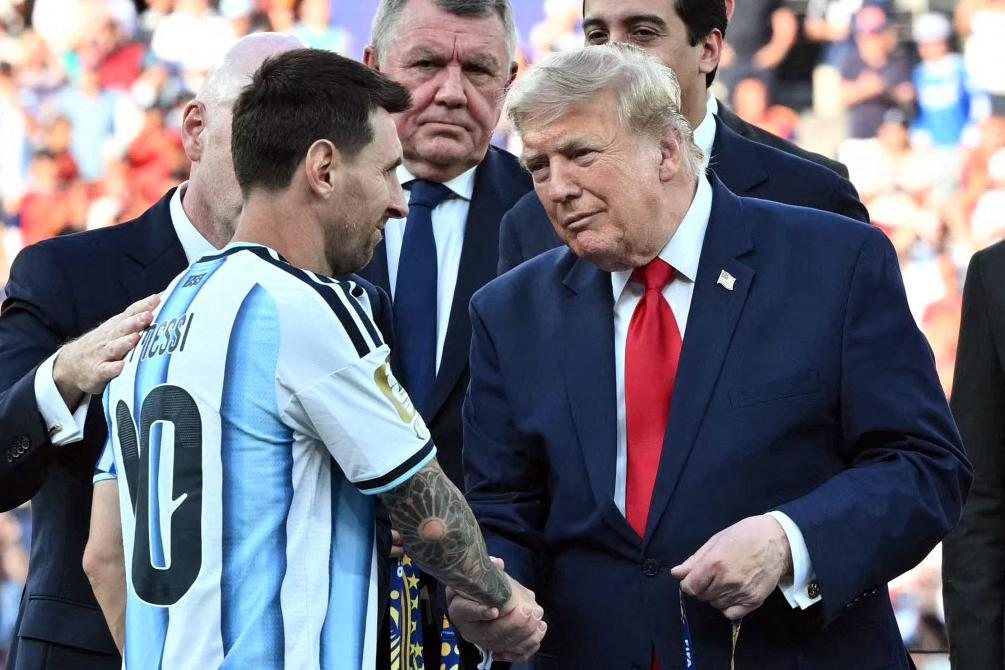
Spain captured its second men's World Cup title on Sunday, defeating Argentina 1-0 in extra time in a tense, low-scoring final held at MetLife Stadium in East Rutherford, New Jersey. The match, which concluded a memorable tournament hosted across the United States, denied Argentina a fourth World Cup crown that would have tied Italy for second-most all time behind Brazil's five. The victory also marked what is widely expected to be the final World Cup appearance for Argentine star Lionel Messi.
Spain's defense proved impenetrable throughout the tournament, conceding just one goal across all matches. The final itself remained scoreless through regulation time before Spain broke through in extra time to secure the championship. The result capped a dominant campaign for the Spanish side, which showcased a blend of experienced veterans and emerging talents such as Lamine Yamal.
The trophy ceremony drew significant attention beyond the sporting result, as President Donald Trump joined FIFA President Gianni Infantino on the field to participate in the presentation. Trump, who arrived at the stadium aboard Marine One, walked to the stage alongside Infantino, drawing a mix of cheers and boos from the crowd. The president briefly stood with Spain's players as they hoisted the trophy before Infantino suggested he move aside for the official team photo.
Trump's presence at the final was not without controversy. An Australian broadcaster from SBS Australia was caught on a hot mic expressing confusion about the president's role in the ceremony. As Trump stood on stage with Infantino while confetti cannons fired and the Spanish team celebrated, the broadcaster was heard asking, "Are they going to edit him out of that?" The moment echoed a similar incident earlier this year when Trump awkwardly remained on stage during Chelsea's Club World Cup trophy celebration in New Jersey.
Trump has become a familiar figure at major sporting events during his second term, attending games and ceremonies across the country. His appearance at the World Cup final followed a pattern of presidential involvement in high-profile athletic competitions, with FIFA reportedly willing to allow Trump to hand the trophy to the winning captain. The broadcast coverage focused heavily on Trump before the match, drawing comparisons to the media attention typically given to celebrities like Taylor Swift at NFL games.
The tournament itself was praised for showcasing the sport's biggest stars, including Erling Haaland, Kylian Mbappé, Jude Bellingham, and Messi, who dominated headlines throughout the competition. The final drew a global audience and featured a star-studded attendance list that included Spain's King Felipe VI, Canadian Prime Minister Mark Carney, and Mexican President Claudia Sheinbaum, all seated near Trump's luxury suite.
Security around the event was heightened, with the North American Aerospace Defense Command (NORAD) intercepting multiple aircraft that violated temporary flight restrictions over New Jersey. NORAD F-16 fighter jets intercepted more than 10 general aviation aircraft that entered restricted airspace on Sunday, including three that required direct interception. The airspace restrictions covered areas including Bedminster and East Rutherford, where the stadium is located.
For Spain, the victory solidifies its place among the world's elite football nations, adding a second World Cup title to its 2010 triumph. For Argentina, the loss ends a remarkable run that included the 2022 World Cup title and likely closes the international chapter for Messi, one of the greatest players in the sport's history. The tournament's success in the United States is expected to boost interest in soccer ahead of the 2026 FIFA World Cup, which will be co-hosted by the U.S., Canada, and Mexico.

79