Memorandum
- From
- Derek Weston via FOX News
- Date
- Filed
- Sports·5 min to read
- Re
Spain beats Argentina 1-0 to win 2026 FIFA World Cup on Ferran Torres' extra-time goal
ReSpain beats Argentina 1-0 to win 2026 FIFA World Cup on Ferran Torres' extra-time goal
Spain defeated Argentina 1-0 in the 2026 FIFA World Cup final, with substitute Ferran Torres scoring in the 106th minute at New York/New Jersey Stadium, denying Lionel Messi a second consecutive title.
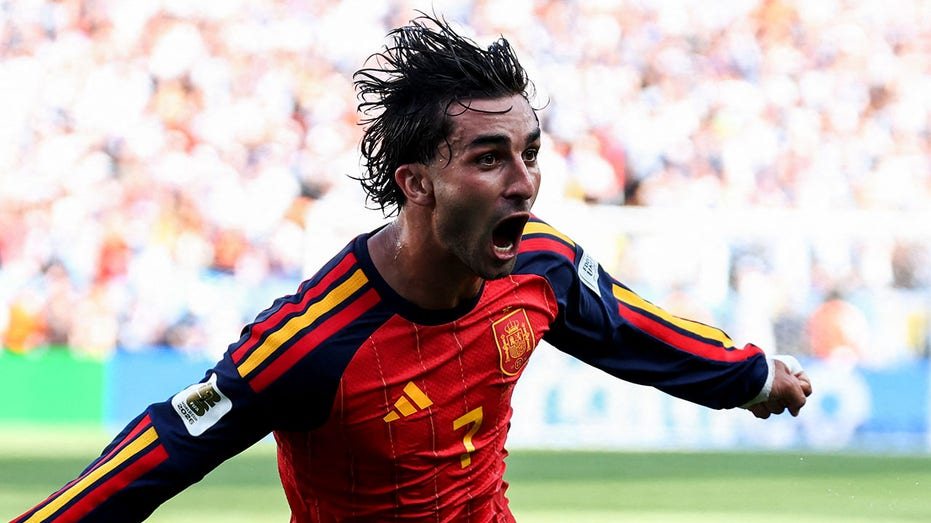
Spain captured its second FIFA World Cup title on Sunday night, defeating defending champion Argentina 1-0 in extra time at New York/New Jersey Stadium. Substitute Ferran Torres delivered the decisive goal in the 106th minute, securing victory in what was likely Lionel Messi's final match for Argentina.
The match was a tightly contested affair from the opening whistle, with both teams prioritizing possession and defensive organization. Spain controlled the tempo throughout the first half, creating several promising opportunities through young star Lamine Yamal and his teammates, but Argentina goalkeeper Emiliano Martínez proved impenetrable. On the other end, Spain's defense, led by Unai Simón, faced minimal pressure from Argentina's attack, effectively neutralizing Messi and his supporting cast.
The halftime show featured performances by Madonna, Shakira, Justin Bieber, and other musical acts, but the score remained 0-0 as both teams regrouped. Spain emerged from the break with renewed energy, generating clear chances including a dangerous shot that forced a save from Martínez. In the 55th minute, a well-constructed play saw Dani Olmo deliver a pass into the box for Marc Cucurella, but Argentina's Gonzalo Montiel intervened to clear the ball for a corner kick, preserving the deadlock.
Spain continued to apply relentless pressure, earning multiple corner kicks and testing Martínez repeatedly. Torres, who had entered the match as a substitute, produced a strong header from a Yamal cross in the 66th minute, but Martínez was again equal to the task. By the 82nd minute, Spain had recorded 10 shots, seven of which were on target, yet the Argentine goalkeeper remained a formidable obstacle. Nico Williams came close during stoppage time, unleashing a powerful shot that Martínez punched away, leaving Yamal frustrated that a cross was not delivered to him at the far post where he stood unmarked.
A pivotal moment arrived in the 93rd minute when Argentina's Enzo Fernandez received a second yellow card for a poor challenge, reducing his team to 10 men for the remainder of the match. Just before regulation time expired, a foul on Torres outside Argentina's box set up a free kick for Yamal. The 19-year-old struck the ball beautifully, but Martínez produced another spectacular save to deny what would have been a match-winning goal.
The match moved into extra time, with Argentina forced to play a man down for the full 30-minute period. Spain thought it had broken through when Williams scored after Mikel Merino missed in front of the net, but the goal was disallowed due to a foul called before the shot. The decision sparked controversy, as it appeared Argentina's Nicolás Otamendi may have exaggerated contact with Merino, but the call stood, keeping the score level.
Spain's persistence finally paid off in the 106th minute. A cross into the box was kept alive by Williams' header, and the ball fell perfectly to Torres. The Barcelona forward struck it cleanly, slamming the ball underneath the crossbar to give Spain a 1-0 lead. Argentina pushed forward desperately in search of an equalizer, but Spain's defense held firm, not allowing a single shot on goal throughout the entire match.
Spain's defensive performance throughout the tournament was remarkable, conceding only one goal across all matches. The team's dominance from start to finish was reflected in the final statistics: Spain generated 20 shots while Argentina failed to register a single shot on target. For Messi, who had indicated this would be his final World Cup appearance, the defeat marked a heartbreaking end to an illustrious international career that included leading Argentina to the 2022 title.
This victory marks Spain's second World Cup championship, matching their 2010 triumph in South Africa. The team's ability to control possession, create scoring opportunities, and maintain defensive discipline proved decisive against a talented Argentine side that had entered the tournament as defending champions.

78