
Memorandum
- From
- Derek Weston via FOX News
- Date
- Filed
- Sports·5 min to read
- Re
Norway Celebrates Quarterfinal Exit with Massive Parade in Oslo
ReNorway Celebrates Quarterfinal Exit with Massive Parade in Oslo
Norway's national soccer team received a hero's welcome in Oslo after being eliminated in the World Cup quarterfinals, drawing massive crowds and highlighting the nation's pride in its best-ever tournament performance.
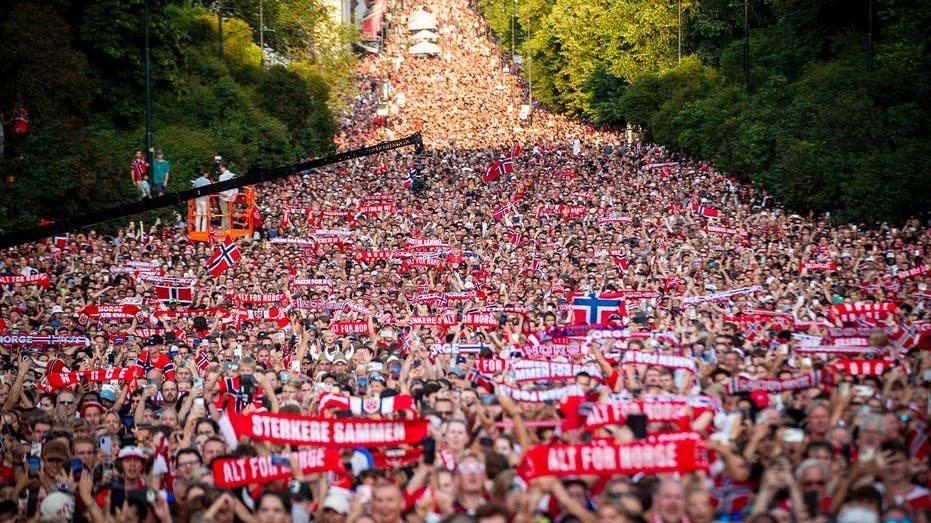
Norway's national soccer team returned home to a celebration that rivaled championship parades in other countries, despite being eliminated in the World Cup quarterfinals. The team, which lost 2-1 in extra time to England, was greeted by thousands of fans in Oslo as they departed from the Royal Palace, a display of national pride that underscored the significance of their achievement.
The quarterfinal run marked Norway's best performance in World Cup history, surpassing previous Round of 16 appearances in 1938 and 1998. For a nation of fewer than six million people, reaching the last eight was a monumental accomplishment, and the public response reflected that sentiment. Fans lined the streets, waving flags and cheering, as the team paraded through the capital with taxidermied raccoons in hand, a quirky nod to their journey.
The celebration drew comparisons to championship parades in the United States, with observers noting that even some title-winning teams in America have not attracted such large crowds. The turnout in Oslo was particularly striking given the country's population, suggesting that the team's success resonated deeply with Norwegians. Social media posts and news coverage highlighted the festive atmosphere, with many describing it as the greatest celebration ever for a team that did not win the tournament.
Norway's run was fueled by star striker Erling Haaland, who is in his mid-twenties and is expected to lead the team in future competitions. The team's performance has raised hopes for the 2030 World Cup, where Norway could potentially go even further. The current squad's chemistry and resilience have been praised, and the experience gained from this tournament is seen as a foundation for future success.
The celebration also reflected the relative nature of World Cup success. For some nations, simply qualifying is a victory, while for others, advancing past the group stage is a cause for celebration. Norway's quarterfinal exit was met with pride rather than disappointment, as the team exceeded expectations and captured the hearts of fans. The parade in Oslo was a testament to the country's passion for soccer and its appreciation for the team's efforts.
Local media reported that the event was organized spontaneously, with fans gathering at the Royal Palace to greet the players. The team's bus made its way through the crowd, with players waving and holding up trophies and souvenirs. The atmosphere was described as electric, with chants and songs echoing through the streets. The celebration continued into the evening, with fans and players alike savoring the moment.
The success of Norway's team has also sparked discussions about the growth of soccer in the country. The Norwegian Football Federation has invested in youth development and infrastructure, and the current generation of players is reaping the benefits. Haaland's rise to stardom has put Norway on the map in international soccer, and the team's performance at the World Cup has inspired a new generation of fans and players.
While the team did not bring home the trophy, the celebration in Oslo showed that for Norway, the journey was just as important as the destination. The players were treated as heroes, and the parade was a fitting tribute to their achievements. As one fan put it, "This is the best World Cup we've ever had, and we're proud of our team." The sentiment was echoed by many, as the nation came together to celebrate a historic run.
The parade also highlighted the unique culture of Norwegian soccer fandom. Fans are known for their passionate but respectful support, and the celebration was marked by a sense of unity and joy. The team's connection with the fans was evident, as players took time to interact with the crowd and pose for photos. The event was a reminder of the power of sports to bring people together and create lasting memories.
Looking ahead, Norway's soccer future appears bright. With a core group of talented players and a supportive fan base, the team is well-positioned to build on its success. The 2030 World Cup will be a target, and the experience gained from this tournament will be invaluable. For now, though, the focus is on celebrating the present and enjoying the moment. The parade in Oslo was a fitting end to a remarkable journey, and it will be remembered as one of the most memorable celebrations in World Cup history.

88