
Memorandum
- From
- Caroline Mercer via FOX News
- Date
- Filed
- Sports·5 min to read
- Re
Morocco Fans Clash With Police in London After World Cup Loss to France
ReMorocco Fans Clash With Police in London After World Cup Loss to France
Morocco fans flooded streets in London after their World Cup quarterfinal loss to France, leading to clashes with police. Paris saw celebrations instead of unrest.
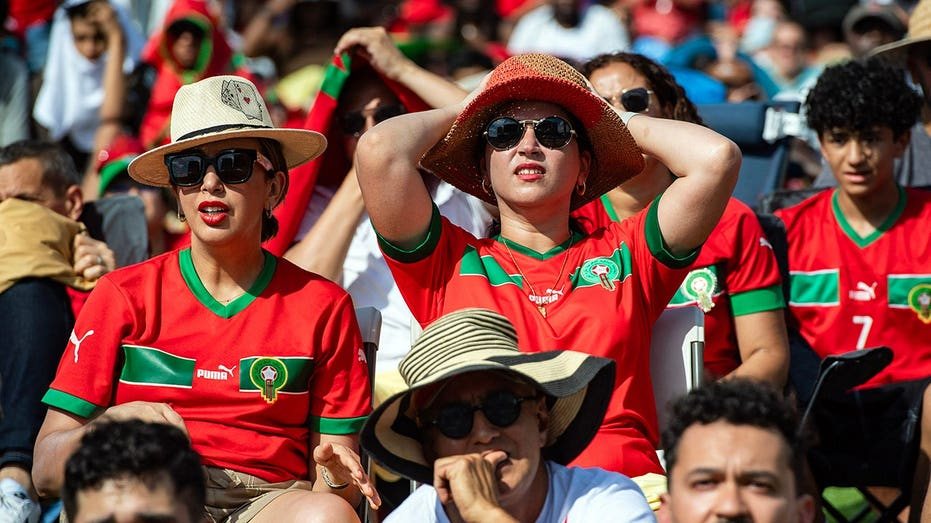
Public unrest erupted in parts of London late Thursday night after Morocco's 2-0 loss to France in the FIFA World Cup quarterfinals, with large crowds of Morocco supporters flooding the streets and clashing with riot police. The disorder, concentrated around Edgware Road in northwest London, saw police in full riot gear—equipped with shields and body armor—trying to contain crowds that launched fireworks and threw debris into the road. Smoke billowed through the streets as fans waved Moroccan flags, some jumping on top of vehicles and holding up traffic. One video circulating on social media appeared to show an officer down on the asphalt, though the circumstances of the injury and the officer's condition were not immediately known.
The unrest followed France's decisive victory over Morocco, a rematch of the 2022 World Cup semifinal that France also won. Kylian Mbappé opened the scoring with his eighth goal of the tournament, tying him with Argentina's Lionel Messi for the most goals in the competition. Ousmane Dembélé added a second-half goal to seal the 2-0 win and send France into the semifinals for the third consecutive World Cup. Morocco, despite the loss, made history by becoming the first African nation to reach more than one World Cup quarterfinal, building on their historic run in 2022 when they became the first African team to reach the semifinals.
While many had feared that Paris would erupt into riots—especially given the chaos that followed Paris Saint-Germain's UEFA Champions League victory over Arsenal in May—the French capital instead saw scenes of celebration. Videos from the L'avenue des Champs-Élysées showed cars honking horns with both French and Moroccan flags flying out of windows, and supporters lining the sidewalks waving flags and joining in the festivities. The contrast between the two cities highlighted the different ways fans processed the result: in London, frustration boiled over into confrontation, while in Paris, the match was treated as a shared moment between the two nations.
The London disorder was not an isolated incident. Similar scenes unfolded after Egypt's World Cup exit earlier in the tournament, when Argentina rallied for a controversial 3-2 victory that featured several disputed officiating decisions. In that case, Egyptian fans in several cities took to the streets in protest, leading to clashes with police. The pattern suggests that high-stakes World Cup matches involving African teams can trigger emotional responses from diaspora communities, particularly when the outcome is seen as unfair or when national pride is deeply invested.
Morocco's elimination means no African nations remain alive in the World Cup. France will face the winner of the quarterfinal between Spain and Belgium, while the other side of the bracket features England versus Norway and Argentina versus Switzerland. France's victory also extended their remarkable run of success in the tournament: they have now reached the semifinals in three straight World Cups, a feat achieved by only a handful of nations in the competition's history. For Morocco, the loss ends a campaign that saw them become the first African country to reach multiple quarterfinals, a milestone that underscores the growing strength of African football on the global stage.
Authorities in London have not released an official statement regarding the unrest, but the Metropolitan Police are expected to review the incidents and assess whether any arrests were made. The disorder adds to a series of fan-related disturbances during the World Cup, which has seen celebrations and protests in cities across Europe and the Middle East. As the tournament progresses, security forces in host cities and major diaspora hubs remain on alert for potential flashpoints, particularly when matches involve teams with large expatriate communities.

113