Memorandum
- From
- Connor Quincy via FOX News
- Date
- Filed
- Sports·6 min to read
- Re
Caitlin Clark Drives WNBA to Historic Late-Night Cable Ratings Despite Limited Playing Time
ReCaitlin Clark Drives WNBA to Historic Late-Night Cable Ratings Despite Limited Playing Time
Caitlin Clark and the Indiana Fever drew 1.04 million viewers on cable at 10 p.m. ET, a historic late-night milestone for the WNBA, even as Clark played only 16 minutes in her return from injury.
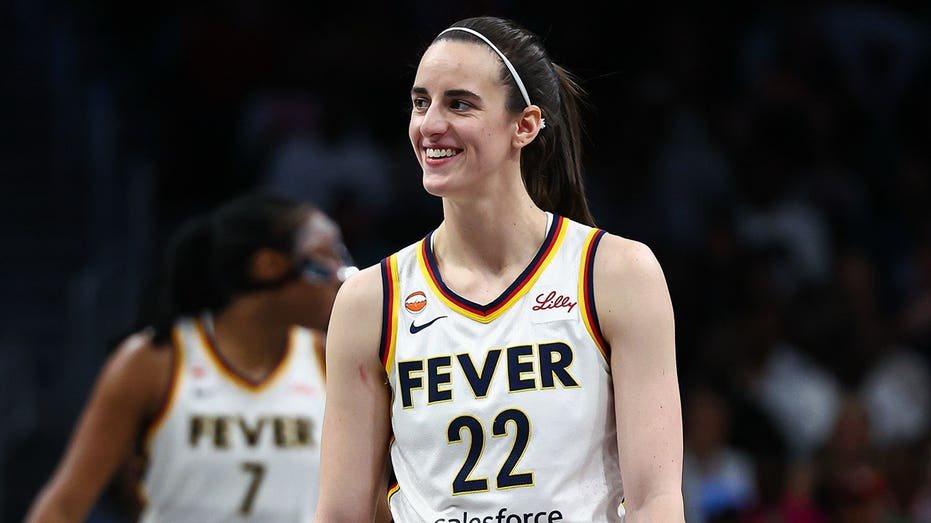
The WNBA has added another milestone to its growing list of television achievements, and once again Caitlin Clark was at the center of it. The Indiana Fever guard helped deliver an average audience of 1.04 million viewers for Wednesday night’s game against the Los Angeles Sparks, according to data from USA Sports PR. The game aired on USA Network and CNBC, marking the first time in league history that a game with a 10 p.m. ET start time averaged at least one million viewers.
The Fever lost the game 106-92, and Clark played only 16 minutes in her return from a back injury that had sidelined her for the previous two weeks. She scored nine points in limited action. But the individual performance took a backseat to the broader television story. The game was played on a Wednesday night in a late East Coast window, on cable rather than broadcast television, and still managed to cross the seven-figure threshold.
According to USA Sports PR, citing Nielsen Big Data + Panel data, the Fever-Sparks matchup was the most-watched WNBA game on record for the networks that carried it, up 149 percent compared to the 2025 cable average. The achievement is particularly notable given the unfavorable conditions. The game did not air on a weekend or in a prime weeknight slot, and it was not carried by a major broadcast network like ABC or CBS, where Clark has drawn even larger audiences earlier this season.
Indiana’s opening-weekend game against the Dallas Wings averaged 2.49 million viewers on ABC, making it the league’s fourth-largest audience since 2000, including playoffs and All-Star Games. A later game against the New York Liberty on CBS drew 2.56 million viewers, the third-largest WNBA audience of any kind since 2000. Those numbers were driven by Clark’s star power and the Fever’s growing national appeal, but Wednesday’s cable-only figure may be even more telling about her impact on the league.
Before Clark arrived in the WNBA, the league went nearly 16 years without a single game averaging one million viewers. The previous seven-figure game came in 2008, when Candace Parker’s professional debut drew 1.07 million viewers on ABC in a 3:30 p.m. ET Saturday afternoon slot on a major broadcast network. Now, with Clark involved, a million viewers on cable at 10 p.m. ET on a Wednesday has become a reality.
The game itself was not a showcase for Clark or the Fever. Indiana trailed the entire second half and never got closer than a nine-point deficit in the fourth quarter. Clark’s return from a back injury aggravated during a June 24 game against the Phoenix Mercury was limited, and she was not on the floor during key stretches. Yet the television audience remained strong throughout the broadcast.
The WNBA and its media partners have emphasized that the league’s growth is a broader story about women’s basketball, not just one player. There is evidence to support that view. The league has more visibility than ever, and non-Fever games have also drawn improved ratings. For example, a July 5 game between the Fever and the Las Vegas Aces, played without Clark, averaged 1.55 million viewers on ESPN’s «Women’s Sports Sundays,» making it the biggest cable or streaming WNBA audience of the season at the time.
However, that number also underscores Clark’s influence. The Fever have become the WNBA’s most important television brand, carrying national interest in a way they never did before her arrival. The 1.55 million viewers for the Clark-less game against the Aces was more than the combined viewership of the previous two «Women’s Sports Sundays» broadcasts, which featured the New York Liberty against the Golden State Valkyries (743,000 viewers) and the Liberty against the Sparks (778,000). Neither of those games involved the Fever.
Sports Media Watch noted that the five most-watched WNBA games this season have all featured Indiana. The pattern is consistent: when the Fever play, ratings rise, regardless of whether Clark is on the court. That dynamic has turned the Fever into a must-watch team for a national audience, a status the franchise had not enjoyed before Clark’s arrival.
The WNBA is clearly in a stronger position than it was a few years ago. The product has more visibility, and even non-Fever games are drawing audiences that would have been unthinkable in the pre-Clark era. Drawing over 700,000 viewers for a regular-season game on cable was rare before 2024. Now it is becoming more common. But the biggest numbers continue to point to Clark and the Fever.
Wednesday’s game was another data point in that trend. A late-night cable broadcast, a limited star performance, a loss for the Fever — none of it prevented the game from reaching a historic audience. For the WNBA, the message is clear: Clark’s presence on the schedule is now a reliable driver of television viewership, even under the most challenging circumstances.

95