Memorandum
- From
- Delaney Sawyer via fox - Opinion
- Date
- Filed
- Sports·6 min to read
- Re
Americans Urged to Embrace National Unity for 250th Anniversary as Bicentennial Example Shows
ReAmericans Urged to Embrace National Unity for 250th Anniversary as Bicentennial Example Shows
As the United States approaches its 250th anniversary amid political divisions, historical reflection on the 1976 Bicentennial suggests that large-scale patriotic celebrations can unite the country, despite contemporary concerns about discord and cynicism.
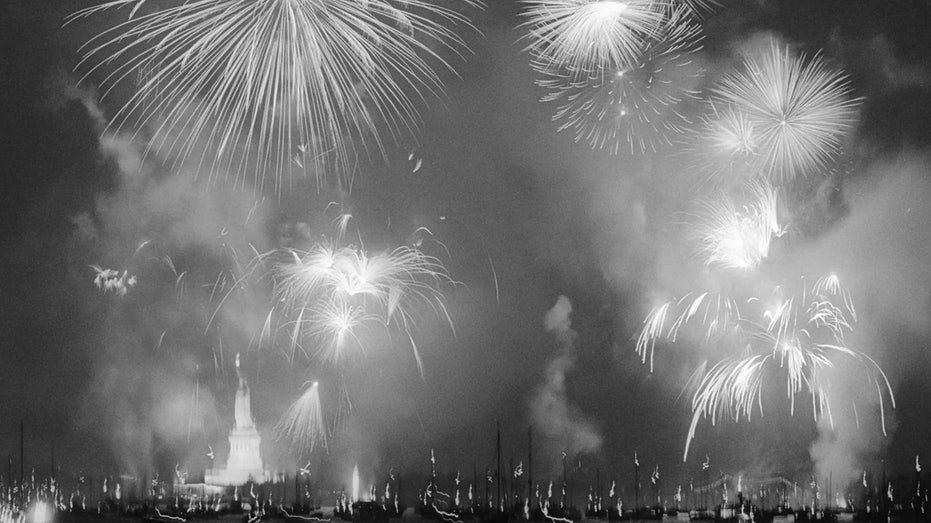
With the United States approaching its 250th anniversary on July 4, 2026, a look back at the nation's Bicentennial celebration in 1976 offers a powerful lesson in national unity. Despite widespread fears of division and cynicism during that era, the Bicentennial turned into the largest patriotic celebration in American history, drawing millions of citizens together in a shared expression of pride and reflection. As the country now prepares for the Semiquincentennial, many historians and commentators point to the 1976 festivities as a model for overcoming contemporary political strife.
The 1976 Bicentennial arrived at a time of deep national turmoil. The preceding 13 years had been marked by the assassinations of President John F. Kennedy, the Rev. Martin Luther King Jr., and Senator Robert F. Kennedy, along with the violent upheavals of the Civil Rights Movement, the divisive Vietnam War, and the Watergate scandal. Trust in government, elites, and big business had plummeted. A Boston Globe columnist at the time wrote that the great issue of the 1976 presidential campaign would be to restore confidence in government and in the American people themselves, warning that without such restoration, the country would remain purposeless and rudderless.
Despite these challenges, the Bicentennial sparked an extraordinary wave of celebration. Over 12,566 towns and cities participated in the Bicentennial Communities project, renovating parks, historic buildings, and constructing new community centers. The Freedom Train, which departed Wilmington, Delaware, on April 1, 1975, crisscrossed the country and was visited by more than seven million Americans before concluding its journey on December 31, 1976. In Philadelphia, as many as 10 million tourists toured Independence Hall and viewed the Liberty Bell. Queen Elizabeth II made a triumphal state visit, landing first in Philadelphia, underscoring the international significance of the event.
The commercial aspect of the Bicentennial was equally remarkable. Decades before the rise of e-commerce, Bicentennial-themed merchandise—hats, shirts, flags, medallions, coins, mini Liberty Bells, commemorative booklets, posters, pillow covers, bed linens, and pewter engravings—sold by the millions through mail-order catalogs. The celebration was described as both the greatest patriotic celebration and the greatest sales event in American history.
Washington, D.C., served as the epicenter of the festivities. Over 1.2 million people viewed the Declaration of Independence and the Constitution at the National Archives during 1976. On July 2, the Archives opened for a marathon 76-hour vigil, during which more than 10,000 visitors waited in lines over three hours long to see the documents. Two days later, a street party on Constitution Avenue drew 8,000 people for a reading of the Declaration, patriotic songs, and the cutting of a six-foot-tall birthday cake. On the morning of July 4, composer Leonard Bernstein read the Declaration before a crowd in Manhattan's Battery Park. At 2 p.m. Eastern Time, bells rang out across the nation for two minutes from church steeples, town halls, and firehouses. Parades large and small snaked through Main Streets nationwide, and that evening, over a million people packed the National Mall and lined the Potomac River to witness a gigantic fireworks display depicting eras in American history.
The Bicentennial did not solve all of America's problems or create eternal fellowship. There were protests and condemnations of the country. However, the vast majority of Americans showed both pride and perspective. A Gallup poll taken in June 1976 found that 77% of respondents felt the nation had succeeded over 200 years in achieving the ideals for which it was founded. This sentiment, historians argue, offers a template for the current era.
As the 250th anniversary approaches, similar efforts are already underway. A Freedom Plane is currently touring the country, and exhibitions at the National Archives, Library of Congress, and Smithsonian Institution, as well as at local museums and presidential libraries, are drawing thousands of Americans to view artifacts from the nation's past. A new wave of books on the founding, the Revolutionary War, and the Declaration of Independence are being published, and documentaries are being streamed. Despite anger manifested online and in the streets, rising incivility, and political polarization, the vast majority of the country goes about its daily life peacefully. Debate and heated argument about the country's past are part of American tradition, and the Bicentennial demonstrated that such discourse can coexist with widespread celebration and unity.

90