
Memorandum
- From
- Delaney Sawyer
- Date
- Filed
- Society·5 min to read
- Re
What the Ust-Luga strike says about Chinese workers on overseas projects
ReWhat the Ust-Luga strike says about Chinese workers on overseas projects
The confirmed story is a mass wage protest by Chinese workers at a Russian petrochemical site. Reports of withheld documents and months of arrears reveal a deeper problem than the viral police confrontation now circulating online.
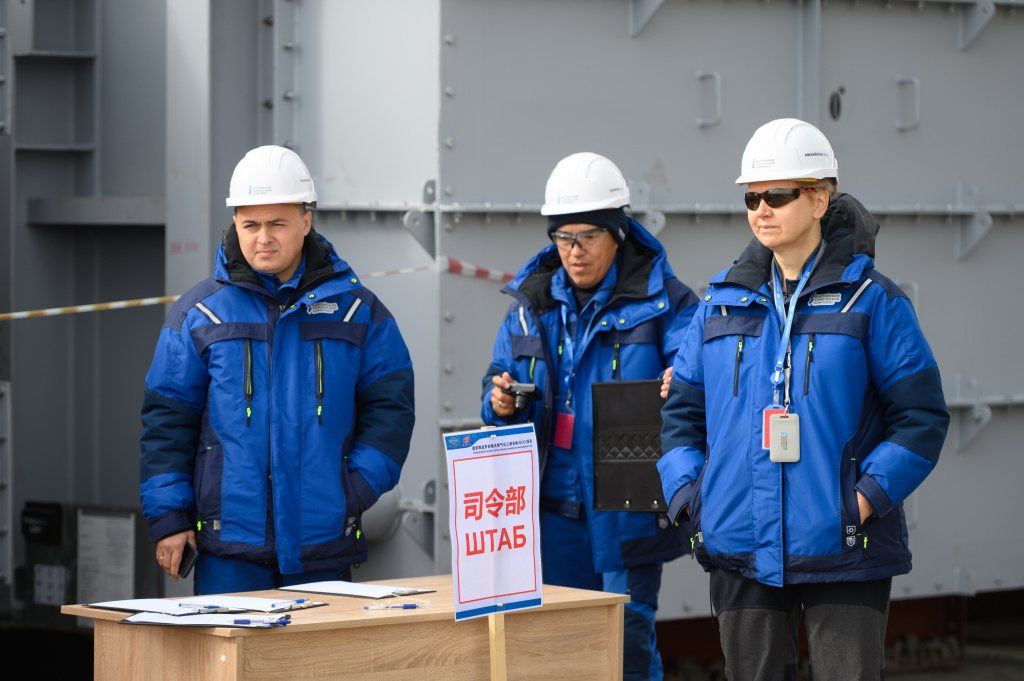
The most dramatic version of the story from Russia’s Ust-Luga industrial zone says thousands of Chinese workers surrounded police vehicles and rescued a colleague from detention. The more firmly documented story is less cinematic but more consequential: hundreds of workers on a major Chinese-contracted project have been striking over wages they say were withheld for months.
China Labor Watch says the dispute at the Baltic Chemical Complex began on June 26, 2026. Four days later, hundreds of Chinese workers walked out again and went to the offices of China National Chemical Engineering & Construction Corporation Seven, or CC7. According to the workers’ accounts collected by the organization, some had not been paid for as long as five months.
The workers reportedly used dormitory bedsheets as protest banners. That detail points to the particular vulnerability of people sent abroad for large construction jobs. Their employer or labor intermediary can be tied not just to their pay, but also to housing, travel, documents and access to the worksite.
The Baltic Chemical Complex is not a small private development. Its official website says it is being built in the Kingisepp district of Leningrad region and is designed to produce up to 3 million metric tons of polyethylene annually. The site names CC7 as its EPC contractor, placing the Chinese company at the center of engineering, procurement and construction.
China Labor Watch says the workers’ complaints go beyond late pay. Some said they had never received their own copies of signed employment contracts. In a later account covering labor incidents involving Chinese workers in Russia during 2025 and 2026, the group cited recurring allegations of wage arrears lasting three to eight months, confiscated passports, restrictions on workers leaving sites and subcontracting structures that made responsibility difficult to trace.
A Chinese-language account focused on overseas workers, “海外家园,” reported in early July that some BCC workers had already booked flights home but were still trying to recover wages and passports. It also reported that police appeared at one protest linked to unpaid wages and housing charges.
From there, the story changed as it traveled. A Reddit live thread repeated an unattributed claim that thousands of Chinese workers blocked police cars, freed a colleague and forced officers to withdraw. The China Labor Watch account of the June 30 walkout describes hundreds of protesters and does not substantiate that full police confrontation.
That gap illustrates a recurring problem in fast-moving labor stories: the most shareable detail can overtake the structural issue. Here, the structural issue is a workforce thousands of miles from home alleging that months of wages and personal documents are beyond their control.
The project’s scale raises the stakes. Chinese state authorities previously promoted the Baltic Chemical Complex contract as one of the largest overseas engineering agreements signed by a Chinese enterprise. If large state-linked contractors depend on layers of subcontractors, wage problems at the bottom can still stop work at the top.
There is also a practical labor-market effect. A worker who believes leaving could mean forfeiting months of wages has less freedom to quit. A worker without a passport or contract copy has fewer tools to challenge an employer. Those conditions can turn a conventional pay dispute into a broader question about coercion and mobility.
The next meaningful development will not be another viral clip. It will be whether workers receive the money they say they are owed, regain control of their documents and can choose freely whether to stay on the project or return home. That outcome will say more about the labor system behind Ust-Luga than the size of any crowd around a police car.
73

Source: Source: China Labor Watch account of the Baltic Chemical Complex strike