
Memorandum
- From
- Delaney Sawyer via Fortune | FORTUNE
- Date
- Filed
- Society·5 min to read
- Re
Earth’s forests took 100,000 years to recover from the last climate shock — this one is moving 10 times faster
ReEarth’s forests took 100,000 years to recover from the last climate shock — this one is moving 10 times faster
A new study in Science reveals that during the Paleocene-Eocene Thermal Maximum 56 million years ago, Wyoming forests lost 60% of their canopy and took over 100,000 years to recover. Scientists warn that today's human-driven warming is occurring roughly 10 times faster than that natural event.
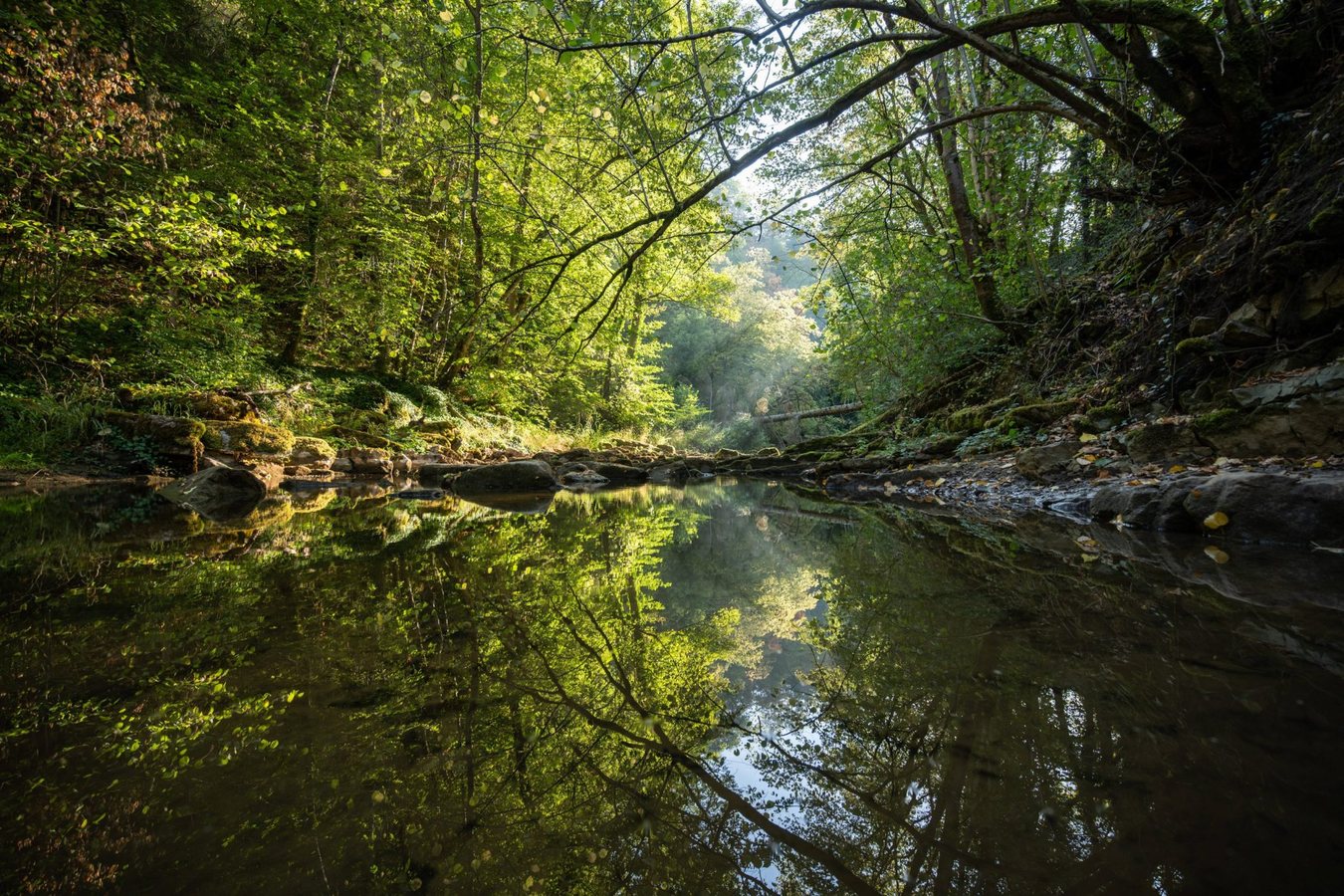
Fifty-six million years ago, Earth’s forests reached a critical tipping point. Dense, lush canopies that had flourished at the start of one of the planet’s most intense greenhouse warming episodes began to thin dramatically. As global temperatures rose by as much as 11 degrees Fahrenheit (6 degrees Celsius), heat and drought stressed the forests, killing large numbers of trees and opening the canopy to more sunlight, which in turn altered the movement of water through the landscape.
In southern Wyoming, ferns briefly flourished where relatives of elms, walnuts, dawn redwood, and avocado trees once thrived, before palms and other warmth-loving plants spread northward. A new study published in the journal Science shows that these Wyoming forests lost 60% of their canopy during this period, known as the Paleocene-Eocene Thermal Maximum (PETM), and that it took them well over 100,000 years to recover.
The PETM is considered Earth’s closest natural analog to the warming the world is experiencing today, but there is a crucial difference: humans are releasing carbon dioxide roughly 10 times faster than the planet’s natural processes did then. Understanding what happened to the forests during that ancient event may help humanity recognize similar thresholds before the planet crosses them again.
Paleobotanists used plant fossils to identify which species once lived in a place, but the harder question was what the forest itself looked like and how it changed. The structure of a forest, and importantly its canopy, controls the amount of light that reaches the forest floor, the temperature, water habitat, and the amount of carbon the forest can store, making it one of the clearest indicators of ecosystem function.
Ecologists measure canopy density using what is known as the leaf area index. Dense forests with multiple layers of leaves intercepting sunlight have a high score, while open forests that allow more light to reach the forest floor have a lower score. Because the canopy influences shade, temperature, water loss, and photosynthesis, the index provides a powerful measure of forest function.
The clues to the density of ancient forest canopies came from microscopic plant cuticles, the thin, waxy outer skin of leaves that can survive for millions of years in organic-rich sediments. The shapes of epidermal cells in these fossil leaf fragments reflect the amount of sunlight the leaf received while growing. Leaves that grow in shade develop longer, more elongated cells as they stretch out seeking sunlight, while those exposed to more sun develop shorter, rounder ones.
To calibrate this relationship, researchers collected soils from forests across Central and South America spanning a wide range of canopy densities. Each handful of soil contains cuticles shed by many different plants across the canopy, reflecting the structure of the forest as a whole. Comparing the shapes of thousands of epidermal cells with the measured leaf area index revealed a remarkably strong relationship: the more elongated the cells, the denser the forest canopy above them.
One of the most surprising discoveries was that the forests did not enter the Paleocene-Eocene Thermal Maximum in decline. Just before rapid warming began, the forest canopies reached their greatest density in hundreds of thousands of years, likely reflecting favorable growing conditions as atmospheric carbon dioxide began to increase. A leading theory for the source of that carbon dioxide involves volcanic eruptions.
That flourishing forest did not last. As temperatures climbed, heat and drought overwhelmed the benefits of higher carbon dioxide levels. The canopy rapidly thinned as trees died, and it remained much thinner for over 100,000 years. The forests functioned very differently in this diminished state, affecting the surrounding environment. Ancient soils gave way to coarser river deposits, suggesting that the loss of canopy altered how water and sediment moved through the basin.
55