
Memorandum
- From
- Connor Quincy via PBS NewsHour
- Date
- Filed
- Politics·5 min to read
- Re
Voters in several states decide abortion rights and redistricting measures
ReVoters in several states decide abortion rights and redistricting measures
Voters are weighing 145 ballot measures on abortion rights, congressional redistricting and voter ID rules alongside the midterm races, while Nebraskans separately decide whether to legalize online sports betting.
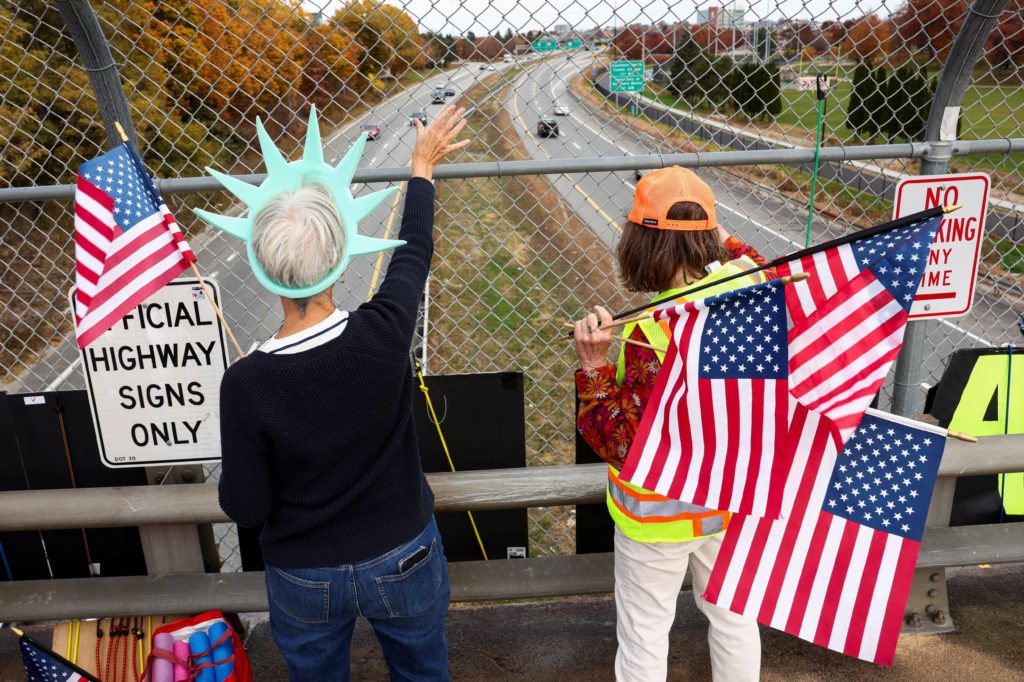
Voters in several states are deciding 145 proposed laws and constitutional amendments on Tuesday, with a battle over abortion rights playing out alongside measures on congressional redistricting and voter identification. The ballot questions serve as a political undercard to a high-profile midterm election that will determine which party controls Congress and state legislatures.
The measures include some that could affect how future elections are run, making them consequential beyond the immediate contests on the ballot. Abortion rights remain one of the most closely watched subjects, as states continue to set their own rules after the Supreme Court's 2022 decision returned the question to the states. Redistricting and voter ID proposals address how congressional maps are drawn and what documentation voters must show at the polls.
Nebraska voters are also weighing two measures that would reshape the state's gambling industry by legalizing and regulating online sports wagering. Measures 440 and 441 would allow people located in the state to place bets on professional and college sporting events through internet-based platforms. Initiative 440 is a proposed constitutional amendment that would authorize the legislation, while Initiative 441 would establish the legal framework and authorize the Nebraska Racing and Gaming Commission to regulate operators. Both must pass for the system to take effect; a vote for only one would not be enough.
Supporters argue that legalization would keep money in the state. They wrote in the secretary of state's informational pamphlet that Nebraskans already wager through illegal and offshore platforms or drive to a neighboring state where betting is legal, and that millions of dollars in tax revenue leave the state every year. The campaign behind the measures, Tax Relief Nebraska, estimates the regulated market could deliver more than $166 million in direct property tax relief over the next ten years, roughly $16.6 million annually. Under Initiative 441, 70 percent of wagering tax revenue would go to the Property Tax Credit Cash Fund.
Nebraska already permits some sports gambling. Voters approved casino gambling at licensed racetracks in 2020, and sports wagering became available at racetrack casinos in 2023, though residents must visit a licensed facility to place bets. According to the Nebraska Racing and Gaming Commission, sportsbooks generated about $9.28 million in gross gaming revenue in 2025, nearly double the $4.71 million recorded in 2024. The state taxes gross gaming revenue at 20 percent.
Demand across the border is a central part of the argument. According to the compliance firm GeoComply, there were about 3.4 million attempts to access regulated sportsbook applications from Nebraska during the 2024-25 NFL regular season, involving nearly 76,000 accounts. The company also recorded more than 326,000 geolocation checks at a single cornfield just across the border in Iowa, a location that has earned the nickname « The Busiest Cornfield in Iowa » because of the volume of checks there.
Not all analysts view the growth of sports betting as a financial success for bettors. A September Bank of America Institute study found that one in five Americans regard sports betting as an investment, a figure that rises to two in five among Gen Z respondents. The same study found that customers typically recover less than 75 cents for every dollar they send to betting platforms, and that even Gen Z, the best-performing generation, falls short of breaking even.
Results on the Nebraska sports betting measures and the broader slate of ballot questions will shape policy in those states for years. Voters in the states with redistricting, voter ID and abortion measures are making decisions that will carry into future elections and the legal rules governing them.
5

Source: Voters decide key ballot measures on abortion rights, congressional redistricting and voter ID laws