
Memorandum
- From
- Caroline Mercer via Forbes
- Date
- Filed
- Politics·5 min to read
- Re
Trump Moves to Create Political Board Overseeing NIH Grants
ReTrump Moves to Create Political Board Overseeing NIH Grants
President Trump has directed OMB Director Russell Vought to draft an executive order establishing a board that would decide which NIH grants get funded, setting up a clash with NIH Director Jay Bhattacharya.
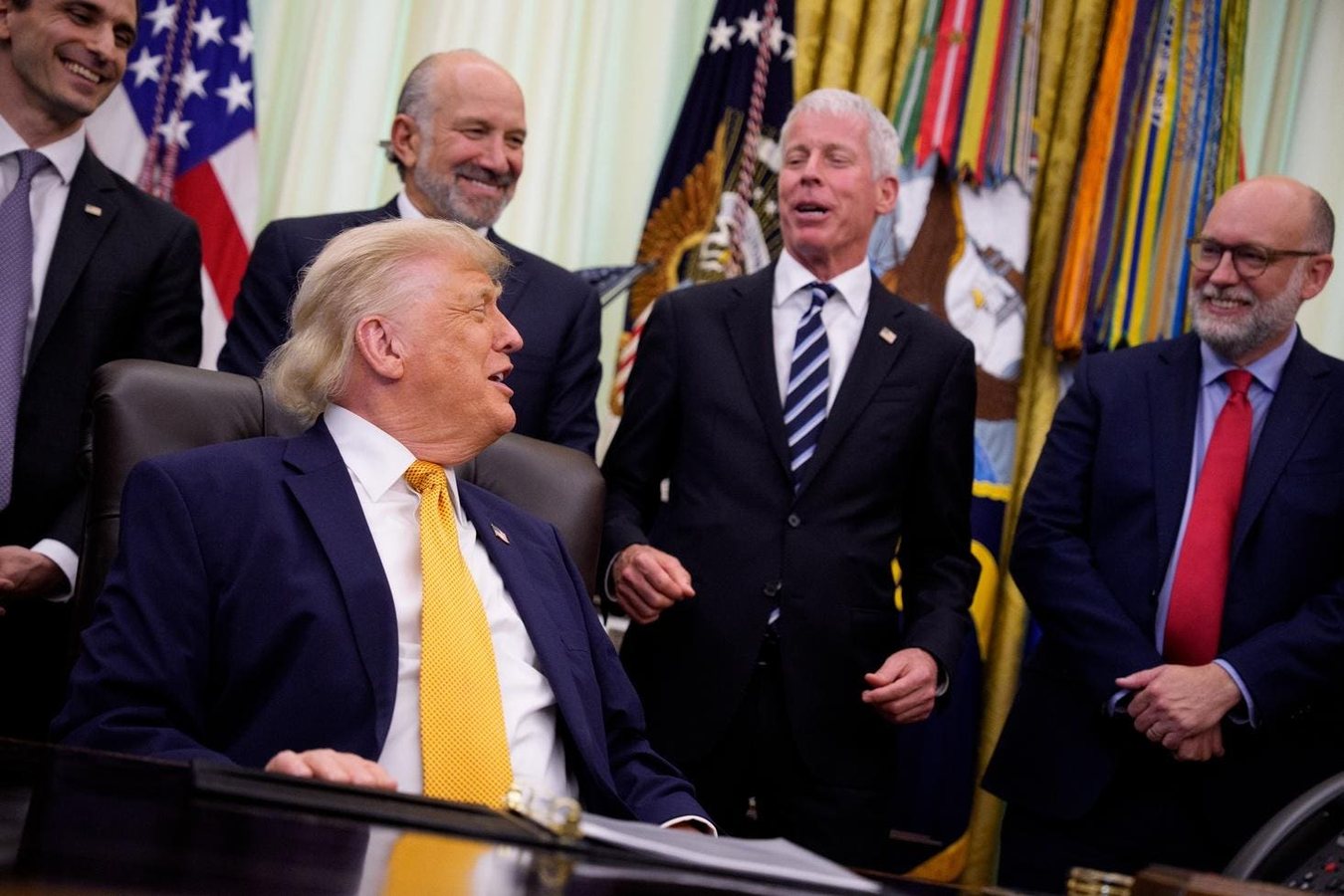
President Donald Trump has instructed Russell Vought, the director of the Office of Management and Budget, to draft an executive order that would create a new board empowered to determine which grants the National Institutes of Health funds, according to reports. The move would insert political appointees directly into decisions that have historically been made through scientific peer review, a shift that could reshape how billions of dollars in federal biomedical research money are allocated.
The proposed board would review and select NIH grant applications, giving it authority over funding decisions that currently rest with the agency's scientific review committees and institute directors. Vought, a key architect of recent efforts to tighten White House control over federal agencies, has already been pressing for more outside influence over NIH grant approvals, a push that has generated friction with NIH Director Dr. Jay Bhattacharya.
Bhattacharya, who was appointed to lead the agency, has reportedly clashed with Vought over the scope of that outside control. The tension highlights a broader internal debate over how much political oversight should apply to the NIH, an agency with an annual budget of roughly $47 billion that supports research on cancer, infectious diseases, neuroscience, and countless other fields.
The executive order, if finalized and signed, would mark one of the most significant changes to NIH operations in decades. The agency has long relied on a two-tier review process: first, scientific peer review panels made up of outside experts, and second, advisory councils that make final funding recommendations to the NIH director. A political board placed above or alongside that structure would introduce a new layer of decision-making that critics say could politicize which research projects advance.
Supporters of the move argue that the NIH needs stronger accountability and that a board could help ensure grants align with administration priorities. Opponents, including many in the scientific community, warn that removing or overriding peer review could undermine the quality and independence of federally funded research. The dispute comes amid a broader push by the administration to assert control over health agencies and their spending.
Details about the board's composition, the number of members, and how its decisions would interact with existing NIH review bodies have not been fully disclosed. It is also unclear whether the board would review all grants or focus on specific categories, such as research involving certain topics that have drawn political scrutiny. The timing of any executive order remains uncertain, though Vought's office is reportedly working on the draft.
The NIH funds tens of thousands of grants each year to universities, hospitals, and research centers across the country. Any change to the approval process could have ripple effects on the scientific workforce, institutional budgets, and the pace of medical breakthroughs. Research institutions that depend heavily on NIH funding are likely to watch the development closely, as are lawmakers who oversee the agency's budget.
Vought has been a central figure in efforts to reshape federal spending and regulatory policy, and his involvement signals that the proposal is a priority for the White House. Bhattacharya's resistance suggests that the plan may face internal pushback even before it is formally announced. How the administration resolves that tension could determine whether the board becomes a reality or remains a proposal.
For now, the reported directive to draft an executive order represents a concrete step toward restructuring how the nation's largest public funder of biomedical research makes its decisions. The outcome will likely shape not only what research gets funded but also how much independence scientists retain in setting the national research agenda.