
Memorandum
- From
- Connor Quincy via fox - Most Popular
- Date
- Filed
- Politics·6 min to read
- Re
Education Official: School Choice Program Will Pressure Democratic States to Opt In
ReEducation Official: School Choice Program Will Pressure Democratic States to Opt In
A top Department of Education official says competitive pressure will push Democratic-led states to join the Federal Scholarship Tax Credit program, as New York Gov. Kathy Hochul moves to opt in and teachers unions push back.
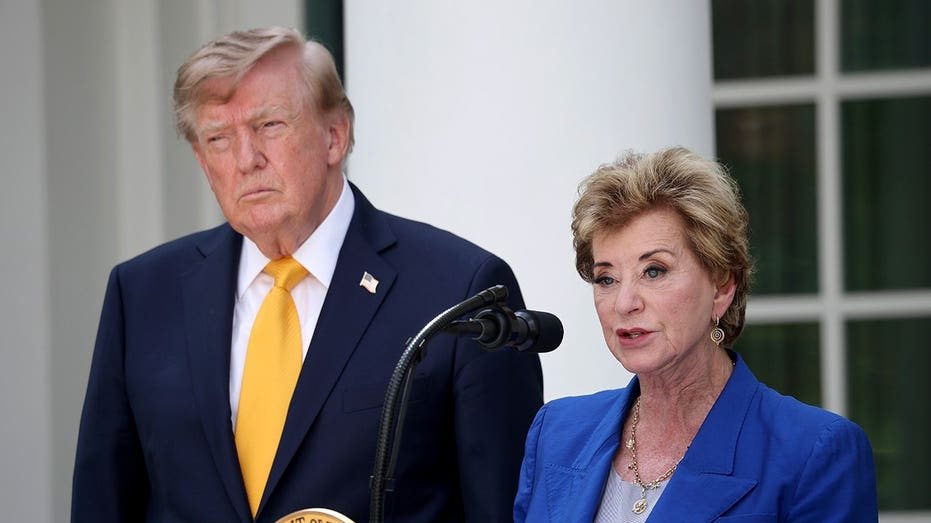
A top U.S. Department of Education official predicts that Democratic governors who have long resisted school choice will face mounting pressure to join President Donald Trump's Federal Scholarship Tax Credit program, as states weigh whether to participate and New York Gov. Kathy Hochul moves to formally opt in.
«I think that pressure is real and is going to encourage all 50 states to ultimately opt in,» said Lindsey Burke, deputy chief of staff for policy and programs at the Department of Education. Her comments came after the Treasury Department and the Internal Revenue Service issued proposed regulations on Oct. 1 to implement the program, which would create the nation's first nationwide school choice framework.
The initiative, also called the Education Freedom Tax Credit, allows individual taxpayers to receive up to a $1,700 dollar-for-dollar federal tax credit for donations to non-profit scholarship-granting organizations. Governors must formally opt in for their residents and local educational organizations to participate and receive funds. The IRS has reported that more than half of U.S. states have already signed up.
Burke argued that competitive pressure will ultimately force blue states to capture the influx of private donations. «If you're in California, for example… a donor will be able to donate to scholarship-granting organizations outside of California, and they will get their tax credit as a result of that,» she said. «So, unless a state like California decides to opt in, then they're going to have donors donating outside of their state and their students in California not benefiting.»
Education Secretary Linda McMahon has said some Democratic leaders have resisted the program simply because «it's a Trump measure.» She pointed to Kentucky Gov. Andy Beshear, who expressed concerns that school choice programs could divert resources from public education — money that opponents argue should go toward teacher salaries, recruiting staff and upgrading facilities. Kentucky has since formally joined the federal program after the state legislature overrode Beshear's veto of opt-in legislation.
Unlike traditional voucher programs that draw directly from municipal or state public education funds, tax-credit scholarships allow taxpayers to redirect a portion of their federal tax liability toward non-profit funding for student scholarships. The federal framework leaves the opt-in decision to state governors, enabling local families to access federally incentivized scholarship dollars.
Sydney Altfield, CEO of Teach Coalition, said the structural design of the tax credit creates a financial incentive that blue-state governors cannot afford to ignore. «I think even just today there might have been a news article where Gov. Jared Polis from Colorado is calling on blue states not to opt in so that he can take their money,» Altfield said. «That's a great opportunity for states like Colorado, and hopefully Gov. Hochul is right behind him. If other blue states don't want to opt in, I can only imagine that Gov. Hochul is going to do everything in her power to get more money into the state. She always says she wants to put money back into the pockets of New Yorkers, and this is doing just that.»
Colorado Gov. Jared Polis became the first Democratic governor to announce his state would participate in the federal program in late 2025, and Colorado subsequently formally opted in. Dismissing critics at the time, Polis told local media he «would be crazy not to» join, pointing out that the program could help families pay for tutoring, after-school programs and summer enrichment.
In May, Emma Wallner, a spokesperson for Hochul, confirmed that the governor intends to opt New York into the program, making it the 30th state to participate. «Governor Hochul is supportive of the federal tax credit scholarship and its potential to help New York students and schools,» Wallner said. «Our office awaits information from the federal government on the program and will thoroughly review the details of the policy for poison pills that could harm New York's education system.»
Despite Hochul's stated intention, major labor groups and teachers unions remain staunchly opposed. A coalition of teachers unions and other public school advocates launched a petition demanding that Hochul reject the program. «Gov. Hochul plans to opt New York starting in 2027. But most New Yorkers haven't even heard of this program or know how it will affect New York,» the petition states. «Tax dollars would help pay private tuition for families who never used public schools.»
For decades, school choice initiatives have remained a third-rail issue for many Democrats, who contend that choice models weaken public school systems and undermine labor unions. However, growing parent demand for alternative education options — including charter schools, private schooling and homeschooling following the COVID-19 pandemic — has pushed several prominent Democrats to reconsider their opposition.
4