
Memorandum
- From
- Caroline Mercer via FOX News
- Date
- Filed
- Politics·5 min to read
- Re
Data center disputes emerge as political flashpoint ahead of 2028 election
ReData center disputes emerge as political flashpoint ahead of 2028 election
Governors in both parties are moving to restrict data center construction amid voter concerns over electric bills, while the White House warns the pushback could undermine America's AI ambitions.
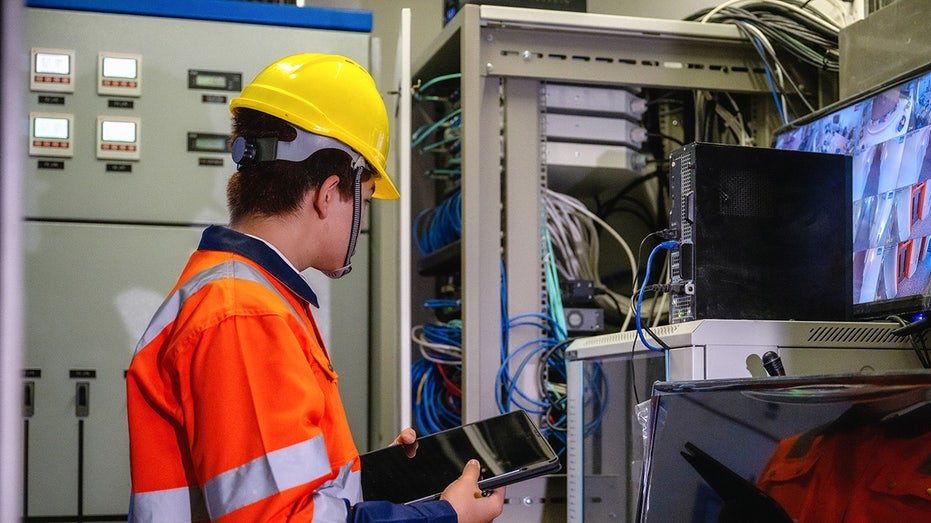
The political battle over data center construction is intensifying across the United States, with governors from both parties imposing new restrictions even as the White House warns the pushback could cost the country its lead in artificial intelligence. The dispute is quickly becoming a defining issue for the 2028 presidential race, pitting immediate concerns about rising electricity costs against long-term strategic competition with China.
Recent months have seen a wave of state-level actions. Pennsylvania Governor Josh Shapiro, a Democrat, signed an executive order he called the "strictest guardrails in the nation" for data centers. Texas Governor Greg Abbott, a Republican, froze new grid connections pending a statewide audit. New York Governor Kathy Hochul paused environmental permits for a year, while Florida Governor Ron DeSantis guaranteed local governments the authority to reject data center projects. The moves reflect a rare moment of bipartisan convergence, driven by public anxiety over utility bills.
Public opposition is substantial. A Fox News poll found that seven in ten Americans oppose having a data center in their own community. At a Public Service Commission hearing in Hancock County, Kentucky, in July, 69-year-old Gary Elder told regulators he feared a proposed 500-megawatt facility nearby could push his electric bill toward $1,000 or more. Elder, a retiree living on a fixed income, voiced a concern that politicians in both parties are now racing to address.
President Donald Trump has emerged as the most vocal advocate for continued buildout, calling Abbott's freeze a "mistake." Senate Republicans have privately warned that the issue could cost the party Ohio's Senate seat, where Trump-endorsed Senator Jon Husted trails in polls and has become associated with data center development. The dynamic is repeating in Ohio's gubernatorial race, with Republican Vivek Ramaswamy and Democrat Amy Acton both calling for moratoriums on new projects.
Data centers are not merely computer warehouses; they form the physical foundation for AI, cloud computing, advanced manufacturing, scientific research, and national security capabilities. Goldman Sachs estimates that U.S. AI-related investment will approach $600 billion in 2026. However, every gigawatt of capacity America fails to build can flow to countries with faster permitting, cheaper power, or more predictable policy, taking construction jobs, supply-chain work, and tax revenue with it.
Many stalled projects this year are not facing zoning fights at all. They are hitting a more fundamental constraint: a shortage of high-voltage transformers. China accounts for roughly 60 percent of global transformer production capacity, creating a strategic vulnerability. Meanwhile, Saudi Arabia's $100 billion HUMAIN program, the UAE's Stargate project, and a Japan buildout backed by Gulf sovereign wealth are courting the same capital that American localities are turning away.
Experts argue the conflict is solvable if framed correctly. Columbia University's Center on Global Energy Policy found that large loads have not been the principal driver of rising rates, and in some places with the highest demand growth, prices have actually fallen when supply, cost allocation, and tariff design are sound. The recommended approach includes requiring data centers to pay the incremental cost of the electricity infrastructure they require, entering transparent power agreements, investing in new generation and storage, and using energy- and water-efficient technologies.
West Virginia offers a contrasting model. Its leaders view data centers as critical infrastructure and are positioning abundant energy, microgrids, and proximity to population centers as advantages. Republican Governor Patrick Morrisey has described the approach as a 20-year strategy, and Google has announced a multibillion-dollar project there. Technology companies also have a role to play; Amazon, Google, and Meta have all announced investments in new generation capacity to support their operations.
The coming years will test whether states can address legitimate consumer concerns without sacrificing the strategic imperative of maintaining America's position as the "AI capital of the world." The choices made now, on where power gets built, who pays for it, and how fast permits move, will shape both the economy and the political landscape for a generation.
153