Memorandum
- From
- Connor Quincy via Fast Company
- Date
- Filed
- Business·5 min to read
- Re
Kids' Meals Shift From Childhood Treats to Adult Value Buys
ReKids' Meals Shift From Childhood Treats to Adult Value Buys
Fast-food kids' meals are being reordered by adults seeking smaller portions and lower prices, while Gen Alpha increasingly chooses chicken chains and fast-casual options over traditional burger kids' meals.
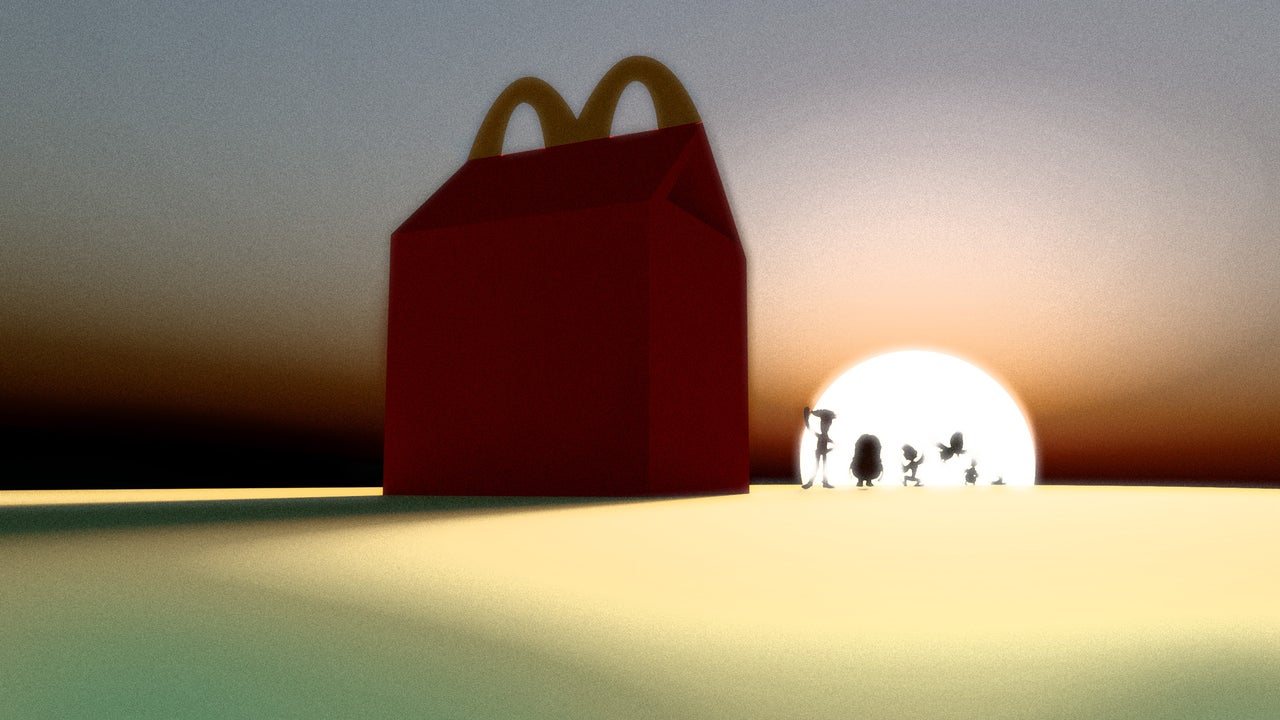
Fast-food kids' meals are undergoing a role reversal that industry analysts say reflects both economic pressure on adults and changing tastes among younger diners. According to market research firm Circana, Gen Alpha is ordering more kids' meals than ever but increasingly taking that business from drive-through burger chains to chicken chains like Chick-fil-A and restaurants with more adventurous menus, such as Chipotle. At the same time, adults squeezed by rising prices and using GLP-1 weight-loss drugs are ordering kids' meals for themselves in growing numbers.
The shift was on display earlier this year when McDonald's rolled out a promotion tied to KPop Demon Hunters, the animated musical about a K-pop girl group and a demonic boy band that became the most-watched film in Netflix history. Rather than a Happy Meal, the chain offered two «dueling adult meals»: the Saja Boys Breakfast Meal, with a spicy McMuffin, hash browns, and soda, and the Huntr/X Meal, with McNuggets, Ramyeon McShaker Fries, and purple Demon Sauce. Customers' choices corresponded to a vote in McDonald's «Battle for the Fans.» The prize inside was a pack of collectible photocards and a QR code unlocking an exclusive video revealing the winner. Analysts estimated the promotion could bring in $100 million in its first few days.
The adult focus was deliberate. The kids' meal has morphed into a value hack, a light meal, a nostalgia trip, and a collector's drop — none of which mean much to an actual child. The format emerged in the 1970s after fast-food marketers discovered that children drove a surprising share of sales. Yolanda Fernández de Cofiño, a McDonald's franchisee who had just opened the first location in Guatemala, noticed in 1974 that children were not finishing their food and created a special «Menú Ronald» that drew crowds. McDonald's tested a U.S. version three years later, and Wendy's and Burger King soon followed with kid portions and toys in decorated boxes.
Back then, kids rarely expected new toys outside Christmas or birthdays, says Gary Cross, a Penn State historian of consumer culture. Free kids'-meal prizes turned getting one into an any-day event. Soon the prizes were tied to movie franchises and toy brands, a strategy «to sell two products at once and use one product to advertise the other,» Cross says. The toys began as disposable trinkets meant to keep kids busy. Even McDonald's underestimated their appeal, betting that cartoons and puzzles on box flaps would sell the meal. «Once they realized it was the prize kids were after, they course-corrected fast,» says Jonathan Alexandratos, a toy scholar and author of «Free With Every Kids' Meal.» What customers really buy with a kids' meal, Alexandratos argues, is «access to a trend and FOMO satiation,» which means chains can never stop reinventing the prize.
In the 1980s, Wendy's more than quadrupled its kids'-meal toy budget after a survey found that 83% of parents said their children help decide where the family eats. By 1988, the strategy was so widespread that a Wall Street analyst complained to Newsweek that the food business had become: «If you can't lure them in with your food, lure them in with a stuffed animal.» Then McDonald's struck gold in 1997 with its Teenie Beanie Babies promotion, stocking Happy Meals with 100 million stuffed animals from Ty Inc. Restaurants ran out nationwide, and the promotion became a recurring event. Almost by accident, McDonald's evolved into the world's largest toy distributor. By 2006, fast-food chains were handing out 1.6 billion toys a year, according to the Federal Trade Commission, spawning a secondary market for miniature collectibles.
That golden era lasted until 2007, when kids' meal orders began a four-year slide. The Great Recession froze spending just as parents were becoming more health-conscious. The current moment finds the kids' meal pulled in two directions: younger customers want chicken and more adventurous options, while adults want smaller portions and lower prices. The result is a format that no longer belongs exclusively to children, and chains are adjusting their menus and marketing accordingly.
8