
Memorandum
- From
- Caroline Mercer
- Date
- Filed
- News·4 min to read
- Re
What We Know About the Plauru Fire and the Suspected Drone Explosion
ReWhat We Know About the Plauru Fire and the Suspected Drone Explosion
Residents near Romania's Plauru reported an explosion before a border-area fire. A drone is suspected, but the current evidence does not yet establish a Russian Shahed or Geran strike.
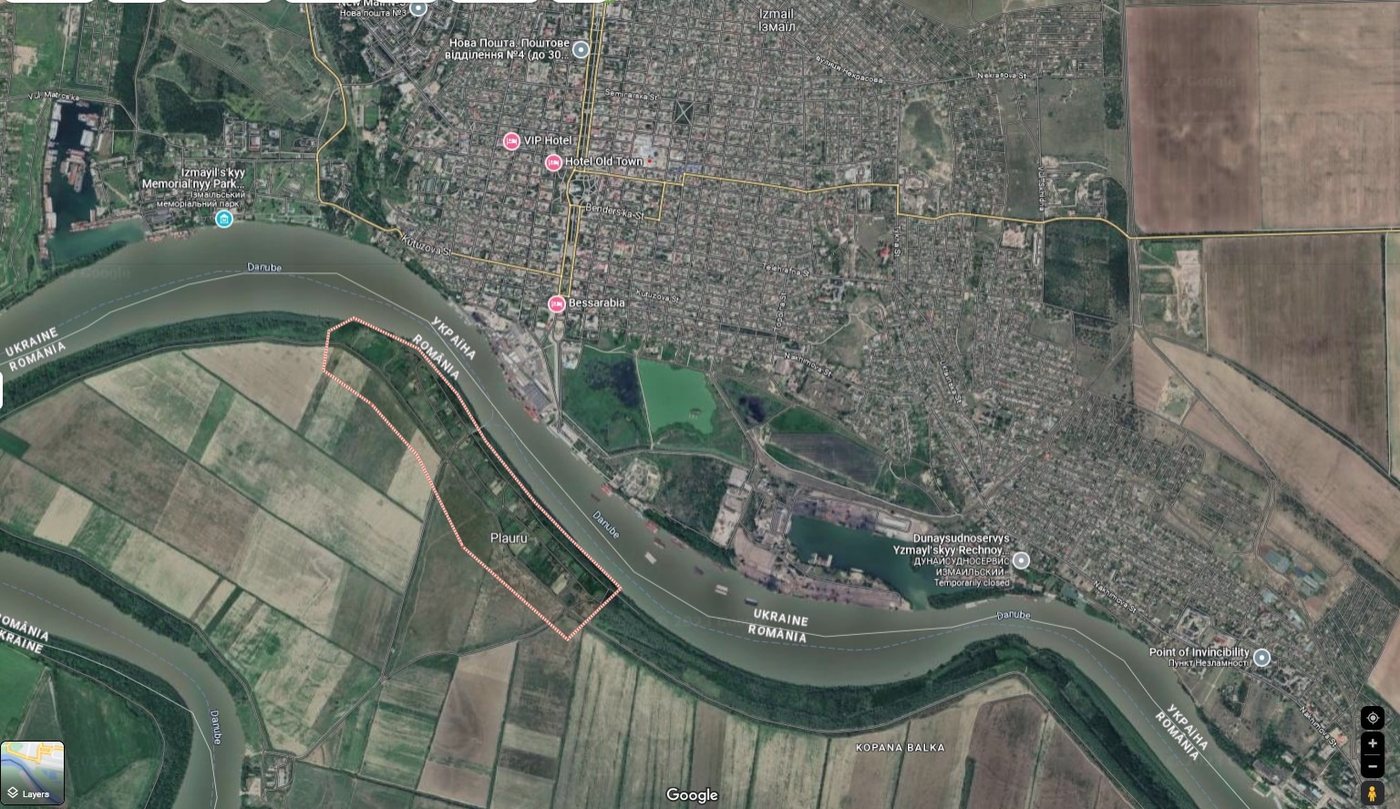
A Wednesday evening fire near the Romanian village of Plauru has quickly been described in some accounts as a Russian drone strike on NATO territory. The public evidence available so far supports a more limited conclusion: a fire occurred, residents reported hearing an explosion, and they told local forestry personnel that a drone appeared to be the likely cause. Romanian authorities have not yet publicly identified a drone model or its origin in this incident.
Romsilva, Romania's state forestry administration, said the fire began at about 5:50 p.m. in forest managed by the Tulcea forestry district. It initially affected about half a hectare. Emergency responders later reported that the fire was localized and that roughly 2,000 square meters of dry vegetation were affected at that stage. Nine firefighters traveled to the area by boat and worked alongside forestry personnel, local volunteers and residents.
The geography is central to the story. Plauru lies roughly 200 meters across the Danube from the Ukrainian port of Izmail. Russia has repeatedly targeted Izmail and other lower-Danube port facilities with drones. The Izmail district administration reported an enemy aerial attack overnight into Aug. 26, saying Ukrainian air defenses prevented hostile drones from reaching their objectives during that nighttime episode.
There was also a separate Romanian air alert earlier on Wednesday. Romania's Defense Ministry said military radar detected an aerial target about eight kilometers north of Vylkove, Ukraine, close to the border. An IAR-330 PUMA SOCAT helicopter was launched for monitoring, and residents in parts of Tulcea County received a RO-Alert around 1:15 p.m. The warning ended at 2:44 p.m., with the ministry saying no incursion into Romanian airspace had been reported during that event. No public statement links that earlier target with the fire several hours later.
Why is the drone explanation being taken seriously? Romania has dealt with repeated spillover from the war. On Aug. 16, the Defense Ministry said a drone entered Romanian airspace from Moldova and was shot down by a Spanish F-18 assigned to air-policing duties. Romanian investigators have also previously found Russian-origin drone debris near Plauru, including components identified as Geran1/2.
Why, then, not call Wednesday's incident a Shahed strike? Because the current Romanian accounts do not make that identification. The Geran and Shahed families are well known in the Russia-Ukraine war, and past finds in the same area create a strong contextual reason for suspicion. But a past identification cannot be applied automatically to a new blast. Investigators need debris, electronic components, explosive traces or other physical evidence to establish what device was involved.
The distinction also changes the strategic meaning. A deliberate Russian attack on a Romanian target would be fundamentally different from a drone that lost navigation, crossed the river after being damaged, or broke apart following an interception over Ukraine. All could put people and property at risk inside a NATO country, but they do not carry the same implications for intent and response.
For now, the Plauru incident is best understood as another sign of how little physical distance separates Russia's campaign against Ukraine's Danube infrastructure from Romanian communities. The next update that matters will be forensic rather than rhetorical: whether investigators find identifiable wreckage in the burned area. That evidence will determine whether the suspected drone explosion becomes a confirmed drone incident and whether its type and origin can be stated with confidence.
59

Source: AGERPRES — Plauru fire