Memorandum
- From
- Derek Weston via fox - World
- Date
- Filed
- News·4 min to read
- Re
France Faces Deepening Crisis as School Protests Expose Budget and Political Strain
ReFrance Faces Deepening Crisis as School Protests Expose Budget and Political Strain
Student protests over crumbling schools have widened into a broader challenge for France, as experts point to heavy public debt, a fragmented parliament, and political movements capitalizing on public anger.
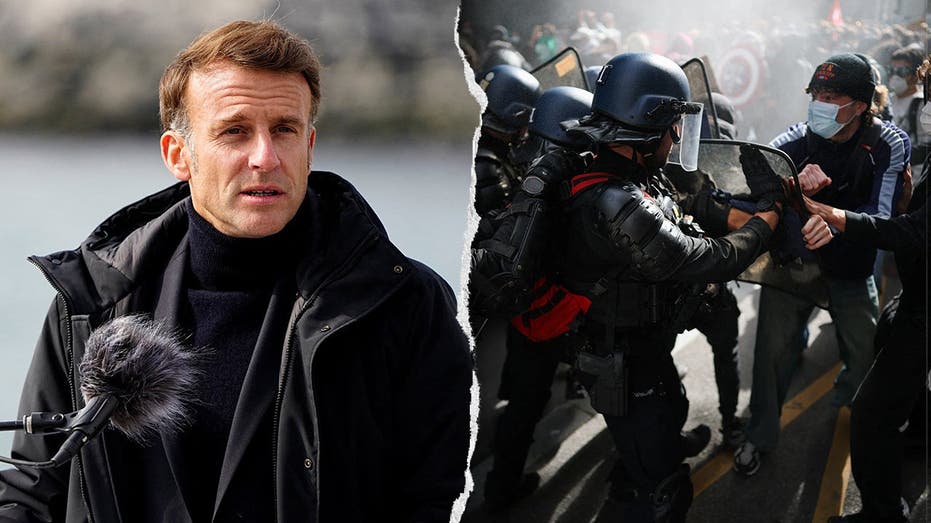
Student protests that began over deteriorating school conditions in France have grown into a wider challenge for the government, with experts warning that the unrest reflects mounting financial pressure and a fractured political landscape rather than a single education dispute.
The demonstrations started in the Paris suburbs in September, driven by complaints about overcrowded classrooms, inadequate heating and cooling, aging buildings, and teachers who were not replaced when absent. Simone Rodan-Benzaquen, the Foundation for Defense of Democracies' senior envoy for Europe, said in an interview from Paris that the anger is genuine but that the violence has become organized, with political forces seeking confrontation with the state. She added that destroying schools would do nothing to improve the education system.
At the center of the tension is how France spends its education money. According to the Education Ministry's 2026 statistical overview, 72 percent of education expenditure went toward salaries, social contributions, and pensions for teaching and non-teaching personnel, while just 8.5 percent went toward investment, including infrastructure and equipment. The figures cover the entire education system, not only high schools. France spent $16,674 per student in general upper-secondary education in 2023, compared with an OECD average of $12,421 adjusted for purchasing power, yet teachers and students continue to report basic shortages.
Harvey Feigenbaum, a professor of political science and international affairs at George Washington University, said the underlying problem is a government caught between expensive social commitments, sluggish economic growth, and pressure to cut spending. French public debt stood at 117.6 percent of GDP in the first quarter of 2026, the third-highest ratio in the European Union behind Greece and Italy, according to Eurostat. Rising borrowing costs and investor concerns have limited the government's ability to resolve the unrest through additional spending, a strategy used during previous waves of French protests.
The financial squeeze has collided with a fragmented political system. Feigenbaum argued that Macron's 2017 centrist project weakened France's established moderate parties without creating a durable governing coalition to replace them, opening space for more polarized movements. Macron's pension reforms triggered widespread protests, and implementation of the 2023 retirement changes has been suspended until 2028. After Macron called snap parliamentary elections in 2024, the National Assembly emerged deeply divided without a governing majority, leaving the government without the votes for coherent action.
Prime Minister Sébastien Lecornu is handling the immediate unrest while Macron faces questions about the stability of the political system he reshaped. Responsibility for public high school buildings and equipment falls to regional authorities, while the national government oversees much of the education system, including teacher staffing. Feigenbaum said that centralized structure makes national leaders the focus of public anger when schools fail to deliver.
The pressure has already forced a concession. Education Minister Édouard Geffray announced an emergency plan to deploy 3,000 qualified educators to particularly affected schools, costing several dozen million euros. Student unions welcomed the measure as an initial victory but pledged to continue demonstrating. Rodan-Benzaquen also pointed to a broader sense of anxiety among young people about their economic future, artificial intelligence, climate change, and international conflicts, suggesting the protests tap into concerns that extend well beyond broken classrooms.
6