
Memorandum
- From
- Caroline Mercer
- Date
- Filed
- News·5 min to read
- Re
What Wamani Is Actually Building in Argentina
ReWhat Wamani Is Actually Building in Argentina
The viral “billionaires’ ark” story has a real 32,000-hectare project behind it, but the owners have spent almost $10 million, not more, and the property now openly markets tourist stays.
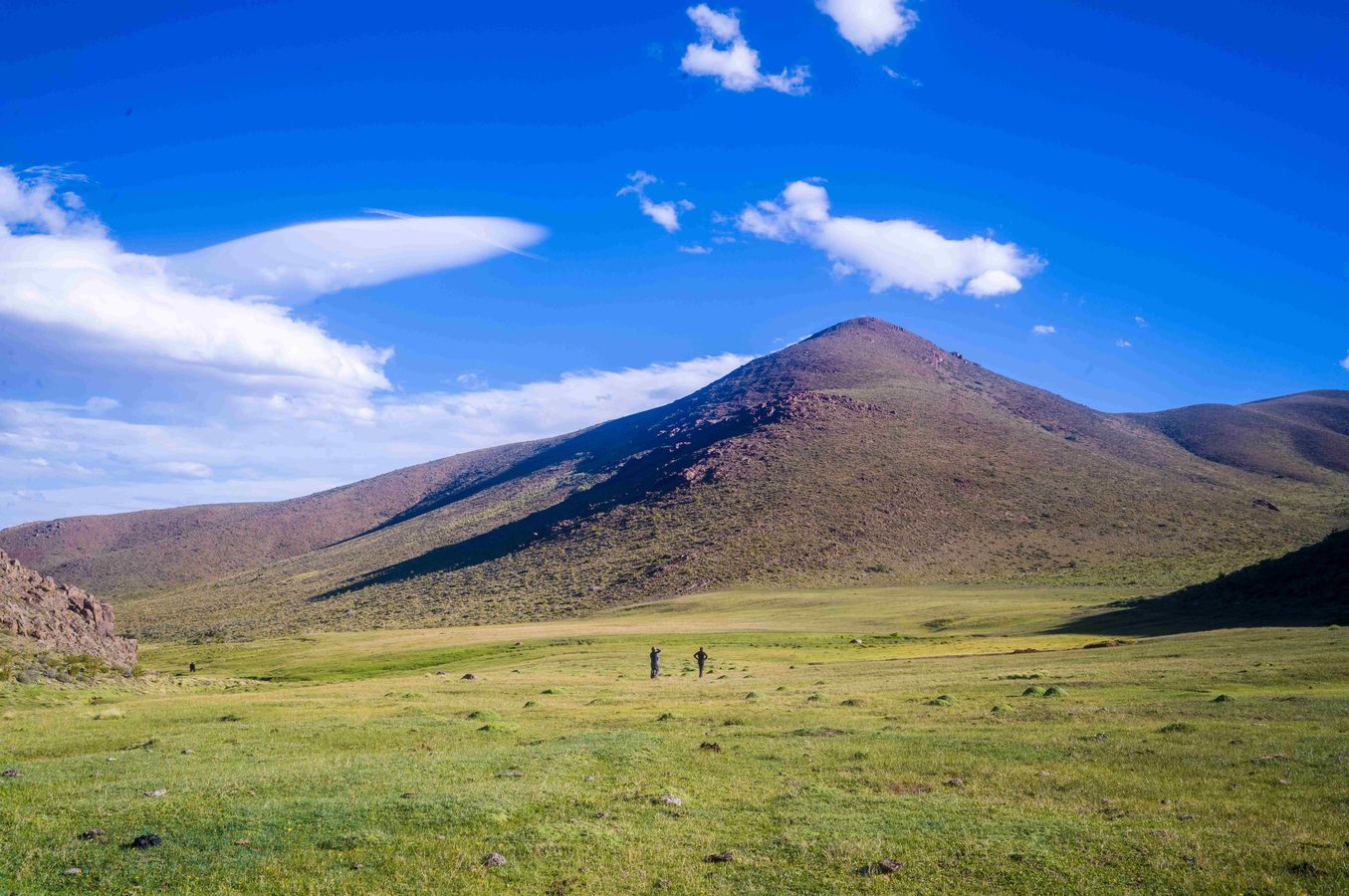
The viral version of Wamani is simple: billionaires have built a private ark in Argentina, spent more than $10 million and plan to save an offline copy of the internet for the apocalypse. The real project is more complicated, and in several ways more instructive.
Wamani is a 32,000-hectare property in San Carlos, Mendoza, near the Andes. Its own website presents it as a remote mountain and ranch destination. The Financial Times reports that over roughly two years its owners have added small prefabricated homes, geodesic domes and an airstrip. Solar panels provide part of the energy system, while Starlink supplies basic everyday connectivity.
Six entrepreneurs own the project. Martín Varsavsky holds a 50% stake, with five friends sharing the rest. Reported co-investors include OLX co-founder Alec Oxenford and Kind founder Dan Lubetzky. This is where the first correction matters: Lubetzky is a billionaire, while the Financial Times estimates Varsavsky’s fortune at about $700 million. Describing the group as wealthy technology entrepreneurs is more accurate than treating every owner as a confirmed billionaire.
The second correction concerns cost. Varsavsky told the Financial Times that the owners had spent almost $10 million. Some social posts have converted that into more than $10 million. The project is still expanding, so future spending may pass that level, but the current public claim should not be rounded upward into a different fact.
The third point requires a distinction between a plan and a finished system. Wamani’s owners are studying whether they can download large language models onto solar-powered computers. The stated reason is resilience: if global servers fail, local models could preserve some access to stored knowledge and computational tools. Varsavsky has described it as creating a limited private “internet,” but it would not be a replacement for the global network. Without a connection, it would have no automatic stream of new information from outside. Its value would come from whatever models and data had been stored beforehand.
Food and transport are being treated in the same way. The property already has an airstrip. Varsavsky plans to bring in cattle and has discussed acquiring more neighboring land that could support crops. Springs and streams provide water sources on the existing estate. None of those systems makes Wamani invulnerable: Mendoza is dry, and strong Andean winds can periodically make the open landscape difficult to use.
There is also a major mismatch between the “invitation only” meme and Wamani’s present-day public face. Its official website has an availability inquiry, describes accommodation and meals, and advertises trekking, mountain biking, horseback riding, transfers and private-flight coordination. The Financial Times says the owners are considering Airbnb. That does not turn the entire estate into a public park, but it does mean personal friendship is not the only stated route to visiting.
The political context is part of the story as well. Varsavsky bought the property shortly after Javier Milei’s election and supports the Argentine president. He has promoted a “tranquility visa” idea for wealthy people seeking a fallback in Argentina during a major war. Separately, the Argentine government is working on a citizenship-by-investment program. The two initiatives are not the same, but they reflect a shared premise: geopolitical distance can be marketed as an asset.
Wamani is therefore best understood as a layered hedge. In normal times it can operate as a remote tourism property. In a crisis, its owners hope that land, solar power, aviation, food plans and local computing will reduce dependence on outside systems. Whether that would work under a truly global collapse is unknowable. What is already clear is that resilience itself has become something wealthy investors are trying to build, package and, potentially, monetize.
66

Source: Source: Financial Times