
Memorandum
- From
- Caroline Mercer
- Date
- Filed
- News·3 min to read
- Re
What Russia’s New Drone Sites Mean for NATO
ReWhat Russia’s New Drone Sites Mean for NATO
The new launch infrastructure is best understood as an expansion of Russia’s war capacity against Ukraine that also creates a larger contingency problem for NATO.
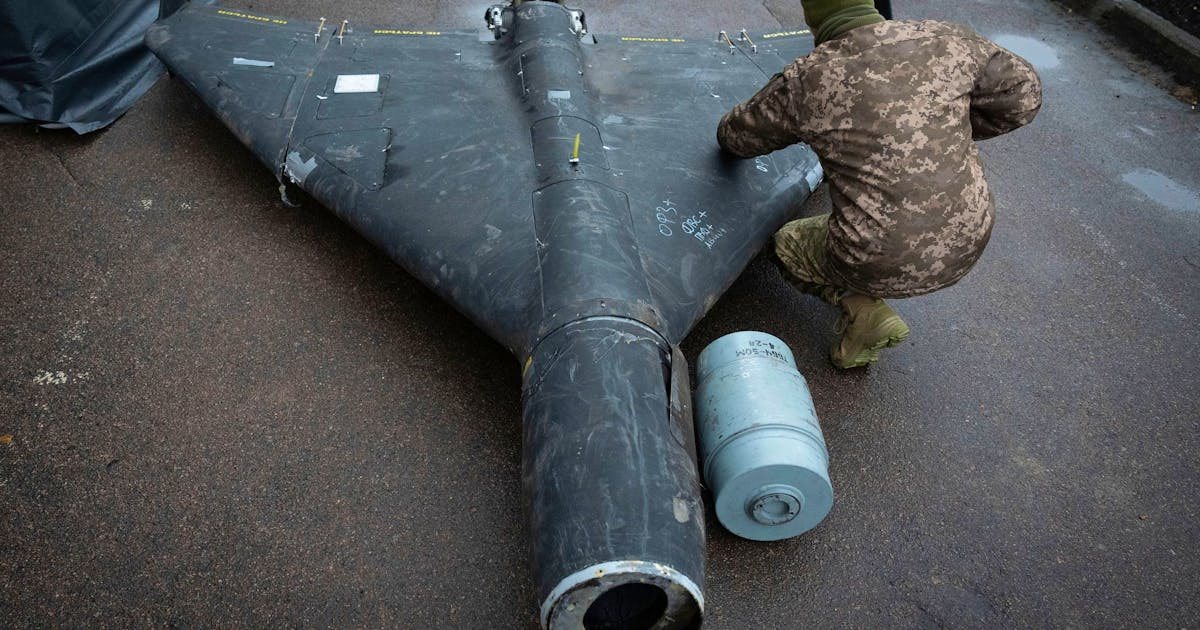
A new network of Russian long-range drone launch sites is changing the military geography around Ukraine and NATO’s eastern flank, but the most useful way to understand it is to separate what the infrastructure is doing now from what it could do in a wider conflict.
Commercial satellite imagery reviewed in recent reporting identified at least 10 Russian sites with new or expanded launch infrastructure near Ukraine and Belarus. Analysts counted dozens of launch rails, and open-source tracking cited by The War Zone indicated that seven of the 10 sites had already been used in attacks on Ukraine.
The immediate function is therefore not speculative. Russia is dispersing launch capacity and creating more places from which it can stage large drone salvos against Ukraine. The Institute for the Study of War assessed the construction as likely intended to increase the scale and resilience of Russia’s regular long-range strike packages. That evidence contradicts claims that the facilities can only be meant for attacks on NATO countries.
The second layer is contingency. Because the infrastructure sits on Russia’s western side and supports long-range systems, it also expands the territory that Moscow could potentially threaten if a future confrontation widened. Parts of NATO’s eastern flank, including Poland, fall within the potential reach described in public assessments. Capability, however, is not the same thing as evidence of an attack order.
That distinction is important because European governments are dealing with a parallel stream of intelligence warnings. Reuters reported that Poland and the Baltic states have reinforced security around energy and other critical infrastructure after allied intelligence suggested Russia could consider a staged or false-flag drone incident. Officials discussed the possibility of using Ukrainian-made or captured drones to confuse attribution. The reporting did not show that such an operation had been approved or was imminent, and the Kremlin rejected the warnings.
U.S. assessments reported by CNN are similarly cautionary rather than predictive. They say Vladimir Putin could try to test NATO unity with a limited attack in the coming years, potentially through cyber operations or a small incursion, but they do not identify a specific near-term strike on Poland.
NATO has responded to the broader pattern by strengthening eastern-flank defenses. After recent Russian airspace violations affecting Poland and Romania, the Alliance said it was reinforcing integrated air and missile defense from the Baltic to the Black Sea. The practical takeaway is straightforward: Russia’s new drone network already increases pressure on Ukraine, while NATO must plan for the additional option it gives Moscow in a future crisis. The risk grows because the same infrastructure can serve both today’s war and tomorrow’s coercion.
57