Memorandum
- From
- Caroline Mercer via FOX News
- Date
- Filed
- News·5 min to read
- Re
Trump Faces Decisive Battle With Iran as Nuclear Threat Grows
ReTrump Faces Decisive Battle With Iran as Nuclear Threat Grows
President Trump's confrontation with Iran is at a critical juncture, with the regime's religious fanaticism and nuclear ambitions posing a unique threat that conventional deterrence cannot address.
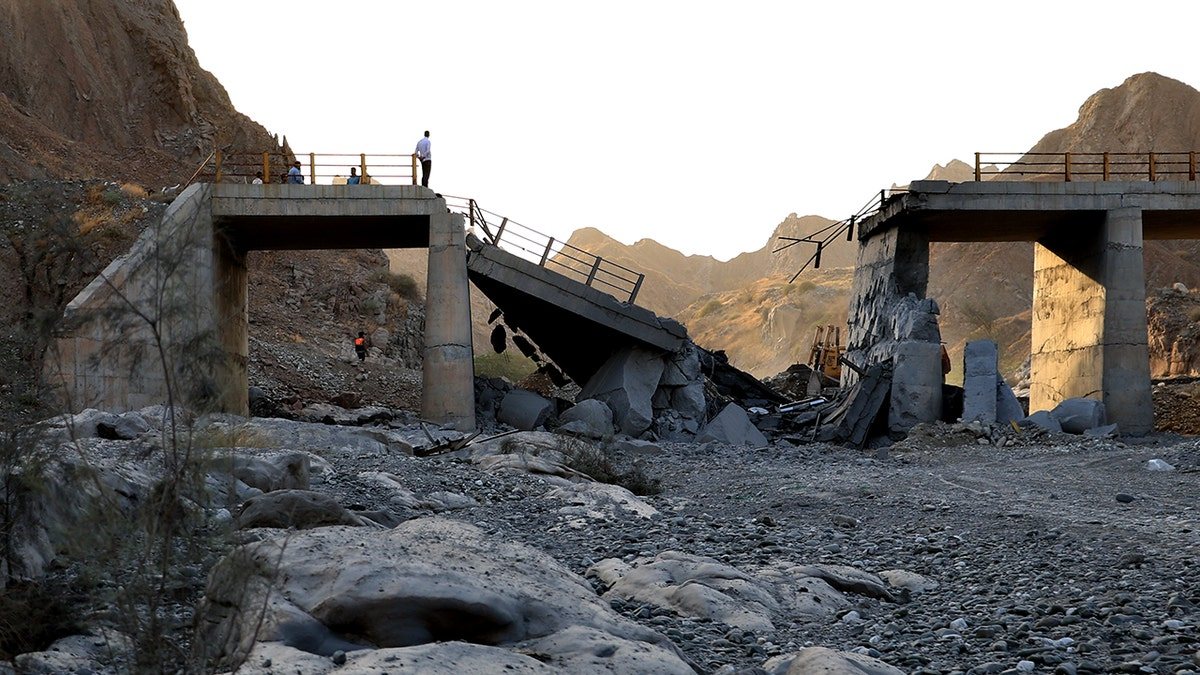
The future of the West and President Donald Trump's historical legacy hinge on the outcome of the ongoing struggle with the Islamic Republic of Iran, a battle the United States is decisively winning but has not yet secured. If President Trump perseveres, victory is possible; if he abandons the effort, it could become the worst foreign policy debacle since the Vietnam War, rivaling the catastrophic withdrawal from Afghanistan under President Joe Biden in 2021. Given these stakes, it is highly likely that Trump will continue the fight, and he should.
Iran is not a normal nation that can be engaged through traditional deals; it is a national security threat run by religious fanatics. This overarching reality defines the danger Iran poses to the region and the world. The Islamic Republic and the Iranian Revolutionary Guards Corps (IRGC) cannot be deterred in the same way as other tyrannies. Leaders like Xi Jinping and Vladimir Putin can be deterred because they have no evident desire to die or see history end. Iran, however, cannot be deterred from its mission to destroy Israel and the United States, as destruction and even defeat are not the ultimate concerns for the theocrats at the top. Martyrdom is seen as the best outcome for individuals caught up in Khomeinism, and regime survival is secondary to their extreme version of Twelver Shi'ism.
Twelver Shi'ism holds that the Twelfth Imam, Muhammad al-Mahdi, did not die but entered occultation in the 9th century and will return at the end of time as the Mahdi to establish justice and peace. Some believers assert that turmoil may help hasten his return. When Ayatollah Khomeini accepted a 1988 ceasefire with Iraq, he did not fear a popular uprising, believing the Islamic Republic had time to serve its mission. Today's dictator, IRGC Commander-in-Chief Ahmed Vahidi, knows the regime is on borrowed time. The economy is shattered, experiencing hyperinflation that will only worsen, and it cannot support the 90 million people who depend on it. This economic collapse makes inevitable rebellion and revolution against the IRGC.
Vahidi's predecessor, the late Ayatollah Ali Khamenei, took a brutal approach when hundreds of thousands of protesters took to the streets in January of this year. Like Chinese dictator Deng Xiaoping in 1989, Khamenei ordered the murder of as many citizens as needed to suppress the uprising. That choice worked once in China and again in Iran, but as countless dictators have found, a regime that survives only through tens of thousands of secret police cannot stand against millions of people without a surveillance state like China's. Iran lacks such a system. Vahidi knows his weakened regime cannot survive years into the future, meaning the religious mission to destroy the "Little Satan" of Israel and prepare for the Hidden Imam must take precedence over regime survival.
Given this, Vahidi and his minions will never agree to anything other than ruses to acquire weapons of mass destruction to destroy Israel and perhaps trigger the return of the occulted Imam. The site known as Pickaxe Mountain represents Iran's last best chance to break out and obtain a nuclear weapon. The bunker busters President Trump used to obliterate Iran's second most deeply buried nuclear facility at Fordow may not work against Pickaxe. Bombing around the site could set back construction but cannot destroy the caverns and everything being built within them. This is the set of facts before President Trump: a regime run by religious fanatics, rich in oil revenues if allowed to resume exports, and executing a backup plan to build nukes in a cavern so deep it cannot be destroyed by conventional weaponry.
The First Gulf War, the second war with Iraq, and the invasion of Afghanistan have all been described as "perfectly executed half maneuvers," strategic hesitations that lead to military defeat. Napoleon's famous maxim applies here: "If you start to take Vienna, take Vienna." President Trump must see this battle through to its conclusion, avoiding the half measures that have plagued past U.S. interventions. The stakes are too high for anything less than a decisive victory.
92