
Memorandum
- From
- Connor Quincy via fox - Politics
- Date
- Filed
- News·5 min to read
- Re
Top Trump Official Presses House Republicans on SAVE Act Reconciliation Plan
ReTop Trump Official Presses House Republicans on SAVE Act Reconciliation Plan
OMB Director Russell Vought met with House Republicans to push a $95 billion budget bill that includes funding for the SAVE Act, border security, and aid to farmers, aiming to bypass a Senate filibuster through reconciliation.
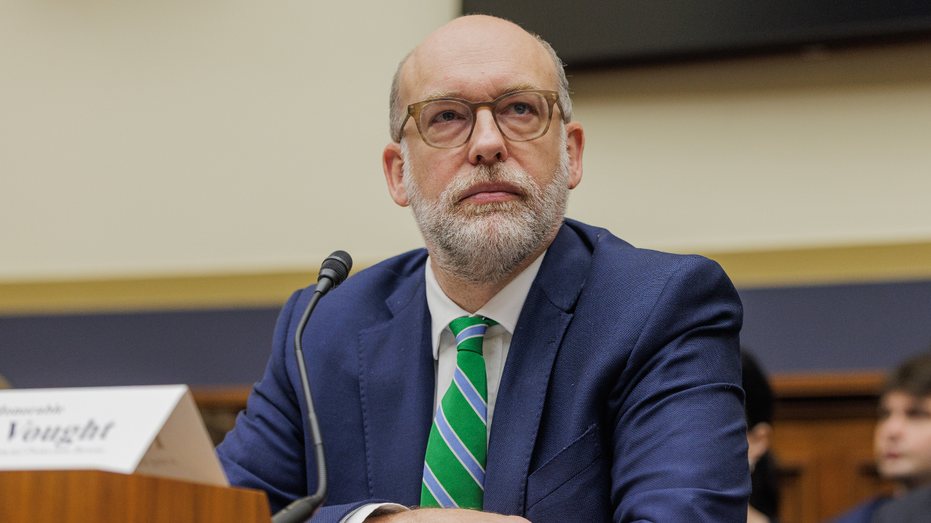
President Donald Trump’s top budget official, Office of Management and Budget Director Russell Vought, met behind closed doors with House Republicans on Tuesday to rally support for a legislative strategy that would advance the Safeguarding American Voter Eligibility (SAVE) Act through the budget reconciliation process. The move is designed to circumvent Democratic opposition in the Senate, where the bill has stalled since passing the House in February.
The SAVE Act would require proof of citizenship for voter registration and establish federal voter ID standards. Republicans argue it is necessary to protect election integrity, while Democrats have criticized it as a restrictive measure that could disenfranchise eligible voters. The bill’s path forward has become entangled in a broader debate over federal spending, with some fiscal conservatives in the GOP expressing unease about the lack of offsetting budget cuts in the proposed legislation.
Vought’s meeting came as Speaker Mike Johnson seeks to quell a potential conservative revolt over the plan, which would bundle the SAVE Act with approximately $95 billion in new spending. The package includes funding for Trump’s military operations against Iran, aid for U.S. farmers, and additional resources for states to implement election integrity measures. Republicans plan to use the reconciliation process, which allows budget-related bills to pass the Senate with a simple majority, bypassing the 60-vote threshold typically needed to overcome a filibuster.
During the meeting, Vought assured lawmakers that spending cuts could be pursued in a separate, fourth reconciliation bill to be completed after the current legislation, according to multiple sources who spoke with Fox News Digital. Johnson has been making a similar pitch to House members, emphasizing that the immediate priority is to pass the SAVE Act and other key initiatives, with deficit reduction to follow.
Some fiscal hawks, however, remain skeptical. Rep. David Schweikert of Arizona expressed frustration during the meeting, saying he was “disgusted” by the push to increase spending without corresponding cuts. Vought responded by citing his experience crafting conservative budgets and noting that Republicans had already achieved spending reductions earlier in the term. Rep. Eric Burlison of Missouri, who had voiced doubts about the bill on Monday, told reporters after the meeting that he was still not convinced. “I’m not 100% convinced that the SAVE language is going to be held solid through the Senate,” Burlison said. “In fact, I would bet against it.”
Other lawmakers indicated conditional support. Rep. Keith Self of Texas said he was willing to accept some spending increases to secure the SAVE Act, calling it “the most important bill.” Rep. Chip Roy of Texas, another fiscal conservative, said he was undecided but suggested he was leaning toward supporting the budget framework. Roy emphasized that he wants the SAVE Act to remain intact and for any new spending to be fully offset in the fourth reconciliation bill. “People wonder why the so-called 3AM caucus exists and why we hold our votes to the last minute to put pressure on Republicans in Congress to deliver? It’s because they revert to the mean — which is spending, amnesty, unlimited immigration and political show votes,” Roy said.
The reconciliation process begins with the House passing a budget resolution that directs committees to draft specific spending and revenue measures. Those details are then consolidated into a single bill that must pass both chambers before reaching the president’s desk. Republicans used a similar maneuver earlier this year to pass Trump’s “One Big, Beautiful Bill Act” and to fund immigration enforcement.
Some Republicans questioned whether a fourth reconciliation bill could be completed this year given the party’s slim majorities. One House GOP lawmaker, speaking on condition of anonymity, responded to that question by sharing a GIF of actor Ryan Gosling stifling a laugh. Rep. Lloyd Smucker of Pennsylvania said he was uncertain about a fourth bill but expressed a desire for more spending cuts.
The SAVE Act remains a central focus for the White House and Republican leadership, who view it as a key election-year priority. The bill’s fate now hinges on whether GOP leaders can secure enough votes from their own conference to advance the budget framework, while also navigating the complexities of the reconciliation process in the Senate.
87