Memorandum
- From
- Derek Weston via FOX News
- Date
- Filed
- News·6 min to read
- Re
Supreme Court justices make rare Capitol Hill appearance
ReSupreme Court justices make rare Capitol Hill appearance
Supreme Court justices visited Capitol Hill for the first time since 2019, a rare appearance that underscores ongoing interactions between the judicial and legislative branches.
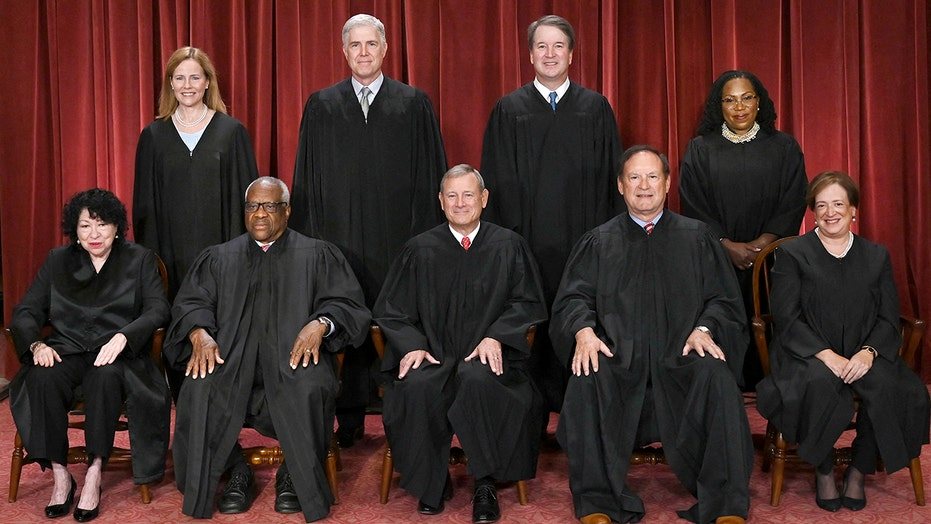
Supreme Court justices made a rare visit to Capitol Hill, marking their first appearance before Congress since 2019. The visit, which took place amid a busy legislative session, signals a renewed dialogue between the judicial branch and lawmakers on issues of mutual concern.
The justices' appearance comes as Congress considers several pieces of legislation that could affect the federal judiciary, including bills related to court security, judicial ethics, and the structure of the appellate courts. While the specific agenda for the visit was not publicly detailed, such meetings typically involve discussions about judicial administration, budget requests, and legislative priorities that impact the courts.
This marks the first time since 2019 that Supreme Court justices have made a joint appearance on Capitol Hill. The hiatus was largely attributed to the COVID-19 pandemic, which disrupted many traditional government interactions, as well as heightened security concerns following protests at the Supreme Court building in recent years. The Court has also faced increased public scrutiny over ethics practices and decisions on high-profile cases.
The visit underscores the complex relationship between the Supreme Court and Congress. While the Constitution establishes an independent judiciary, the legislative branch retains significant authority over the courts, including the power to set the number of justices, determine the Court's budget, and confirm judicial nominees. Lawmakers have recently introduced measures to impose a binding code of ethics on the Supreme Court, a move that has drawn mixed reactions from justices and legal scholars.
The appearance also comes as the Court prepares to issue rulings on several contentious cases this term, including disputes over federal regulatory power, voting rights, and social media content moderation. The justices' engagement with lawmakers could help ease tensions that have arisen from recent decisions that have overturned long-standing precedents and shifted the balance of power between federal and state governments.
Chief Justice John Roberts has previously emphasized the importance of maintaining the Court's institutional independence while also recognizing the need for constructive dialogue with Congress. In his annual year-end report on the federal judiciary, Roberts has often highlighted the courts' need for adequate funding and security, issues that require congressional action.
The visit was part of a broader day on Capitol Hill that included other significant political developments. Vice President JD Vance was also on the Hill, working to pressure Republican holdouts on key White House priorities, including budget negotiations and a proposed daylight saving time bill that has advanced through the House. The presence of both the vice president and the Supreme Court justices underscored a day of intense legislative activity.
Observers note that the justices' willingness to appear before Congress could signal a shift toward greater transparency and communication between the branches. However, the Court has consistently resisted calls for more formal oversight, arguing that its internal processes are sufficient to ensure ethical conduct and sound decision-making.
The last time Supreme Court justices testified before Congress was in 2019, when several justices appeared before the Senate Appropriations Committee to discuss the judiciary's budget request. That hearing was notable for its collegial tone, with lawmakers expressing bipartisan support for the courts' funding needs despite sharp disagreements on other issues.
Since then, the Court has undergone significant changes, including the confirmation of three justices appointed by President Donald Trump, shifting the Court's ideological balance to a 6-3 conservative majority. This shift has led to landmark rulings on abortion, gun rights, and affirmative action, which have in turn fueled debates about the Court's role in American democracy.
The visit also comes against the backdrop of ongoing discussions about potential reforms to the Supreme Court, including proposals to impose term limits on justices or expand the number of seats on the bench. While these proposals have gained traction among some Democratic lawmakers, they face significant political hurdles and have been opposed by most Republicans and the justices themselves.
For now, the rare Capitol Hill appearance serves as a reminder of the enduring institutional ties between the judicial and legislative branches, even as they navigate a period of heightened political polarization and public scrutiny. The justices' return to the Hill may help pave the way for more regular interactions, though the Court is likely to remain cautious about any steps that could be seen as compromising its independence.
99