Memorandum
- From
- Delaney Sawyer via fox - Entertainment
- Date
- Filed
- News·5 min to read
- Re
Prince William Descends From American Patriots Who Fought British, New Book Reveals
RePrince William Descends From American Patriots Who Fought British, New Book Reveals
A new book traces Prince William's American lineage to Revolutionary War patriot Nathan Hale and other colonial ancestors, revealing a surprising connection to the nation his family once ruled.
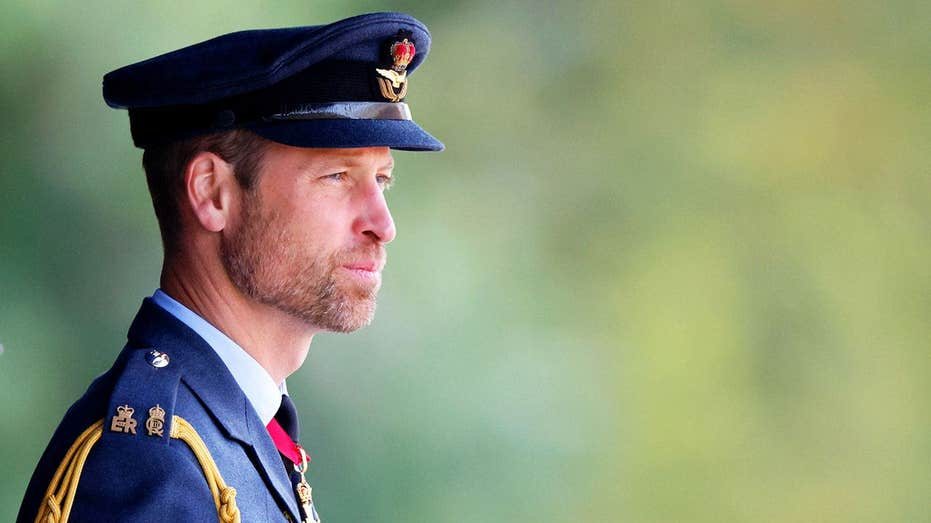
Prince William, the future king of Britain, descends from American patriots who fought against the British crown he is destined to inherit, according to a new book that traces his family tree. In «American Crown,» author Stephanie Green details the Prince of Wales' extraordinary American lineage, linking him to Revolutionary War hero Nathan Hale and other colonial ancestors who opposed British rule.
«The more I read about the family, the more interesting it was,» Green told Fox News Digital. «All the characters in the family tree are so fascinating, and it's an American success story. The fact that he has this American bloodline — I don't even know if he's aware of it.» Kensington Palace declined to comment on the book, as is its standard policy.
Through his mother, the late Princess Diana, William's lineage traces back to Benajah Strong, a Connecticut militiaman born in 1740. The Strong family has been in America since the 1600s, and Benajah played a key role in the early days of the American Revolution. «Benajah was from Coventry, Connecticut, which places him not only in the heart of the American Revolution but at its very beginning,» Green explained. «Coventry was a hotbed of anti-monarchist sentiment, and Benajah's role during the American Revolution was to spread the word that the British were on the march. He was part of what we call 'The Lexington Alarm.'»
Strong's nephew was Nathan Hale, whom Green described as «our most famous American martyr and one of our most famous American patriots.» Hale, a Yale graduate and teacher, joined the Connecticut militia when the Revolutionary War began. He later joined Knowlton's Rangers, widely considered the first organized U.S. military intelligence unit. In 1776, Hale traveled to British-occupied Long Island on a spying mission, posing as an unemployed Dutch schoolteacher. Some historians believe his fatal mistake was carrying his Yale diploma. Captured by British forces in Queens, he was hanged at age 21, about two months after the Declaration of Independence. His reported last words were, «I only regret that I have but one life to lose for my country.»
Green also uncovered a surprising connection between William's family and America's first president. «Everyone who follows the royal family knows about the Spencer family, a very aristocratic family from England,» she said. «Diana, of course, was Lady Diana Spencer when she married the Prince of Wales in 1981, but people probably don't know that the Spencer family and George Washington's family go way back.» Green noted that Sulgrave Manor, George Washington's ancestral home in England, is located near Althorp, the Spencer family estate. «The Spencers and the Washingtons were quite friendly,» she said. «The Spencer girls worked at the Washington home, and the Washington children were friends with the Spencer children. The families were very close.»
One ancestor, Fannie Work, later known as Fannie Roche or Frances Burke Roche, particularly intrigued Green. Work, William's great-great-great-grandmother, was an American heiress born around 1857 who came of age during the Gilded Age. «She was a fascinating woman,» Green said. «She had two scandalous divorces during a time when people rarely even said the word 'divorce' in polite society. She was determined to live life her own way.» Green drew parallels between Work and Diana: «They were both beautiful. They were both glamorous. They both courted scandal. They seemed to have everything going for them, yet they were rebels at heart.»
Work lived lavishly between New York, Newport, Rhode Island, and Paris, and later bought an apartment on New York City's Fifth Avenue, where she died in 1947 at age 90. Green believes that, had Diana lived, she would have embarked on a new life in America. «She was spending a lot of time in America during the last years of her life,» Green said. «She had many American friends. She was also planning to move here. I interviewed her priest and, according to him and other sources, she loved America.»
95