Memorandum
- From
- Delaney Sawyer via Fortune | FORTUNE
- Date
- Filed
- News·5 min to read
- Re
Nearly 1,000 missing in Nepal floods as hydropower tunnels trap workers
ReNearly 1,000 missing in Nepal floods as hydropower tunnels trap workers
Catastrophic flooding in Nepal has left nearly 1,000 people missing, including hundreds of workers trapped in hydropower tunnels. The disaster knocked about 10% of the country's power capacity offline and destroyed roads, bridges, and essential buildings, prompting calls for more resilient rebuilding.
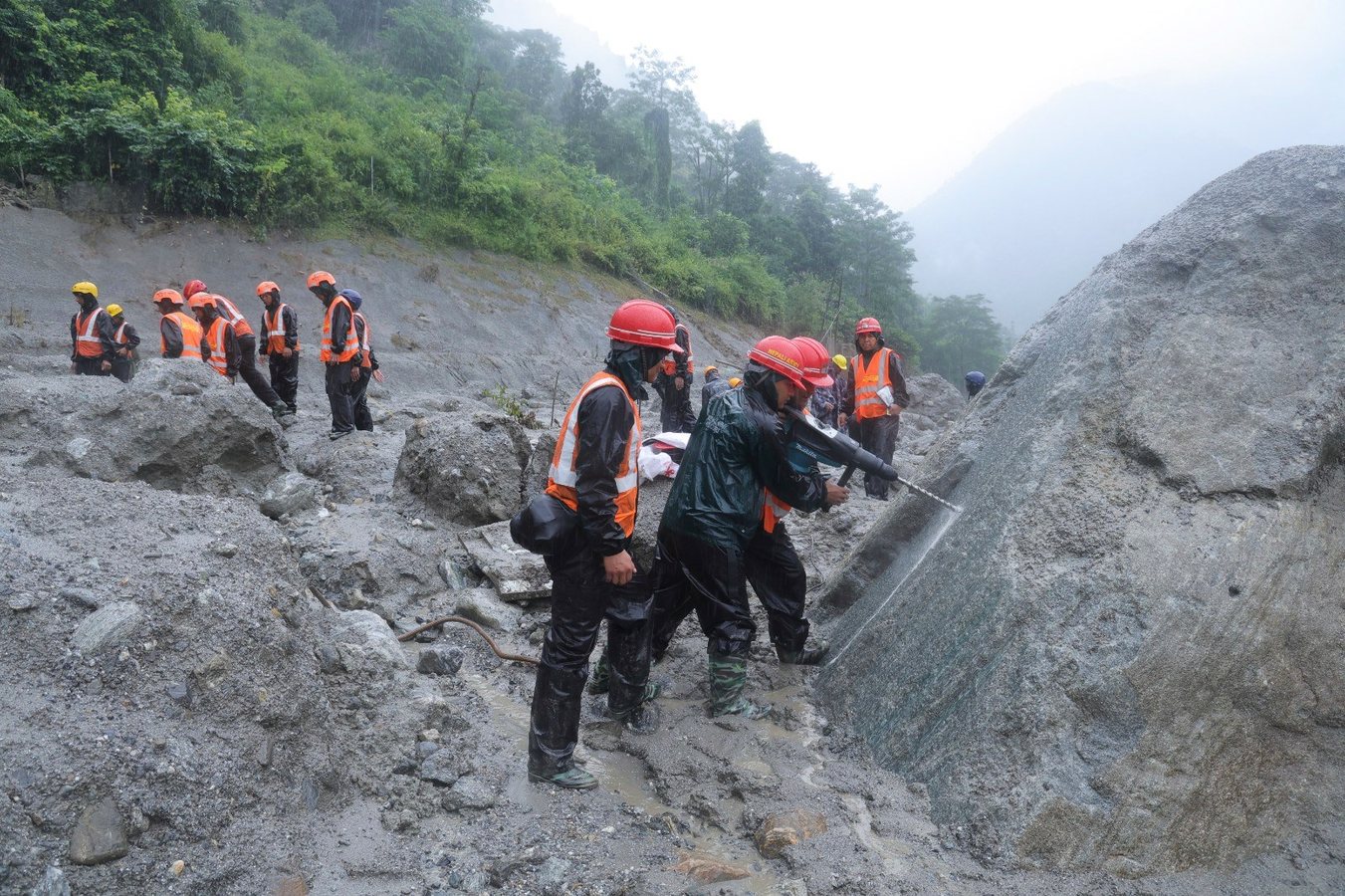
Catastrophic flooding in Nepal has left nearly 1,000 people missing and hundreds of workers trapped inside hydropower tunnels, while the disaster knocked roughly 10% of the country's power capacity offline. The Independent Power Producers' Association, Nepal, reported that up to 900 workers are unaccounted for across a dozen hydropower projects, with many believed to be stuck in tunnels where they had taken shelter. In Nepal and China combined, more than 900 people have died and 4,700 remain missing.
The loss of hydropower infrastructure is estimated to have taken 700 megawatts offline, a significant blow to a country where hydropower is both a foundation of the electricity grid and a key source of economic growth and export revenue. Workers were seen shoveling thick mud from a flood-ravaged power station in central Nepal, trying to revive a facility that supplies electricity to more than 20,000 people. The plant was among those fully or partly destroyed across Rasuwa, Nuwakot and Dhading, some of the worst-hit districts.
Disaster experts said the immediate priority is rescue and recovery, but the longer-term question is how to rebuild without recreating the same vulnerabilities. Jakob Steiner, a geoscientist at the University of Graz in Austria, said authorities must take a hard look at how they will rebuild in these places and whether future projects will be approved after this event. He described the tunnels as large enough to drive trucks through, built to access hydropower infrastructure and divert water, which made them a natural but dangerous refuge for workers.
Beyond the hydropower projects, tens of kilometers of roads, multiple bridges, and essential buildings such as schools and hospitals have been destroyed. Ramraj Narasimhan, a senior director with the Coalition for Disaster Resilient Infrastructure, said rebuilding should focus on continuity of services rather than trying to make every structure indestructible. He suggested choosing better locations for construction, creating alternate routes, providing backup power, improving early warning systems, and using financial tools such as insurance to speed recovery.
Risk assessments should examine where rivers bend, where slopes are unstable, and where a single failure could cut off several communities, Narasimhan said. His organization estimates that $124 billion worth of Nepal's infrastructure is exposed to climate-driven disasters, creating the potential for hundreds of millions of dollars in losses each year. A report by the coalition found that Nepal's average annual losses are nearly $760 million from various disasters, while the country's national disaster funds cover only a fraction of that amount.
Climate scientists said the Himalayan region, which is warming faster than many other parts of the world, is particularly at risk from human-caused climate change. Glaciers across the Hindu Kush Himalaya are losing ice at an accelerating rate, while permafrost degradation, unstable slopes, glacial lakes, and increasingly erratic rainfall are raising the risks of floods, landslides, and debris flows, according to the Kathmandu-based International Center for Integrated Mountain Development.
Much of Nepal's hydropower potential is run-of-river, meaning facilities are closely tied to steep river corridors where land is limited and hazards can cascade quickly. Steiner said smaller floods can sometimes be managed with diversions that keep debris and high flows away from expensive infrastructure, but for events as large as the latest flood, physical defenses may be overwhelmed. In those cases, early warning becomes the critical protection for people.
The flood was detected at the China-Nepal border after moving rapidly from its source, leaving little warning time upstream, but there was still time as it traveled downstream toward hydropower sites, raising questions about whether warnings could have reached workers sooner. Himanshu Thakkar, coordinator of the South Asia Network on Dams, Rivers and People, said environmental, social, and disaster-risk assessments need to reflect the specific landscape and past hazards of each valley, backed by land-use rules and stronger accountability. He argued that hydropower projects can become force multipliers when large structures, debris, and altered river channels add to downstream damage, and suggested Nepal should also consider more decentralized solar power as part of a broader energy mix. The question now, he said, is not only how fast Nepal can rebuild, but what it chooses to put back in the path of the next flood.
117