Memorandum
- From
- Derek Weston via Fast Company
- Date
- Filed
- News·5 min to read
- Re
Colossal Biosciences Taps AI Tool to Advance Dodo De-Extinction Effort
ReColossal Biosciences Taps AI Tool to Advance Dodo De-Extinction Effort
Colossal Biosciences says its new GenoMorph AI has narrowed the genetic targets needed to recreate dodo traits in a living pigeon relative, marking a step forward in its plan to bring back the extinct bird.
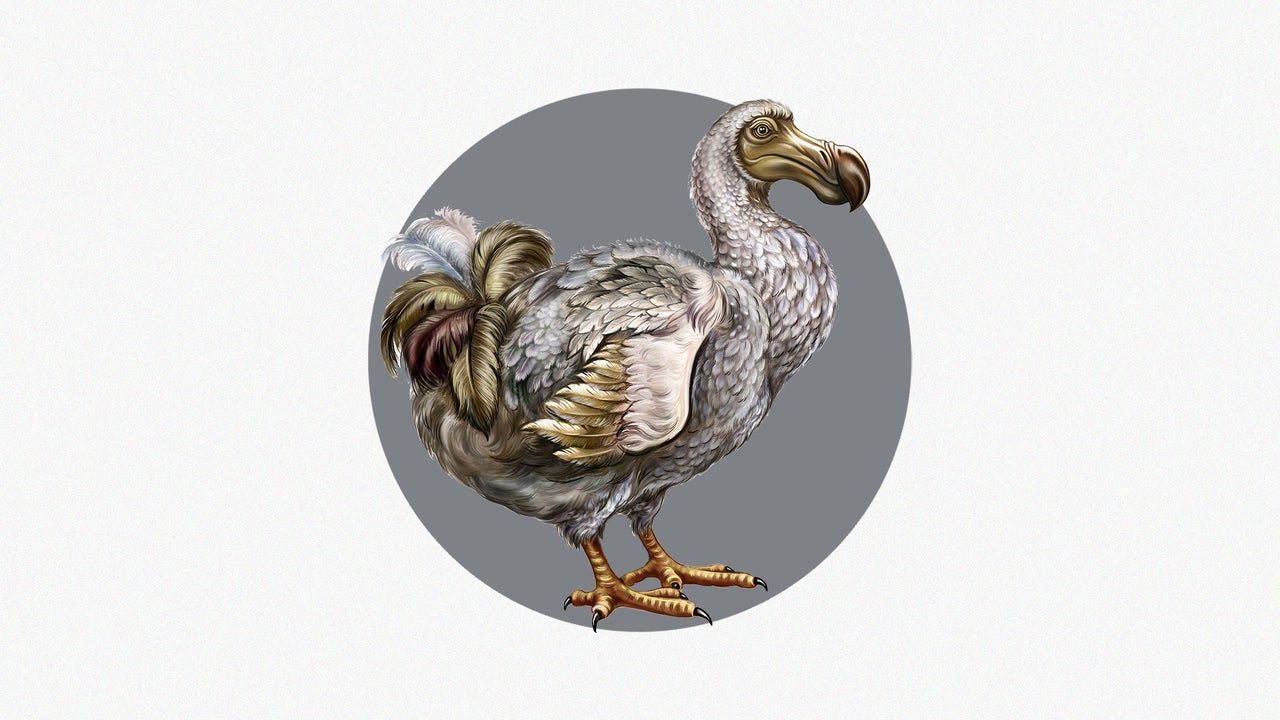
Colossal Biosciences has moved closer to its goal of bringing back the dodo, announcing that a new artificial intelligence tool it built has identified the specific regions of dodo DNA likely responsible for the bird's defining traits. The Dallas-based genetics company said the tool, called GenoMorph, has narrowed the list to roughly 2,300 DNA targets that could guide efforts to engineer a living relative into a functional dodo.
The dodo was a flightless bird endemic to Mauritius, documented by Portuguese sailors in the 16th century and wiped out within decades by hunting and invasive species. Colossal, founded in 2021, has already claimed to resurrect the dire wolf and has announced projects to bring back the woolly mammoth, the thylacine, and the giant moa. Its dodo work, however, faces a unique obstacle: the company has access to only one genomic sample of the bird, far less than the roughly 100 mammoth genomes it can compare for its elephant-relative project.
To work around that limitation, Colossal combined DNA sequence data from a range of living birds with 3D skull scans and developmental gene expression data, feeding all of it into GenoMorph. The machine-learning tool identifies which genes are turned on or off, and when, during the formation of traits such as a beak or feathers. According to chief science officer Beth Shapiro, the system produces a candidate list of genetic regions that could be edited to turn a Nicobar pigeon — a smaller, brightly colored, strong-flying bird with a tiny beak — into something resembling the iconic dodo.
«It's all about this regulatory landscape,» Shapiro said. «Every cell has the same book in it, but which chapters should I be reading if I want to make a dodo beak versus a Nicobar pigeon beak?»
Colossal also said it has for the first time used lipid nanoparticles to perform genomic editing inside an egg, a technical step that matters because birds develop in shells rather than in a surrogate womb. The company's previous work with dire wolves involved conception via surrogate, but a bird must be edited and gestated inside an egg.
The company is careful to describe its goal as a «functional» dodo rather than a perfect replica. Its strategy involves filling in the genetic sequence of a living pigeon relative with selected dodo DNA associated with specific traits. Whether that constitutes actually bringing back the dodo depends on how broadly one defines a species, a debate that has drawn sharp objections from some scientists even as Colossal pursues its other de-extinction projects.
Shapiro counters that species boundaries are often blurrier than the public assumes. «It's a species definition that's based on an arbitrary threshold of sequence similarity,» she said. «But that threshold is arbitrary. It's going to be arbitrary no matter who you are.»
CEO Ben Lamm said the company's use of AI differs from the large language models that dominate current public attention. GenoMorph is trained on a narrow, highly specific dataset — bird genomes, skull shapes, and developmental expression patterns — rather than a broad base of general knowledge. That narrower approach, Lamm suggested, allows the tool to surface genetic candidates that would be impractical for a human to mark manually across billions of DNA letters.
The announcement does not mean a dodo is imminent. Colossal still must translate its candidate list into viable edits, then successfully gestate an edited embryo inside an egg. But the company presents the GenoMorph results as evidence that its AI pipeline can guide de-extinction work even when only a single genome is available, a problem that could apply to other lost species with sparse genetic records.
For now, the dodo remains extinct, and Colossal's project remains a long-term research effort. The company's latest update shows how artificial intelligence is becoming a central tool in the broader debate over what it means to bring a species back — and whether a functional approximation can ever count as the real thing.
3