
Memorandum
- From
- Delaney Sawyer via fox - Most Popular
- Date
- Filed
- News·5 min to read
- Re
Erika Kirk responds to New York Times op-ed on marriage and family, says writer missed the point
ReErika Kirk responds to New York Times op-ed on marriage and family, says writer missed the point
Erika Kirk, widow of Charlie Kirk and head of Turning Point USA, criticized a New York Times newsletter for misrepresenting her views on marriage and children, arguing that the piece viewed family through a materialistic lens.
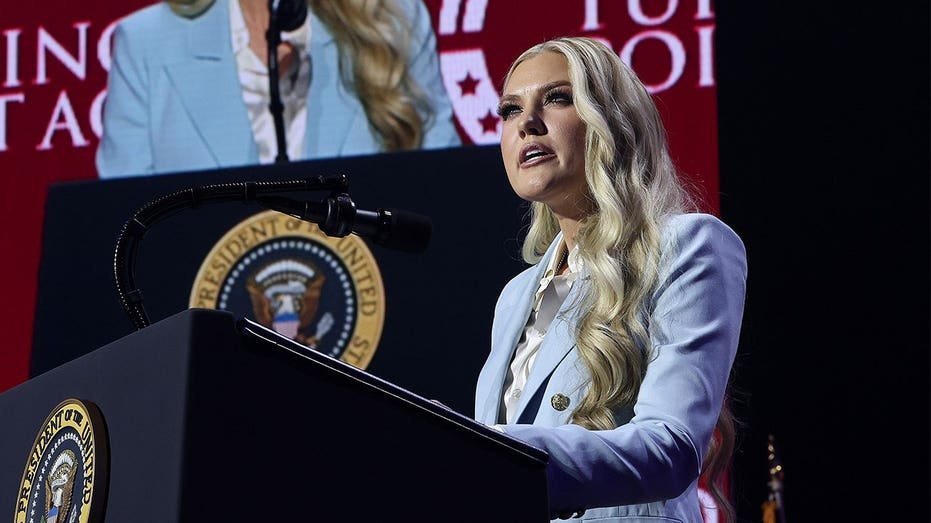
Erika Kirk, the widow of Charlie Kirk and a leader at Turning Point USA, publicly pushed back against a New York Times opinion newsletter on Friday, accusing the author of fundamentally misunderstanding the purpose of marriage and family. In a post on X, Kirk wrote that the piece by opinion writer Jessica Grose “completely misses the point on the purpose of marriage and children and completely misrepresents my views in the process.” She argued that the article was “laced with viewing family through the lens of money and career as if those things bring fulfillment and purpose.”
Kirk’s response came after Grose’s newsletter, titled “The Gap Between the Families We Have and the Ones Conservatives Want,” specifically cited remarks Kirk made during a commencement ceremony at Hillsdale College in May. At that event, Kirk said that if her late husband were alive, he would have encouraged young people to marry early and “have more kids than you can afford.” Grose noted that Kirk’s statement drew backlash amid rising gas and grocery prices, suggesting that such advice was out of touch with economic realities.
In her rebuttal, Kirk emphasized that the author omitted a key part of her Hillsdale speech where she said, “Marry young, not rushed, but young.” She argued that the broader message was about prioritizing family over material concerns. “When you’re on your death bed, your money and your career won’t be whispering in your ear ‘I love you’ as you take your last breath,” Kirk wrote. “The material goods and fortune of this world mean nothing when we go to our eternal resting place.”
Grose’s piece also referenced a 21-year-old married speaker at Turning Point’s Women’s Leadership Summit in June who declared her husband as the head of her household and called feminism a “psyop.” Grose argued that such views do not reflect what most Americans want, writing, “By casting the ideal 21st-century relationship in antiquated terms, conservatives are ignoring the glaring reality of how Americans actually want to live and are living their lives.”
Kirk countered that people should not delay having children. “We serve a God of order and when you live a life ordered there’s a double portion of grace. Meaning marriage first, then kids, and everything else,” she wrote. “Timing matters because life is shorter than you might think, and you never know what could happen. The point is, don’t put it off. Don’t rush it or force it if it’s not right, but don’t put it off.”
Kirk married Charlie Kirk in 2021 at age 32, while he was 27. She said she does not view that age as too old or too young but expressed regret that they did not meet sooner to start their family earlier. She also addressed the financial concerns raised by critics, explaining that encouraging larger families does not mean advocating for irresponsibility. “There is no such thing as perfect timing to have kids. Financial struggles are a part of life, but the problem is a lot of Americans are self-surviving, not self-sacrificing, and they expect to live a very distinct lifestyle based on what they see online,” she said.
Kirk clarified that when Charlie Kirk encouraged young people to “have more kids than you can afford,” he was not promoting reckless childbearing or reliance on welfare. “He was saying children aren’t a luxury item to have once you meet a certain tax bracket threshold. You don’t need a mansion in order to build a family,” she wrote.
Grose’s newsletter drew on historian Stephanie Coontz’s book “For Better and Worse,” which argues that marriage has varied across cultures and eras. Grose concluded that conservatives who want more marriages and children must offer a vision that appeals to a broad majority of Americans. “It makes absolutely no sense to create a definition of marriage that excludes the desires and ideals of a substantial majority of Americans,” she wrote.
The New York Times did not immediately respond to a request for comment on Kirk’s criticism. The exchange highlights an ongoing cultural debate over the role of marriage, family, and economic priorities in contemporary American life.
128