
Memorandum
- From
- Delaney Sawyer via fox - Politics
- Date
- Filed
- News·7 min to read
- Re
Elite US universities face federal funding restrictions over millions from China-linked entities
ReElite US universities face federal funding restrictions over millions from China-linked entities
Dozens of elite American universities received $27.6 million from foreign entities on federal watchlists, including some tied to the Chinese military, in the second half of 2025. The Trump administration is now threatening to restrict federal grant funding unless institutions end these relationships, citing national security concerns.
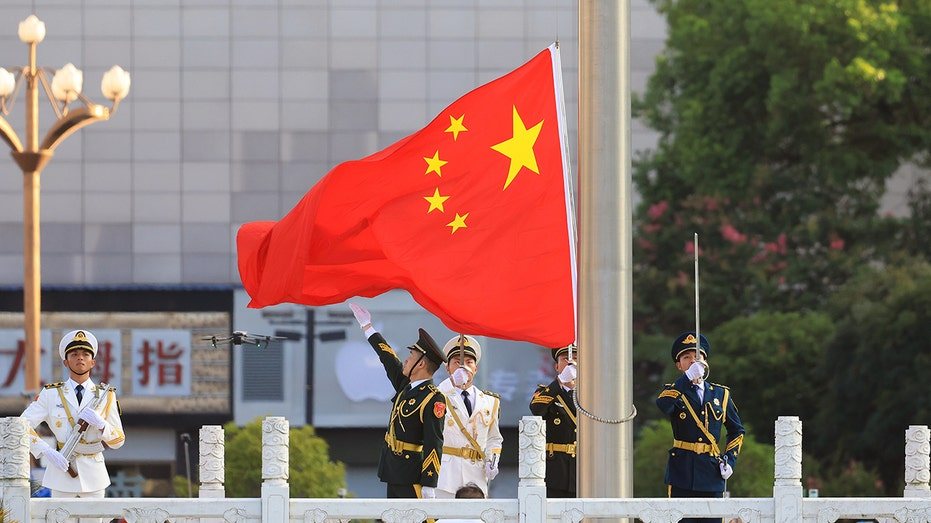
Dozens of elite American universities have accepted millions of dollars from foreign entities on federal watchlists, including some with direct ties to the Chinese military, according to government data. The revelations have prompted the Trump administration to threaten restrictions on federal grant funding for institutions that maintain these relationships, marking a significant escalation in the ongoing debate over foreign influence in U.S. academia.
State and Education Department officials confirmed that universities reported receiving a combined $27.6 million from foreign entities on at least one federal watchlist during the second half of 2025, according to CBS News. The institutions involved include Northwestern University, the University of California, Irvine, the University of Connecticut, Bryant University, and the University of California, Berkeley.
An Education Department spokeswoman told Fox News Digital that American universities have received nearly $405 million from what she described as counterparties of concern, entities that pose a real risk to national security and that of U.S. allies. She added that while previous administrations often looked the other way or kept this data hidden, the Trump administration is now bringing this information into the open through an updated Section 117 Dashboard, equipping the State Department to use the data to protect the nation.
Under Secretary of State for Public Diplomacy Sarah B. Rogers sent letters last week to the boards of the affected universities, urging heightened diligence on the matter. The letters, obtained by CBS News, warn that continued relationships with these entities could result in restricted access to federal grant funding. The letters emphasize the national security implications of the financial ties.
Among the most notable payments, the Aero Engine Corporation of China, which is on the Treasury Department's Foreign Assets Control List due to its relationship with the Chinese military, paid $7.8 million spread across Northwestern University, UC Irvine, and the University of Connecticut over the past several years. The company develops engines for fighter jets and attack helicopters used by China's People's Liberation Army. Documents filed with the Department of Education do not disclose how the funding was used, and previously, records did not even show the specific origin of the funds, only their country of origin.
President Donald Trump issued an executive order in April 2025 directing the Department of Education to collect more information from universities about the sources of their foreign funding. This order has significantly increased transparency around foreign financial flows into American higher education, which experts say has been a long-standing concern.
LJ Eads, founder of Data Abyss and director of research intelligence at Parallax Advanced Research, told CBS News that this has been a conversation going on for years in research security circles. He described the lack of follow-through on restrictions as a huge policy failure, comparing it to giving a teenager a cellphone with no restrictions on its use.
UC Berkeley, a leading research institution in technology areas where the United States and China are direct competitors, has also received funds from Chinese entities on federal watchlists. Among these was a $7.6 million grant from Sun Yat-sen University, which hosts China's National Supercomputing Center. Sun Yat-sen University is on the Pentagon's 1286 List, which enumerates research institutions believed to be engaged in problematic activities.
A spokesman for UC Berkeley told Fox News Digital that the university complies with all statutes and regulations applying to contracts and gifts from foreign sources. The spokesman added that the university is still analyzing and fact-checking the characterization of the government's data and the referenced CBS reporting. He also clarified that CBS's report erroneously claimed that UC Berkeley manages the Department of Energy's primary high-performance computing facility at the Lawrence Berkeley National Laboratory, noting that Berkeley in that context refers to the geographical location, not institutional management.
Bryant University had a $22.6 million contract with the Beijing Institute of Technology to maintain a jointly operated academic program in China. The Beijing Institute of Technology appears on two federal watchlists. A Bryant University spokesman told Fox News Digital that the reporting reflects payments associated with a now-terminated accounting program whose contract was originally established in 2014 with the independent Beijing Institute of Technology, Zhuhai, and terminated ten years later in 2024. The spokesman emphasized that the program was educational instruction only and never included research activities, federally funded research, defense-related work, technology transfer, or intellectual property development. After learning that Beijing Institute of Technology had fully acquired the Zhuhai institution and following its addition to the Department of Defense's 1286 list, Bryant initiated termination of the relationship, stopped enrolling new students, and is completing a teach-out period for existing students in accordance with accreditation requirements.
The situation highlights the complex and often opaque financial relationships between American universities and foreign entities, particularly those linked to the Chinese government and military. The Trump administration's aggressive stance signals a new era of scrutiny and potential consequences for institutions that fail to sever these ties, with billions of dollars in federal research funding potentially at stake.
116