
Memorandum
- From
- Derek Weston via UX Collective
- Date
- Filed
- News·4 min to read
- Re
Apps Turn Life Into Data, Reshaping How Users See Themselves
ReApps Turn Life Into Data, Reshaping How Users See Themselves
A growing reliance on fitness trackers and productivity apps is creating a new kind of self-understanding, where algorithmically defined metrics can override bodily sensations and personal judgment.
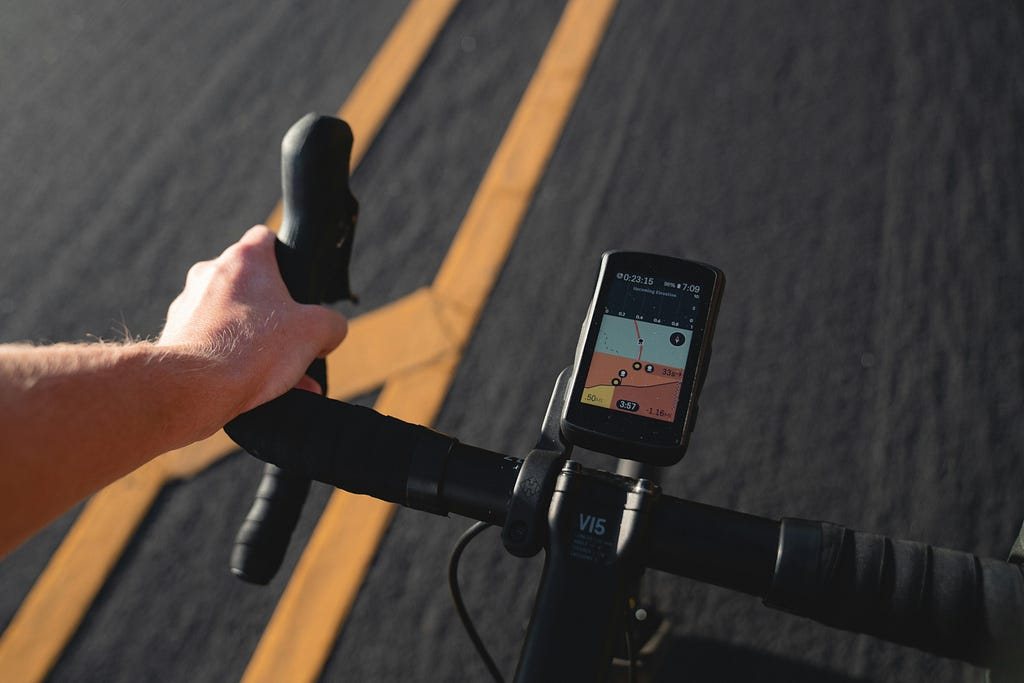
Fitness trackers, productivity dashboards, and habit apps are quietly changing how people understand themselves, turning everyday activities into streams of measurable data that can carry more authority than direct experience. The shift is visible in something as ordinary as a bike ride: a cyclist who once set out with no objective, free to stop for coffee or take a detour, now follows a screen that displays cadence, power, and heart rate, and that flashes red when output falls below a target.
That transformation is the subject of a new analysis that introduces the term «homo metricus» to describe a person who understands and governs themselves primarily through algorithmically defined metrics. The concept captures a broader cultural change in which scores, streaks, and step counts become the lens through which people interpret their own bodies, moods, and achievements.
Sports are hardly the only domain affected. Productivity is tracked in project-management tools, language-learning streaks are maintained at all costs, and a daily goal of 10,000 steps shapes the decisions of millions. The pattern extends to social and family life: when a cyclist returns home, the first question is often how many kilometres were covered; after a football match, it is whether a goal was scored. The answer, frequently, is zero.
The analysis draws a distinction between two ways of experiencing the same activity. An offline cyclist relies on signals from the body and the environment — breathing, leg fatigue, gradient, temperature, wind — and adjusts effort accordingly. A connected cyclist relies on a GPS computer, heart-rate monitor, and power meter, with the screen acting as an authority that can compete with, and sometimes override, physical sensation. A rider may slow down before reaching a biological limit because the device warns of excessive intensity, or may judge a workout as hard because a relative-effort score says so, even when the body suggests otherwise.
The consequence is subtle but significant. The technology platform can come to represent the body more than the body represents itself. Metrics do not merely describe an experience; they begin to define it. A free ride becomes a training session, a set of measurable targets to be improved. Impulsive options — stopping for coffee, visiting a friend, changing route when it rains — do not need to be forbidden. They simply become invisible to the workout structure.
None of this is presented as purely negative. The author notes a genuine appreciation for numbers: knowing distance, average speed, or power output can deepen understanding of a workout, and maps offer a satisfying record of where a ride went. The problem is not data itself but the way data can crowd out other forms of knowledge. One cycling coach, described as a real person rather than an AI agent, sometimes prescribed workouts with the screen turned off — a recognition that good performance depends on understanding one's own body.
The broader implication reaches beyond cycling. As apps collect and reflect more personal information, they shape decisions in domains from exercise and learning to work and spending. The metrics feel objective, but they are designed, selected, and displayed by platforms with their own incentives. Users who want to preserve a sense of agency may need to decide when to look at the screen and when to trust the signals that no app can measure.
8