
Memorandum
- From
- Caroline Mercer via fox - Opinion
- Date
- Filed
- News·6 min to read
- Re
Recent US outages were not an attack but expose serious vulnerabilities
ReRecent US outages were not an attack but expose serious vulnerabilities
A string of technical failures across email, aviation, banking and the NSA network has officials saying they were unrelated and not cyberattacks, but analysts warn that concentrated dependencies and aging infrastructure leave the country exposed to a future deliberate attack.
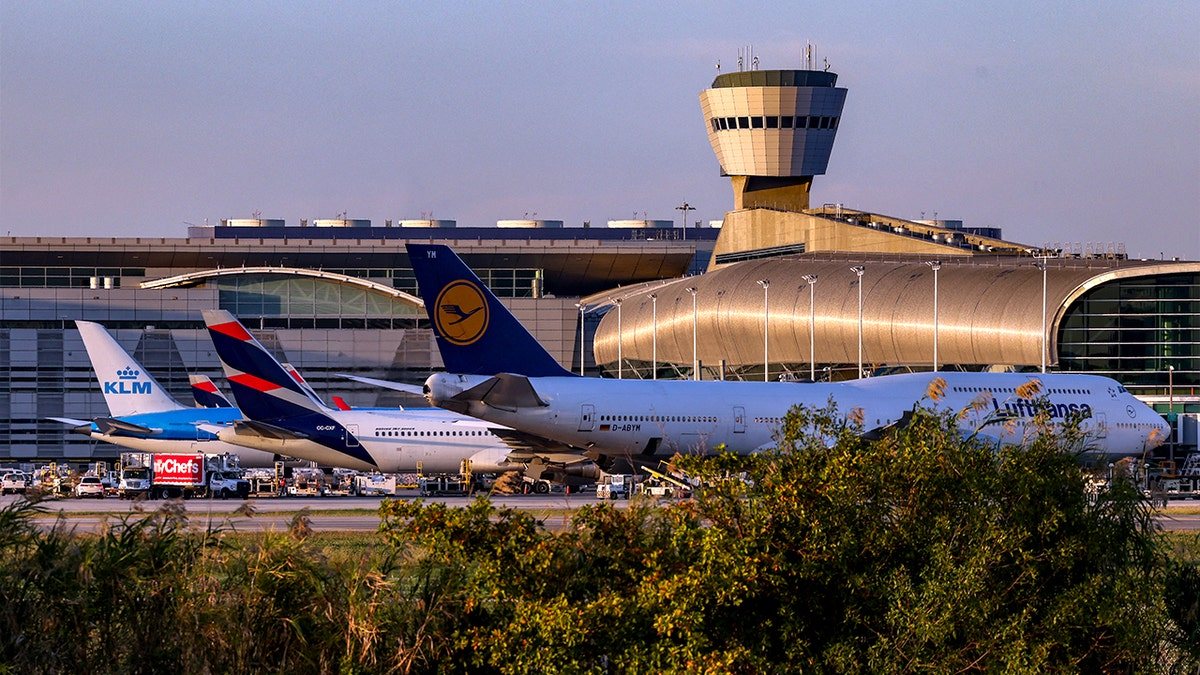
A recent run of outages across major American systems was not the result of coordinated sabotage, according to officials who have examined the incidents, but it has renewed concern about how fragile the country's critical digital and physical infrastructure has become. Homeland Security Secretary Markwayne Mullin has said officials are highly confident the disruptions were unrelated technical problems rather than a cyberattack.
The incidents came in quick succession. Microsoft 365 services, including Outlook, went down worldwide after a latent defect from a July network update surfaced under heavy load. The Federal Aviation Administration then ordered a rare nationwide ground stop after routers at sites in Arkansas and Texas overwhelmed aging air traffic control systems. Chase and other banks reported transaction slowdowns caused by a software bug, United Airlines delayed departures because of an internal system failure, and reports emerged of disruptions to the National Security Agency's classified internal network.
The author of the commentary argues that the common thread is not hostile intent but efficiency taken too far. Heavy reliance on concentrated cloud computing providers and updates that are not fully tested can create single points of failure that reach email, aviation, finance and other sectors at once. Humans, the piece notes, are wired to look for patterns, and events this close together feel ominous even when the evidence points elsewhere.
That does not mean the threat is imaginary. The piece contends that a deliberate attack by a hostile state would look very different, with electricity, water, banking, payments and cell networks failing together rather than in scattered disruptions. Such an attack would most likely accompany or immediately precede military action, such as a Chinese move against Taiwan intended to slow or deter a U.S. response. Iran has been named as the prime suspect in water system attacks over the past few months, and the piece also points to North Korea and criminal networks in Mexico as actors with some capacity to harm critical infrastructure.
The author also describes quieter forms of pressure. Hostile governments probe for weaknesses and may conduct small-scale attacks to test response times. Gray-zone operations can impose economic and psychological costs and divert defensive resources without crossing into open war. The piece cites recent attacks on industrial food freezers and blood banks in Europe and on U.S. military bases as examples, with Russia named as a likely culprit.
China, the piece argues, has already laid groundwork. Volt Typhoon, assessed as linked to the People's Liberation Army, has reportedly pre-positioned access inside U.S. energy, water, transportation and communications systems with the aim of enabling disruption in a crisis. Salt Typhoon, tied to China's Ministry of State Security, has focused on intelligence collection by penetrating telecommunications networks. The piece also refers to a kill switch found in a high-voltage transformer imported from China, discovered during the first Trump administration.
The piece also points to the Mexican government under President Claudia Sheinbaum, which it says increasingly frames relations with the United States as a struggle against foreign interference, particularly around U.S. efforts to arrest drug traffickers or destroy production facilities on Mexican soil. Citing Ammon Blair, a senior fellow at the Texas Public Policy Foundation, the piece says Mexico's military has acquired roughly 2,400 short-range intelligence, surveillance, reconnaissance and attack drones while building domestic manufacturing capacity. Officials have signaled interest in longer-range systems, which the author says would put U.S. infrastructure such as the electric grid and refineries at risk.
Responses are underway at several levels. The Department of War is beginning to learn to use counter-drone technology along the 1,954-mile border with Mexico, state governments are assessing their vulnerabilities in case of a conflict across the Pacific, and industry is working to reshore critical manufacturing. One focus is the high-voltage transformers that move electricity from power plants to homes, factories and data centers. These units are mostly imported, often from China, with lead times of two to four years, and roughly 70 percent of existing American units are more than 25 years old while demand from data centers, electric vehicles and industrial growth rises.
Startups are trying to close that gap. Resolute Grid, based in Austin, Texas, is building large transformers domestically, with engineers who have worked at Tesla and SpaceX. The firm's chief executive, Marcus Owenby, said, « Resilience isn't just keeping the lights on. It's how fast you can replace what breaks. » The piece's broader warning is that power, water, fuel, communications and finance depend on one another, so the failure of one can cascade through all of them.
42

Source: The outages America has suffered weren't an attack, but the next failure could be