Memorandum
- From
- Connor Quincy via FOX News
- Date
- Filed
- News·5 min to read
- Re
America Is Winning Its Battle With Iran, Analysts Say
ReAmerica Is Winning Its Battle With Iran, Analysts Say
The United States is gaining the upper hand in its conflict with Iran, with significant damage to Iran's military and economy, though the conflict could extend for months or years.
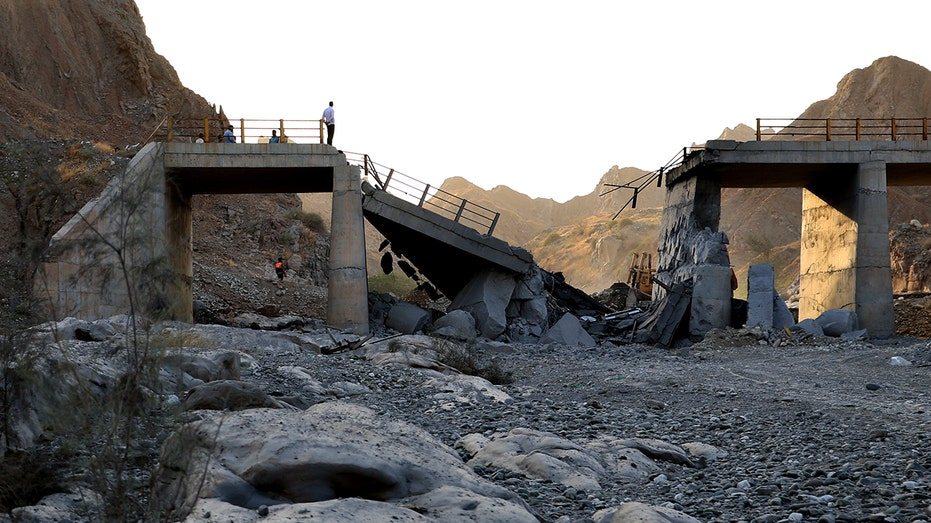
The United States is winning its ongoing battle with Iran, according to a detailed analysis of the conflict's progress, with Iran's conventional military shattered, its economy in ruins, and its nuclear program set back by years. Since combat began nearly five months ago, the U.S. has lost 17 or 18 service members, with more than 420 wounded, while Iran has suffered thousands of military deaths and hundreds of billions of dollars in infrastructure damage.
Iran's missile and drone forces have been significantly depleted, and its ability to threaten shipping in the Strait of Hormuz has been curtailed, though it retains some ordnance. The U.S. Navy's blockade of Iranian shipping has been completely effective, cutting off the country's primary revenue stream from oil sales via the oceans. This has driven the Iranian economy into a deep crisis, with the exchange rate of Iranian rials for U.S. dollars approaching 2 million to one.
The conflict has also restored deterrence in the region. Iran has avoided striking Israel during the most recent 10 days of combat, fearing a response from the Israeli Defense Forces. The Iranian Revolutionary Guard is now afraid to target the Jewish state, and analysts argue it must be made equally afraid to attack Americans, Arab neighbors, or international shipping. The rump regime in Iran appears to be a military dictatorship led by Ahmad Vahidi, the 68-year-old commander-in-chief of the Iranian Revolutionary Guard Corps, who came out of retirement after opening strikes killed scores of leading officials.
The toll on Iran's infrastructure is massive, exponentially larger than the damage it has inflicted on its neighbors. Iran's nuclear program has been obliterated, and its ability to develop a nuclear weapon has been pushed back from weeks to years, even if oil exports resume. The deep tunnels and caverns of Pickaxe Mountain remain a mystery to the U.S., but the IRGC's capacity to break out to a nuclear weapon has been crushed. The conflict could extend for months or even years as the blockade drives the Iranian economy deeper into a hole from which it will take decades to recover.
The cost of oil hovers above $80 a barrel worldwide, 30% higher than when the battle began but significantly lower than the $126 a barrel peak reached in April. Workarounds via pipelines and alternative shipping routes through the Strait near Oman have prevented oil prices from skyrocketing, and global production has stepped up in response to the off-and-on closure of the Strait of Hormuz. Whether President Donald Trump decides to escalate strikes on Iran to include power plants and bridges that serve dual military and civilian uses remains to be seen.
Every lethal attack on Americans elicits extraordinary punishment from the United States, extracting a price after each deadly blow delivered by Iran. While this may be an unrealistic goal given the martyrdom ideology of the theocracy, there are historical precedents for Iranian leaders accepting defeat. Ayatollah Khomeini drank from the cup of poison in 1988, accepting what was essentially a defeat in the Iran-Iraq War. Vahidi, a veteran of that war, may follow the original supreme leader's example.
Iran's president, Masoud Pezeshkian, and its foreign minister, Seyed Abbas Araghchi, have almost no power over the dictator and his military forces, but they have hinted at the reality of a shattered country. The crushed proxy armies in Gaza and Lebanon should also weigh on Vahidi's calculations. Iran can have a ceasefire in hours if it stops firing on shipping and agrees to comprehensive inspections by the International Atomic Energy Agency of its known nuclear weapons development sites, including Pickaxe Mountain. The fact that Israel has not been targeted in the past 10 days suggests that Vahidi has grasped the reality of his situation and has been deterred from ordering further strikes.
92