
Memorandum
- From
- Connor Quincy via World News
- Date
- Filed
- Economy·4 min to read
- Re
Russian Central Bank Slashes GDP Growth Forecast to Zero, Warns of Faster Inflation
ReRussian Central Bank Slashes GDP Growth Forecast to Zero, Warns of Faster Inflation
The Bank of Russia has revised its 2025 GDP growth forecast down to zero and expects inflation to accelerate further, reflecting mounting economic pressures from sanctions, labor shortages, and high government spending.
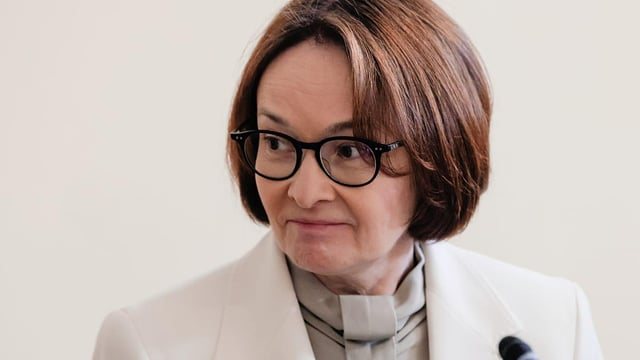
The Bank of Russia has sharply reduced its forecast for the country's economic growth this year, now projecting zero gross domestic product expansion, while simultaneously warning that inflation will accelerate more quickly than previously anticipated. The downgrade underscores the deepening structural challenges facing the Russian economy, including the cumulative effects of Western sanctions, chronic labor shortages, and elevated state spending tied to the war in Ukraine.
In its latest macroeconomic outlook, the central bank slashed its GDP growth estimate from an already modest 0.5–1.0 percent to zero for 2025. At the same time, it raised its inflation forecast, predicting that consumer price growth will exceed earlier projections. The revision follows a period of persistent price increases that have eroded household purchasing power and complicated the central bank's efforts to keep inflation within its target range.
The Russian economy has so far proven more resilient than many Western analysts expected in the first year of the war, supported by large fiscal injections and a partial reorientation of trade toward Asia. However, by late 2023 and into 2024, the strain began to show. The central bank had already been raising its key interest rate aggressively — reaching 21 percent in late 2024 — to cool demand and stem inflation. Yet price pressures have remained stubbornly high, fueled by labor shortages as hundreds of thousands of men have been called up for military service or fled the country, and by robust government spending on defense and social payments.
Inflation is now expected to run well above the central bank's 4 percent target, with some analysts predicting year-end rates above 8–9 percent. Faster inflation hurts Russian households hardest, as real wages and savings are eroded, while businesses face higher borrowing costs and uncertainty about future demand. The zero-growth forecast also signals that the economy may be entering a period of stagnation, with limited capacity to expand production due to sanctions that restrict access to technology and foreign capital.
The central bank's next monetary policy meeting is expected to keep rates high or possibly raise them further if inflationary expectations do not moderate. Governor Elvira Nabiullina has repeatedly emphasized the need to bring inflation under control, even at the cost of slower growth. The revised forecast adds pressure on the Kremlin, which has relied on patriotic narratives of economic resilience to maintain public support. With elections in the background and the war continuing, the trade-off between fighting inflation and financing military expenditure is becoming increasingly acute.
For ordinary Russians, the combination of stagnant output and rising prices means a decline in living standards. The central bank's announcement is likely to reinforce cautious behavior among consumers and investors, further dampening economic activity. International observers will watch for any signal that Russia is preparing to ease monetary policy, but for now the central bank appears determined to prioritize price stability over growth.
78