
Memorandum
- From
- Connor Quincy via fox - Opinion
- Date
- Filed
- Economy·5 min to read
- Re
Michigan Democrats choose Senate nominee in pivotal primary
ReMichigan Democrats choose Senate nominee in pivotal primary
Michigan Democrats choose between Rep. Haley Stevens and progressive Abdul El-Sayed in a Senate primary that could determine control of the chamber and shape the party's future. The winner faces Republican Mike Rogers in November.
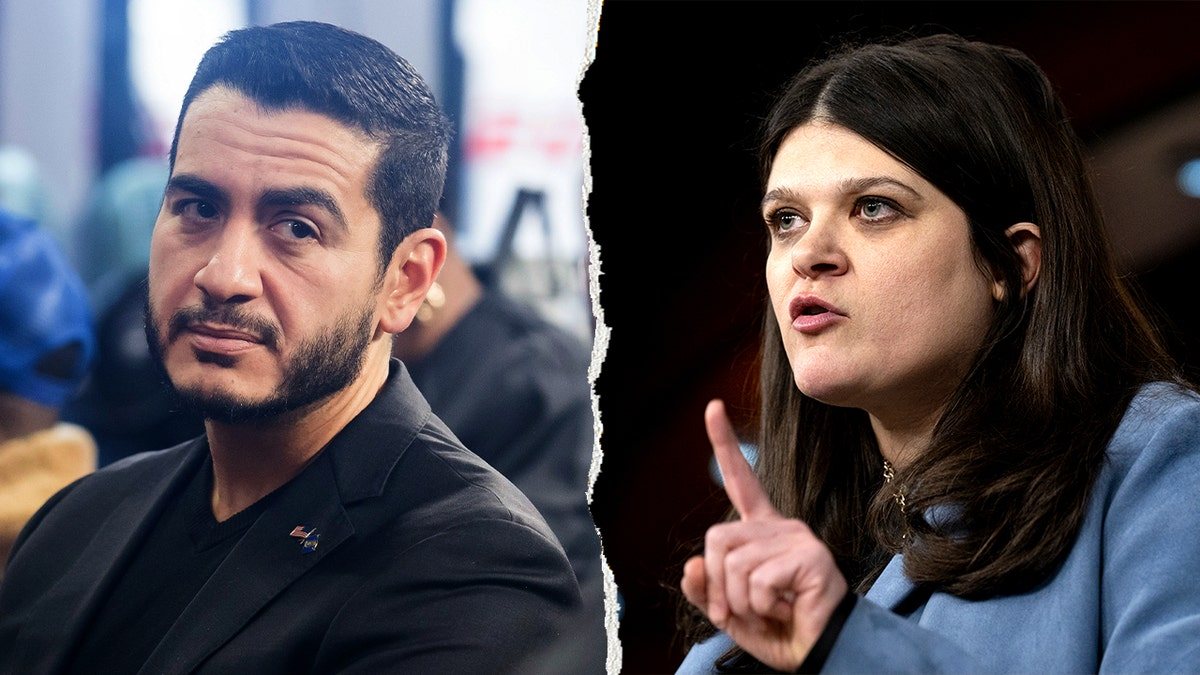
Michigan Democrats are choosing their nominee for the U.S. Senate in a primary that has already become the most expensive Democratic Senate primary in history and a proxy fight for the direction of the party. Voters are deciding between Rep. Haley Stevens, an establishment-backed congresswoman, and Abdul El-Sayed, a progressive who has rallied the party's left wing. The winner will face former Republican Rep. Mike Rogers in November for the seat being vacated by retiring Sen. Gary Peters.
The contest effectively narrowed to Stevens and El-Sayed after Mallory McMorrow suspended her campaign, though her name remains on the ballot. Stevens has represented Michigan's 11th Congressional District since 2019 and is running on her record of helping rescue the auto industry during the Great Recession. El-Sayed, who is campaigning as an outsider, supports abolishing ICE, eliminating oil and gas production, banning school choice, blocking arms shipments to Israel, sharply raising taxes, making four-year college tuition-free and creating a wealth tax. He also supports Medicare for All.
The stakes reach far beyond the primary itself. With control of the Senate hanging in the balance in November, the race could determine whether Democrats win control of the chamber and gain the power to block President Donald Trump's legislative agenda. Trump has endorsed Rogers, a veteran and seven-term congressman who lost a narrow 2024 Senate bid to Democrat Elissa Slotkin by half a percentage point. Michigan is one of the country's most closely watched swing states: Trump won it in 2016, lost it to Joe Biden in 2020 and carried it again in 2024.
Polls suggest the party's choice will matter in the fall. RealClearPolling averages show Stevens leading Rogers in a potential November matchup, while El-Sayed trails him by a narrow margin. That is one reason Stevens has attracted support from Michigan Gov. Gretchen Whitmer, Senate Democratic leader Chuck Schumer and Peters. El-Sayed, by contrast, is backed by Sen. Bernie Sanders of Vermont and Reps. Ilhan Omar of Minnesota and Alexandria Ocasio-Cortez of New York.
Outside spending has intensified the contest. The pro-Israel group AIPAC and affiliated organizations have poured about $30 million into the race to support Stevens and oppose El-Sayed, whose position on Israel has drawn concern from some Jewish voters and pro-Israel donors. Some Jewish Michigan Democrats have said they would vote Republican in the fall if El-Sayed becomes the nominee.
Michigan's open primaries have fueled speculation that some Republicans might cross over to vote for El-Sayed, calculating that he would be easier to defeat in November. So far, there is no evidence that such crossover voting is taking place.
Labor has taken an unusual position in the race. The United Auto Workers endorsed El-Sayed even though Stevens has deep ties to the industry: she served as chief of staff for the Presidential Task Force on the Auto Industry, the federal initiative credited with helping save General Motors and Chrysler and more than 200,000 Michigan jobs during the financial crisis. She also helped build the Office of Recovery for Automotive Communities and Workers in the Obama White House. El-Sayed has no comparable auto industry ties. The UAW, which has expanded to include more than 100,000 higher education workers, has recently endorsed other left-leaning candidates in Democratic primaries.
El-Sayed has not declared himself a member of the Democratic Socialists of America, but his platform aligns closely with the positions of DSA-backed candidates. Much of his funding has come from family: his father-in-law, a nephrologist at a Detroit hospital, donated $300,000 to an independent super PAC supporting his candidacy. El-Sayed has also campaigned with Hasan Piker, an online streamer who once said that the United States deserved the September 11 attacks.
The outcome of the primary will be read as a measure of the progressive movement's strength in a Midwestern battleground state. A loss by El-Sayed in November would likely reduce the left's influence in the 2028 Democratic presidential nominating contest, while a victory could give the movement new momentum. Either way, the Michigan race is expected to shape both the Senate map and the internal balance of the Democratic Party for years to come.