Memorandum
- From
- Delaney Sawyer via FOX News
- Date
- Filed
- Economy·5 min to read
- Re
Iran’s ability to weaponize Strait of Hormuz weakens as global oil supply shifts
ReIran’s ability to weaponize Strait of Hormuz weakens as global oil supply shifts
Iran’s recent attacks on commercial shipping in the Strait of Hormuz sent oil prices higher, but growing global production, alternative export routes, and new shipping patterns suggest Tehran’s leverage over Washington via the strategic waterway is diminishing, according to experts and U.S. government forecasts.
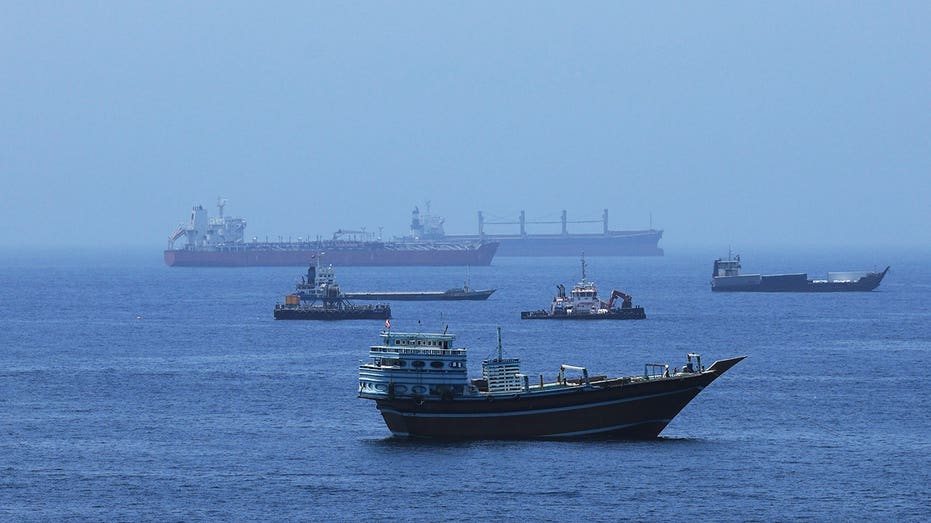
Iran’s latest attacks on commercial shipping in the Strait of Hormuz have driven oil prices higher in recent days, underscoring Tehran’s continued ability to rattle global energy markets. However, a combination of rising global oil production, alternative export routes, and shifting shipping patterns indicates that Iran’s capacity to use the strategic waterway as economic leverage over the United States may be steadily eroding, according to energy analysts and U.S. government forecasts.
The renewed attacks came as President Donald Trump declared the U.S.–Iran memorandum of understanding and ceasefire «over,» warning that his administration could reimpose a naval blockade on Iran if the assaults on commercial vessels persist. Vice President JD Vance had previously linked global oil supplies to negotiations with Iran, stating in a late June interview that the administration aimed to use the agreement to «refill the world’s oil economy» and strengthen its negotiating position.
The U.S. Energy Information Administration (EIA) recently forecast that worldwide crude production and trade flows will rebound to near pre-conflict levels by the end of the year, with most previously shut-in production returning during the first quarter of 2027. The agency expects increased global output to lower crude oil and gasoline prices in the months ahead, despite continued instability in the Gulf region. This forecast aligns with OPEC+’s ongoing production increases, the restoration of output by Gulf producers, and growing reliance on infrastructure that allows crude to bypass the Strait of Hormuz entirely.
These developments do not eliminate Iran’s ability to influence markets, but they could make it more difficult for Tehran to use oil prices as a tool to pressure Washington into negotiating on its terms. The conflict has accelerated a shift that was already underway: Gulf producers increasingly depend on infrastructure built over the past decade to move crude without relying entirely on the Strait of Hormuz. Saudi Arabia can divert exports through its East-West Pipeline to the Red Sea, while the United Arab Emirates has expanded export capacity through Fujairah on the Gulf of Oman, allowing millions of barrels of crude to bypass the narrow waterway.
Commercial shipping has also adapted. More vessels have shifted toward a southern corridor hugging Oman’s coastline, putting additional distance between commercial traffic and Iran’s coastline while enabling exports to continue despite repeated attacks. Retired Navy Rear Adm. Mark Montgomery said these changes strike at the heart of Iran’s strategy, noting that «the southern route creates a route they can’t toll or control.»
Iran’s objective, however, has never necessarily been to shut down the strait altogether. Former Fifth Fleet commander Vice Adm. Kevin Donegan explained that the Islamic Revolutionary Guard Corps (IRGC) has been trying to make commercial shipping «commercially unworkable.» He described the attacks on shipping as strategic rather than random, aimed at raising the cost and risk of commercial shipping to deter insurers and shipping companies from returning to normal operations.
Even Iran appears unwilling to completely disrupt the flow of oil. Maritime tracking firm reported that three Iranian crude tankers were loaded at Kharg Island, highlighting Tehran’s own dependence on oil sales even as it continues to disrupt commercial shipping elsewhere in the Gulf. Markets reflected both realities: oil prices climbed after Iran’s latest attacks renewed fears of broader conflict, but the EIA’s outlook suggests traders also expect additional supply to continue reaching global markets unless the fighting escalates into a sustained disruption.
Iran has proven it can still rattle global oil markets, but the bigger question now is whether rising production, alternative shipping routes, and sustained U.S. military pressure have shortened the duration of those price spikes, potentially denying Iran one of its most effective tools for influencing negotiations with Washington. The evolving dynamics in the Gulf highlight a broader shift in the global energy landscape that could reshape the strategic calculus for both Tehran and the Trump administration in the months ahead.
137