Memorandum
- From
- Caroline Mercer
- Date
- Filed
- Economy·4 min to read
- Re
How Finland Is Splitting the Cost of New Power Capacity With Ukraine
ReHow Finland Is Splitting the Cost of New Power Capacity With Ukraine
Finland will provide about €28.5 million toward a €46.5 million power-technology project, leaving Ukraine to fund the rest in a model that links aid, investment and energy resilience.
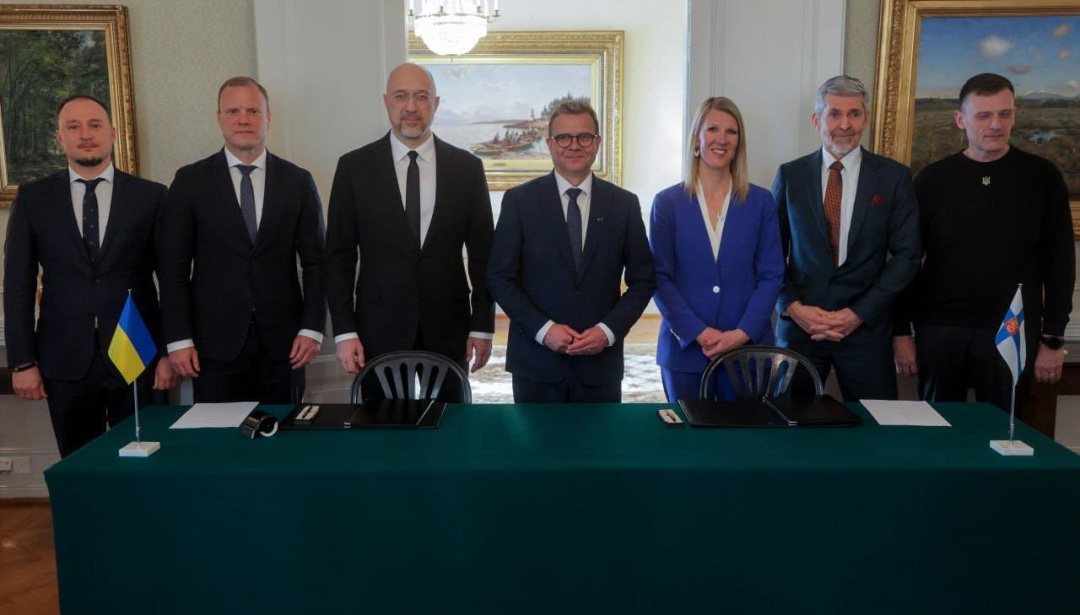
A €46.5 million power-technology project for Ukraine is being financed through a deliberately shared structure. Finland is providing about €28.5 million from development-cooperation funds, while Ukraine will pay the remaining cost. The arrangement offers a compact example of how reconstruction finance is evolving from simple aid transfers into blended investment.
The arithmetic leaves roughly €18 million on the Ukrainian side. That is a substantial contribution, not a symbolic co-payment. It means Finnish public funding reduces the capital burden by about three-fifths while Ukraine retains direct financial responsibility for nearly two-fifths of the technology cost.
Why does that matter? Ukraine’s energy problem is not just about replacing equipment destroyed by Russian strikes. The country is also trying to redesign parts of the system so that future attacks are less disruptive. Distributed generation—smaller power units placed across multiple locations—can support local demand and critical infrastructure even when larger plants or transmission lines are damaged.
Finland has made energy security an explicit part of its development relationship with Ukraine. Its bilateral cooperation budget for 2024–2028 is at least €320 million and also covers education, rule-of-law work, civil defense, climate resilience and economic development. Within that broader plan, the Finland–Ukraine Investment Facility was designed to fund public-sector projects worth up to €50 million in 2025–2026.
The facility is important because it connects financing with Finnish technology and expertise. This is development policy, but it also creates a procurement route for industrial solutions. The result is a model in which Ukraine receives lower-cost access to infrastructure while Finnish suppliers can participate in projects that would otherwise carry unusually high wartime risk.
The power sector already shows how the pieces connect. In May, state-owned Ukrnafta signed a framework agreement with Wärtsilä for equipment used in distributed generation. The program is planned in stages with the Finnish-Ukrainian investment mechanism. An €80 million EBRD loan had already been secured for the first stage, and procurement is being conducted under the bank’s procedures.
In June, Ukraine’s government separately said nearly 939 million hryvnias would be directed through Finnish-Ukrainian cooperation to gas-engine generation in the Ivano-Frankivsk and Lviv regions. The projects were described as having up to 60 megawatts of combined capacity. They provide a tangible reference point for what “distributed generation” means outside a policy document: actual plants in different regions, built to produce closer to demand.
The financing stack is therefore the story. National development funds reduce the cost, Ukrainian money signals ownership, a multilateral bank supplies credit, and an industrial supplier provides technology. None of those components is sufficient alone.
The remaining uncertainty is timing. Ukraine’s energy system gains resilience only when the equipment is installed and operating. Procurement, logistics, construction and grid connection will determine whether the new capacity arrives before another period of intense demand or attack. The next meaningful milestone will not be another funding announcement, but megawatts entering service.
62

Source: Європейська правда