Memorandum
- From
- Delaney Sawyer via FOX News
- Date
- Filed
- Economy·5 min to read
- Re
Data Center Bans Pose Risk to US Economy and National Security, Report Argues
ReData Center Bans Pose Risk to US Economy and National Security, Report Argues
Growing local moratoriums on data center construction could threaten billions in economic output and weaken America's competitive edge in artificial intelligence against China, according to a new analysis.
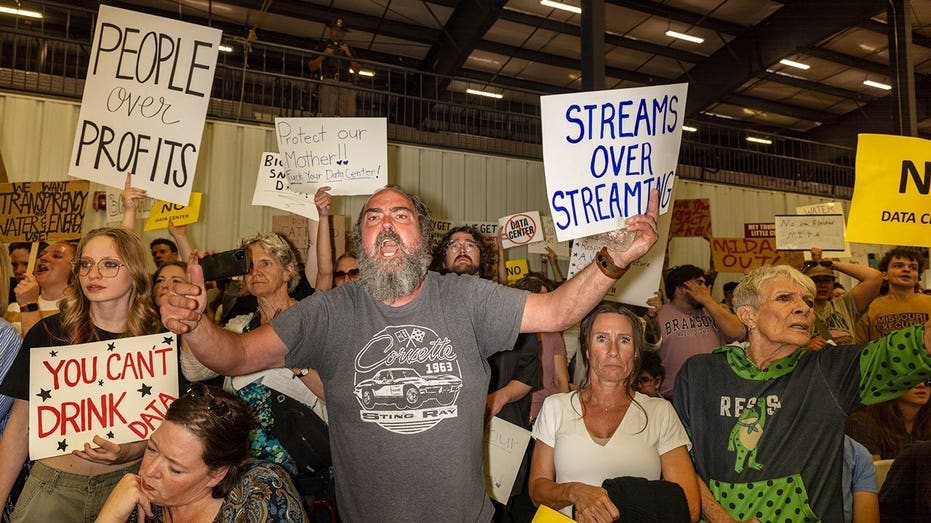
Opposition to new data center construction has emerged as a major policy debate across the United States, with proponents of the industry warning that restrictions on these facilities could undermine both the nation's economic growth and its national security. According to recent analyses, local moratoriums and proposed bans on data centers are spreading rapidly, potentially jeopardizing billions of dollars in economic output and weakening America's competitive position against China in the field of artificial intelligence.
Data centers are the physical infrastructure that powers cloud computing, artificial intelligence, and digital services. As AI adoption accelerates, demand for data center capacity has surged. However, concerns over energy consumption, noise, and environmental impact have led to a growing backlash. The analysis reports that 78 local jurisdictions across the U.S. have imposed temporary moratoriums or bans on new data centers. While New York is currently the only state to enact a statewide moratorium on new construction, 14 other states — including Florida, Oklahoma, and Georgia — are considering similar measures. If these temporary bans become permanent, critics argue, the primary beneficiary would be China, which is racing to dominate AI technology.
The economic stakes are substantial. In Georgia alone, a ban on data centers could affect 552,000 jobs and $850 million in tax revenue, according to figures cited in the report. Proponents of data center expansion contend that far from being a drain on public finances, these facilities generate significant tax revenue and stimulate local economies. AI-driven productivity gains are projected to add trillions of dollars to the U.S. economy, boosting annual GDP growth by an additional 1.5% to 3.7%. These benefits extend beyond large technology companies; small businesses and startups also stand to gain from the productivity enhancements that AI enables.
National security considerations add another layer of urgency. The United States and China together control about 90% of global AI compute capacity, with the U.S. holding a 75% share compared to China's 15%. While China has focused on industrial and military applications of AI, the U.S. still leads in generative AI and innovation. However, this advantage depends on adequate energy and infrastructure to support data centers. Without sufficient capacity, the U.S. risks falling behind in developing AI tools for military use, including autonomous systems, cyber threat detection, intelligence analysis, and logistics optimization. The war in Ukraine has demonstrated the battlefield utility of AI, and analysts warn that restricting data centers could hamper the modernization of America's defense industrial base.
The debate reflects deeper tensions between local environmental concerns and national strategic priorities. Opponents of data centers cite high electricity consumption and strain on local resources, while supporters argue that these facilities are critical infrastructure for the digital economy and national defense. The analysis calls for a balanced approach, urging policymakers to consider the long-term implications of restricting data center development. As the AI race intensifies, decisions made now about data center policy could have lasting consequences for economic prosperity and national security.
In summary, the movement against data centers has grown from isolated local disputes to a nationwide policy issue with significant economic and geopolitical implications. Whether temporary moratoriums evolve into permanent bans will depend on how communities and lawmakers weigh immediate local impacts against broader national interests. The outcome is likely to shape America's ability to compete in AI and maintain its technological edge for years to come.
88