
Memorandum
- From
- Caroline Mercer
- Date
- Filed
- Culture·4 min to read
- Re
What Susan Sarandon Said in Venice About Politics and Work
ReWhat Susan Sarandon Said in Venice About Politics and Work
Sarandon says her support for Palestinians still costs her roles. The documented record includes her 2023 split with UTA, while The Echo Chamber places her back in a major festival competition.
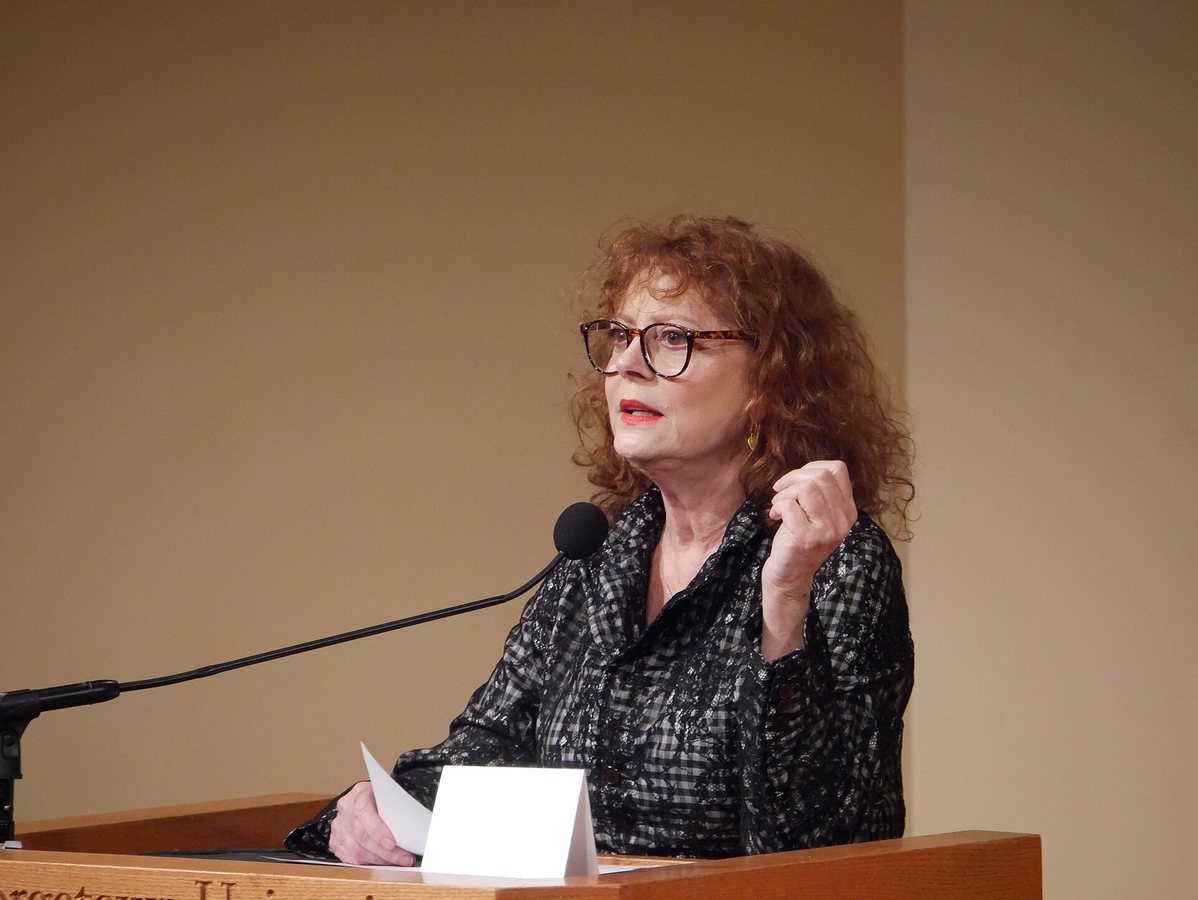
Susan Sarandon’s appearance at the Venice Film Festival brought together three separate facts that are easy to blur: what the actor says is happening to her career now, what is publicly documented from 2023, and what her new film represents professionally.
First, the current claim. Sarandon told reporters in Venice on September 6 that she has recently lost movie roles because of her outspoken support for Palestinians. She said some agencies are still telling people not to hire her. The claim matters because it comes from a performer with a long Hollywood career, but the private casting decisions she described have not been independently demonstrated as a coordinated blacklist.
Second, there is a documented earlier consequence. In November 2023, UTA stopped representing Sarandon after comments she made at a pro-Palestinian rally. Sarandon later apologized for the wording, calling it a serious mistake and explaining that it had failed to recognize the history of antisemitism and persecution faced by Jewish people. She did not, however, withdraw her broader support for Palestinians.
Third, Sarandon is not in Venice simply to discuss politics. She is promoting The Echo Chamber, directed by Andrea Pallaoro and selected for the main competition of the 83rd Venice Film Festival. The cast includes Luca Marinelli and Alicia Vikander. The screenplay credits Bernardo Bertolucci, Ilaria Bernardini and Ludovica Rampoldi, with the film developing from Bertolucci’s final screenplay project.
Sarandon plays Ava, an established singer trying to return to music. In the context of her Venice comments, the casting is unusually resonant. Sarandon said she feels welcome internationally and thanked Pallaoro for giving her the role. The film is scheduled to open in Italy on September 10 and remains eligible for the Golden Lion, to be awarded September 12.
The distinction between these points is important. The UTA split is a verifiable past event. Sarandon’s assertion that roles are still being removed because of her activism is a present-tense account of private industry behavior. The Echo Chamber is the visible counterpoint: whatever resistance she says she faces, she has a substantial role in an international production playing at one of cinema’s most prominent festivals.
There is also a broader industry pattern behind the story, though it should not be overstated. Actors today move between American studios, independent productions and international co-productions more easily than in earlier eras. A setback in one part of the business does not necessarily end a career, while a festival role does not prove that commercial barriers have vanished. Sarandon’s own experience now appears to contain both dynamics at once.
For viewers, the most immediate next development is the film itself. The Echo Chamber will be judged on screen, not only through the controversy surrounding one cast member. Its Venice run and Italian release will show whether the project builds momentum beyond the festival.
For Sarandon, the longer-term question remains open. If more roles follow, Venice may look like a bridge back to sustained work. If they do not, her allegation about political consequences will continue to hang over future casting decisions that are usually made far from public view.
62

Source: Reuters via The Guardian