Memorandum
- From
- Caroline Mercer via Fortune | FORTUNE
- Date
- Filed
- Society·5 min to read
- Re
University President Urges Colleges to Let Students Change Majors as AI Reshapes Careers
ReUniversity President Urges Colleges to Let Students Change Majors as AI Reshapes Careers
Ohio Wesleyan University President Matt vandenBerg argues that the traditional push for 17-year-olds to pick a major early is a costly mistake, especially as AI disrupts the job market. He outlines reforms that let students explore before declaring and invest in liberal arts skills.
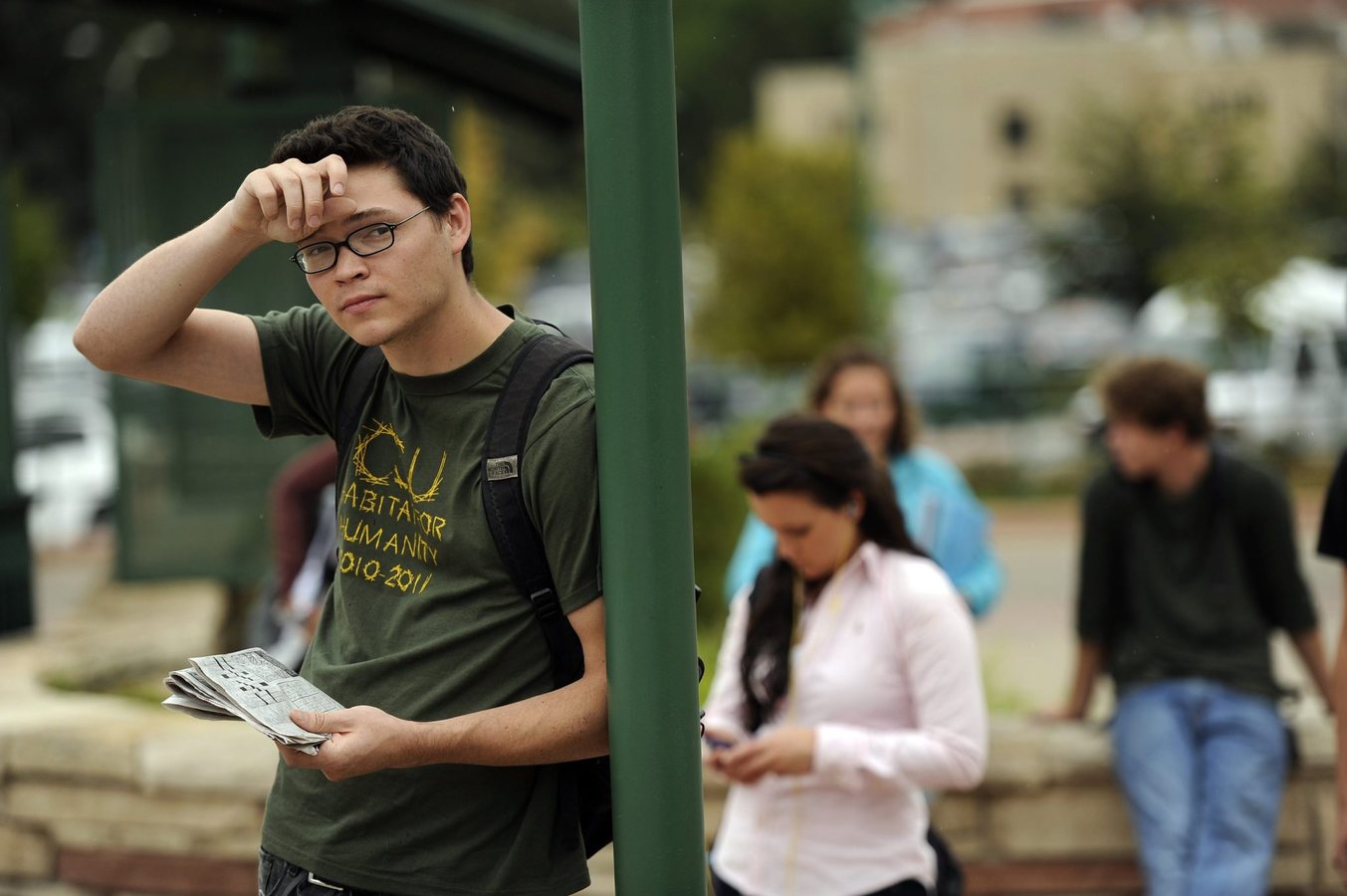
Ohio Wesleyan University President Matt vandenBerg is calling on higher education to stop forcing 17-year-olds to commit to a major before they have had a chance to discover what they want to do, arguing that the rise of artificial intelligence makes early specialization riskier than ever.
In a commentary published by Fortune, vandenBerg described the current system as a costly guess in which students pick a field and a college, then spend four years and tens of thousands of dollars on a hypothesis they are discouraged from changing. He said the industry penalizes students for doing what is developmentally expected: figuring out who they are during their college years.
He pointed to a meta-analysis of 66 longitudinal studies tracking vocational interests from age 12 to 40, which found that interests remain stable through most of adolescence and then rise sharply between ages 18 and 22. Federal data show about 30% of undergraduates switch majors within three years, while broader estimates put the lifetime figure closer to 80%. Those students, he wrote, make up an exploratory majority that most of higher education treats as a problem to fix.
The stakes are rising as AI reshapes the labor market. Research released in April by Lumina Foundation and Gallup found that 47% of enrolled college students said they had seriously considered changing their major because of AI’s potential effect on jobs, and 16% had already done so. VandenBerg argued that highly specific domain expertise, long sold as the path to employment, is exactly what machines can now replicate at scale.
Instead, he said employers are looking for people who can ask good questions, read a room, weigh competing considerations, apply context to hard decisions, and write persuasively without leaning on a large language model. Those human skills, he added, are disproportionately built through the arts, humanities, and social sciences, fields many institutions have been shrinking.
At Ohio Wesleyan, vandenBerg said the university is rebuilding around the exploratory majority. Students cannot declare a major until their sophomore year, and general education requirements are organized around competencies that carry into any profession, including quantitative reasoning, scientific questioning, aesthetic thinking, listening across perspectives, effective writing and speaking, and responsible action. Because those courses count toward graduation, exploration is part of the degree path rather than a detour.
Every student is also required to gain experience outside the classroom through an internship, research, study away, service, or starting a business. The university is designing pathways so that students who change direction do not lose time or money. It is also moving toward the arts and humanities while much of the sector moves away, including a new library under construction that will be the only fine arts-infused main campus library in American higher education and a newly elevated arts and humanities division anchored by a $40 million commitment to raise faculty pay.
VandenBerg acknowledged the pressures driving colleges in the opposite direction. The number of high school graduates is projected to fall 13% by 2041, and 70% of Americans told Pew Research that higher education is headed in the wrong direction. He described the sector as being in a defensive crouch, cutting programs, discounting tuition, and waiting for policymakers, demographics, or a clever sales pitch to rescue it.
He argued that fear is a losing strategy and that colleges should instead build deliberately around the years when students are still becoming who they will be. The model, he wrote, rests on something every parent and employer who switched majors already knows: 17-year-olds are not finished products, and college is where much of that development happens.
2