
Memorandum
- From
- Connor Quincy via New York Post
- Date
- Filed
- Culture·6 min to read
- Re
Smithsonian Museum Director Faces Congressional Backlash Over Transgender Exhibits
ReSmithsonian Museum Director Faces Congressional Backlash Over Transgender Exhibits
During a House hearing, Rep. Nancy Mace questioned Smithsonian National Museum of American History Director Dr. Anthea Hartig about exhibits featuring drag queens and transgender themes, leading to tense exchanges over definitions of gender and sex. The hearing follows a White House report accusing the museum of ideological capture and extreme political activism.
The director of the Smithsonian's National Museum of American History faced sharp criticism from Republican lawmakers during a House hearing on Tuesday, as they challenged exhibits and educational materials they described as overtly sexual and politically charged. Dr. Anthea Hartig, the museum's director, was questioned by Rep. Nancy Mace of South Carolina about displays featuring drag queens and a glossary that informed visitors that some cultures recognize more than two genders.
Mace pressed Hartig on basic definitions, asking, "Do you believe that men can become women?" Hartig hesitated, responding that the question was not relevant to her role as museum director. Mace countered, "It's very relevant. You've got men dressed up as women, and you have them on displays in front of kids." The exchange grew more pointed when Mace demanded, "What is a woman, Dr. Hartig?" Hartig began to answer that as a historian and director, it was not her role to define the term, but Mace interrupted, stating, "You sexualized the American History Museum. So, this is a fair question."
Mace also referenced a museum glossary that states while American culture traditionally recognizes two genders, other countries recognize three or more. She asked Hartig how many genders exist. Hartig replied, "I'm not sure which glossary you're speaking," and offered to provide an answer later. When Mace asked when Hartig's own gender was revealed to her, Hartig smiled and said, "I don't really think that's relevant to the conversation." Mace insisted it was relevant given the museum's displays.
The hearing comes on the heels of a sweeping White House report released on July 4, 2026, titled "Restoring Truth and Sanity to American History." The 162-page report, produced by the White House Domestic Policy Council, concluded that the Smithsonian Institution's National Museum of American History has become a taxpayer-backed institution of "ideological capture" and "extreme political activism." The report states that the museum, under its current leadership, "cannot be trusted to tell America's story honestly and in a way that is inspiring, unifying, and worthy of our great republic." It follows President Donald Trump's March 27 executive order targeting the museum's direction.
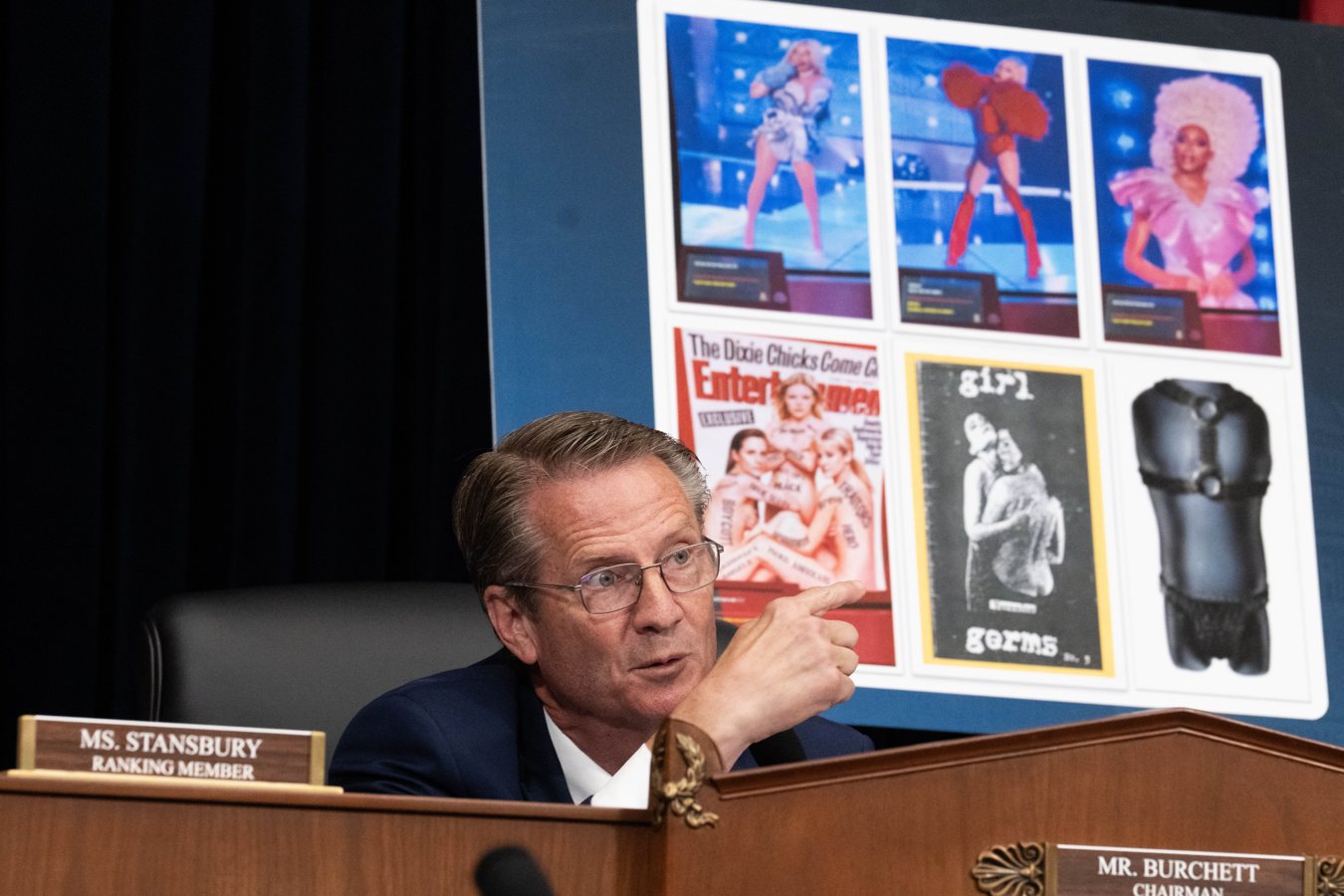
Rep. Tim Burchett of Tennessee also confronted Hartig, displaying photos of exhibits he described as overtly sexual and transgender-focused. "Gender and sexuality are highlighted by your museum," Burchett said, showing images from the exhibits on a posterboard. The lawmakers' criticism centered on the museum's portrayal of gender identity and its inclusion of drag queen displays, which they argued were inappropriate for a national history museum visited by families and children.
In her opening statement, Hartig defended the museum's work, asserting that "the Smithsonian takes the concerns raised in the White House Domestic Policy Council's report seriously." She added that the museum is fact-checking the report and "unwaveringly attest that it does not fairly or accurately characterize the full body of work at the museum." Hartig emphasized that "the museum does not take sides in America's political debates" but instead "preserves and documents the evidence of American life in all of its breadth, so that the public can encounter the past and draw their own conclusions." She acknowledged that "there is always room for improvement" but maintained that the museum's mission is to serve the public with honesty and breadth.
The White House report, however, paints a starkly different picture. It argues that the museum has become subject to "institutional capture by a radical, activist ideology that is fundamentally opposed to telling the noble, honest story of the great country we know and love." The report's executive summary states that visitors to the National Museum of American History "should encounter the story of the United States told with honesty, seriousness, and pride" and that the museum should help Americans understand "where America came from, what makes it distinctive, and why it is worth preserving."
The hearing highlighted a broader cultural and political divide over how American history and contemporary social issues are presented in public institutions. Lawmakers on the committee argued that the museum's focus on gender and sexuality detracts from its core mission of presenting a unifying national narrative. Hartig, meanwhile, defended the museum's approach as inclusive and reflective of the diversity of American life.
The controversy is unlikely to subside soon, as the White House report calls for significant changes at the Smithsonian. The report's findings and the heated exchanges in the hearing suggest that the museum's leadership will continue to face scrutiny from Congress and the administration over its exhibits and educational materials. Hartig's testimony did not satisfy her critics, who demanded clearer answers on the museum's direction and its commitment to presenting a balanced view of American history.
99