Memorandum
- From
- Connor Quincy via Fashionista Full
- Date
- Filed
- Culture·5 min to read
- Re
London Fashion Week Sees Buyer Surge as Designers Weigh City's Future
ReLondon Fashion Week Sees Buyer Surge as Designers Weigh City's Future
London Fashion Week's Spring 2027 season closed with a 19% rise in accredited buyer attendance and a 41% jump in international buyers, but questions persist over whether the city can retain its emerging talent.
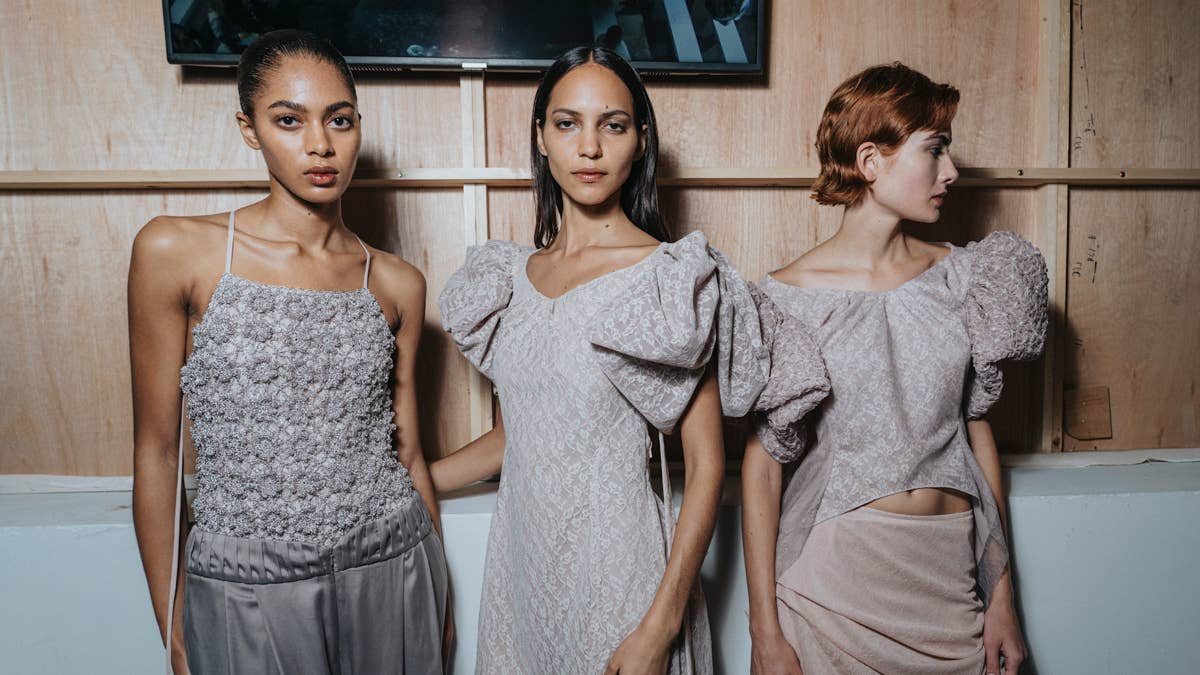
London Fashion Week closed its Spring 2027 season with measurable momentum, as the British Fashion Council reported a 19% year-on-year increase in accredited buyer attendance and a 41% rise in accredited international buyers. The figures arrive as CEO Laura Weir's regeneration strategy begins to show tangible results, with Launchmetrics data from earlier this year already indicating a 56% year-on-year growth in media impact value for the Fall 2026 season.
«There is a real sense of momentum around this season,» Weir said. «What excites me most is the combination of extraordinary creative talent with a renewed confidence in London as a place where fashion, culture and commerce collide.»
The strongest signal of that renewed confidence came from McQueen's homecoming show, the brand's first at London Fashion Week in a decade. Creative Director Seán McGirr described the collection as «a celebration of London's ceaselessly stimulating and transcendent power,» fusing Neoclassicism with rave culture. Mulberry also returned to the runway for the first time in eight years, reporting revenue up 4% to £125.5 million for the year to March 2026, with second-half growth accelerating to 11%. Christopher Kane's debut for the British brand subverted its heritage with a dose of kink.
Burberry's Monday night show under Daniel Lee reinforced British heritage and contemporary culture as central to the 170-year-old brand's narrative. The company's turnaround is taking shape, with adjusted operating profit reaching £160 million in the year to March 2026, up from £26 million the previous year.
London's established independent voices — Simone Rocha, Erdem and Roksanda — demonstrated the city's capacity to produce world-class talent. Simone Rocha's Sunday morning show was praised for its elegance and emotional honesty, while Erdem's 1920s-inspired collection and Roksanda's textural play on the National Theatre rooftop drew strong buyer interest. «London is an important market for Neiman Marcus and Saks Fifth Avenue: The market is a thriving compilation of independent talent and legacy brands,» said Chloe King, fashion director for women's at both retailers. «The world-building and clear points of view of Erdem and Simone Rocha translate into unique, emotional collections that truly resonate with our customer.»
London's indie darlings are also maturing. Chopova Lowena and KNWLS presented collections that felt gutsy and singular, while younger upstarts Johanna Parv, Talia Byre and Steve O Smith generated fierce appetite. Parv's sporty, pragmatic outing featured clean lines and smart techwear; Byre's all-white show was shot through with neon pink and denim; Smith's intimate presentation was modeled on a lecture to showcase his artisanal techniques.
«London remains such a creative hub during fashion week. There are always so many exciting brands to discover, alongside emerging designers who bring the eclecticism, experimentation and sense of individuality that London is known for,» said Brigitte Chartrand, chief merchandising officer at Net-a-Porter, which stocks London labels including Emilia Wickstead, Roksanda and young stars Aaron Esh, Pauline Dujancourt and Liberowe.
Talia Loubaton, founder of Liberowe, hosted her sophomore presentation this season and said no other city would make sense for her, noting that 80% of the collection is made in London. «Being part of the London scene is very important. There is space for newness and experimentation here,» she said. Gui Rosa, whose debut melded Almodóvar-inspired transgression with a «Gossip Girl»-style debutante ball, acknowledged the commercial challenge: «Not everyone will want a cardigan and a pencil skirt. We have to be really clever.»
Yet the central question remains whether London can translate the event's cultural momentum into viable companies and retain its emerging talent. Victoria Beckham, Stella McCartney and Kiko Kostadinov have joined the Paris Fashion Week schedule, while buzzy upstart Conner Ives decamped to New York Fashion Week and Christopher Kane shuttered his namesake label three years ago. «London Fashion Week's recovery is real, but so far it's a recovery of the event, not the ecosystem,» said Christopher Morency, chief brand officer at Dogma.
2