Memorandum
- From
- Delaney Sawyer via GameSpot - All Content
- Date
- Filed
- Culture·5 min to read
- Re
Castlevania: Belmont's Curse Review: A New High for the Series
ReCastlevania: Belmont's Curse Review: A New High for the Series
Castlevania: Belmont's Curse delivers the best combat in series history, a sprawling Paris map, and an ingenious tarot card system that fuses exploration, story, and spells into a cohesive whole.
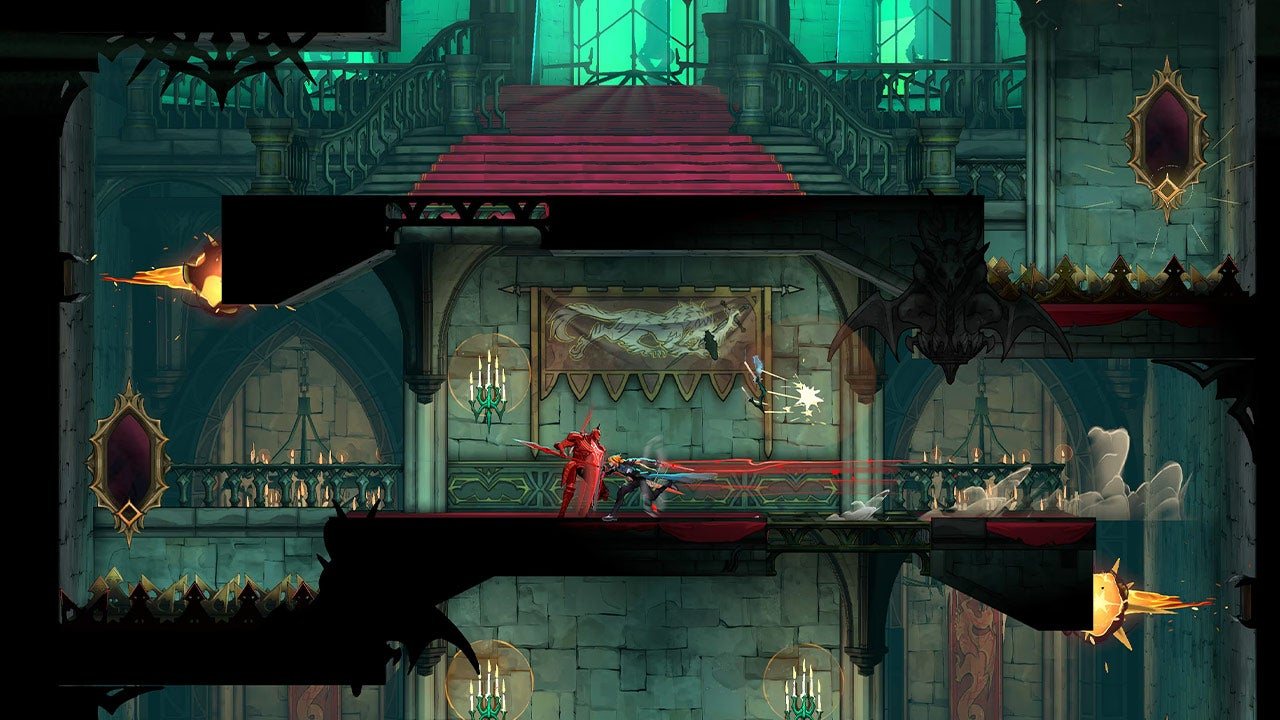
Castlevania: Belmont's Curse does not reinvent the series the way Symphony of the Night did nearly three decades ago. Instead, it achieves a brilliant synthesis, with every component operating at peak performance to deliver a new high for the franchise. The result is a sprawling, mysterious adventure that stands among the best 2D action games in recent memory.
Players control Rose Belmont, daughter of Trevor Belmont, who has trained her entire life as the successor of the Belmont clan. Though Trevor remains a capable fighter, Rose volunteers to investigate otherworldly happenings in Paris, eager to prove herself worthy of the family name. But Rose carries a cursed red mark on one arm, making her dangerously instrumental to the machinations of Dracula and his armies. The curse was passed to her at birth by her late mother, Sypha, who also gifted her a magical tarot deck.
That tarot deck is the game's central mechanic and its most elegant design choice. Each card represents a follower of Dracula, with honorific names like The Fallen, The Warrior, or The Builder. At different points, the deck serves as mission signposting, environmental puzzles, pieces of story lore, characters to serve as dialogue for Rose, boss locations, and ultimately, her pool of spells. When Dracula's castle emerges in the heart of Paris, the full deck is revealed, putting the complete array of monsters in the player's sights.
Finding and defeating one of Dracula's servants transforms their tarot card into an Arcana spell, which then opens its own flexible progression system. The first boss, The Fallen, serves as a basic primer for finding clues and navigating the winding streets of Paris. Defeating him grants two important tools: a recognizable boomerang axe spell and an arcane whip that allows Rose to grab onto grapple points to reach new locations. That same whip can grab onto any enemy, and a well-timed strike while grappling toward a foe deals serious damage. Enemies flying midair can even help Rose reach distant platforms, harmonizing traversal and combat in surprising ways.
Each Arcana spell also comes with three objectives called Works of Mercy. These range from simple tasks like defeating a set number of enemies with the relevant spell to more complex goals that incentivize exploration or experimentation. One objective for The Warrior rewards finding a particular location that ties thematically to that character's story. One of Medusa's objectives requires petrifying a shield-carrying enemy, a reference to the myth of Perseus. Completing these objectives opens a node to choose one of three power-ups for the spell, and finishing all three rewards extra dialogue from the Arcana character.
Dracula's captured followers occupy a mindspace within the tarot, giving Rose characters to bounce off of for story purposes. The cast is well differentiated: The Fallen is a gruff creature who comes to feel protective of Rose, while Medusa, even imprisoned, unsubtly roots for her to fail and constantly tries to trick her into moves that further her master's plans. Many characters have their own agendas and rivalries, often at cross-purposes with Rose or each other, adding a compelling dynamic as they bicker inside her head. The regular addition of characters means any of them could interject in dialogue to offer commentary, though the core cast remains the first three found.
One drawback of such a dynamic supporting cast is that Rose herself is less interesting by comparison. She is a determined heroine archetype who remains that way throughout, a central point of gravity for other characters to orbit. She works on that level, but she is deadset on her mission from start to finish and not much more.
What ultimately makes Belmont's Curse the total package is how all these elements synergize. A sprawling map bursting with mysteries, joyous traversal tools, a story balancing macabre tone with occasional lightness, creative and well-drawn characters, and hands-down the best combat of any Castlevania game—among the best combat of any 2D action game, period. The tarot cards fuse these disparate elements into one cohesive whole. Castlevania is back, and it is fantastic.
7