Memorandum
- From
- Delaney Sawyer via fox - Opinion
- Date
- Filed
- Business·5 min to read
- Re
Utilities and data center developers must share costs as AI power demand surges
ReUtilities and data center developers must share costs as AI power demand surges
An opinion piece argues that America's AI race depends on expanding electricity generation and grid infrastructure, with data center developers paying their fair share of costs.
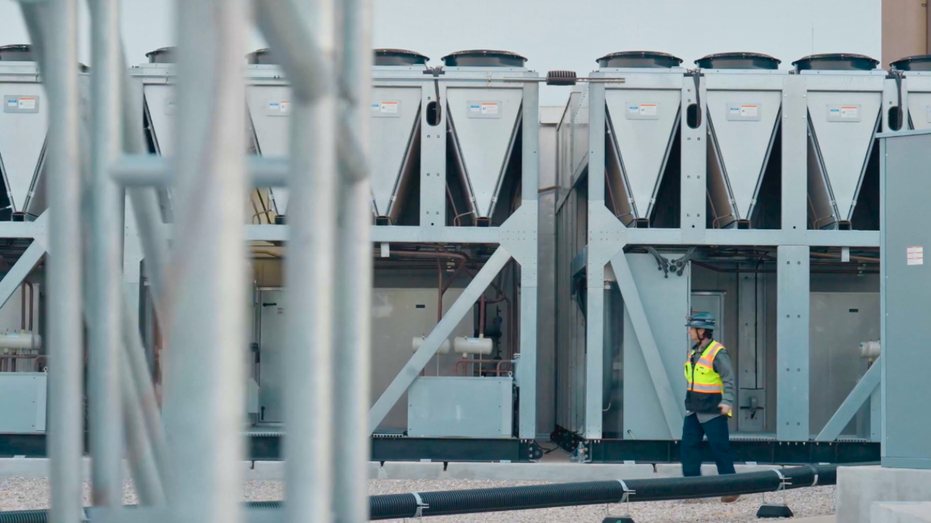
America's lead in artificial intelligence will depend as much on its power grid as on its software, according to a commentary by Brian Harrell. He argues that the nation able to deliver reliable, affordable and secure electricity will be best positioned to win the race for AI and superintelligence, and that Washington and Silicon Valley cannot overlook the energy constraints that come with it.
The central argument is that AI systems run on electricity. Data centers, which form the backbone of the technology, require large amounts of power, dependable grid connections and specialized infrastructure. Without sufficient supply, advanced AI hardware sits idle, which Harrell describes as expensive equipment waiting for a connection. He contends that the country must dramatically expand its power generation and delivery infrastructure to remain the global technology leader.
Harrell presents electric utilities as central to that effort. He writes that utilities, long viewed simply as service providers, are now strategic partners in economic competitiveness and national security. He notes that utilities bring engineering expertise, operational experience and an understanding of regional demand, transmission constraints and grid reliability. Building new generation facilities, transmission lines and substations, however, often takes years of planning, permitting and construction, while data center developers want to move quickly.
To close that timing gap, he argues, utilities and developers should collaborate much earlier, aligning construction schedules, forecasting demand and identifying necessary upfront investments. Washington could help by streamlining permitting and reducing regulatory delays to give long-term investment certainty.
On cost, Harrell is direct. Data center developers, he writes, must bear their fair share of the infrastructure costs driven by their electricity demands. Residential customers and small businesses, in his view, should not subsidize infrastructure built primarily to serve large technology companies. He points to long-term power purchase agreements, dedicated infrastructure investments and minimum billing commitments as tools that can ensure large customers contribute appropriately. He also cites the White House's Ratepayer Protection Pledge as reinforcing the principle that AI innovation can accelerate without shifting costs onto ordinary Americans.
He calls for transparent cost allocation, enforceable commitments from large data center customers, and safeguards so that residential ratepayers are not left with stranded infrastructure costs if projects are delayed, scaled back or abandoned.
On supply, Harrell argues for an "all-of-the-above" strategy that judges energy resources by reliability, affordability and availability. He says natural gas provides essential dispatchable generation, nuclear energy offers dependable baseline power with low operational emissions, and hydroelectric, wind, solar and battery storage contribute where they make economic sense. Existing coal facilities, he adds, remain part of the picture where continued operation is economic and legally compliant. He concludes that utilities need flexibility to choose the resource mix that suits their customers, and that energy abundance is a national security imperative as data centers compete for power with manufacturers, hospitals, military bases and households.
Harrell also raises cybersecurity as a threat he says deserves more attention. He writes that the electric grid and digital infrastructure are deeply interconnected, so power disruptions can halt computing services and software incidents at technology providers can ripple back to critical infrastructure. Utilities must defend corporate networks, industrial control systems and substations, while data centers face risks involving cloud platforms, software supply chains and third-party vendor access.
9