
Memorandum
- From
- Connor Quincy
- Date
- Filed
- Business·6 min to read
- Re
Ukraine’s Defense Minister Dismissed After Failing to Meet Key Goals, Report Shows
ReUkraine’s Defense Minister Dismissed After Failing to Meet Key Goals, Report Shows
Mykhailo Fedorov was dismissed as Ukraine’s defense minister after failing to complete three priority tasks set by President Zelensky, including closing the airspace and reforming mobilization, while focusing on drone projects and clashing with military leadership.
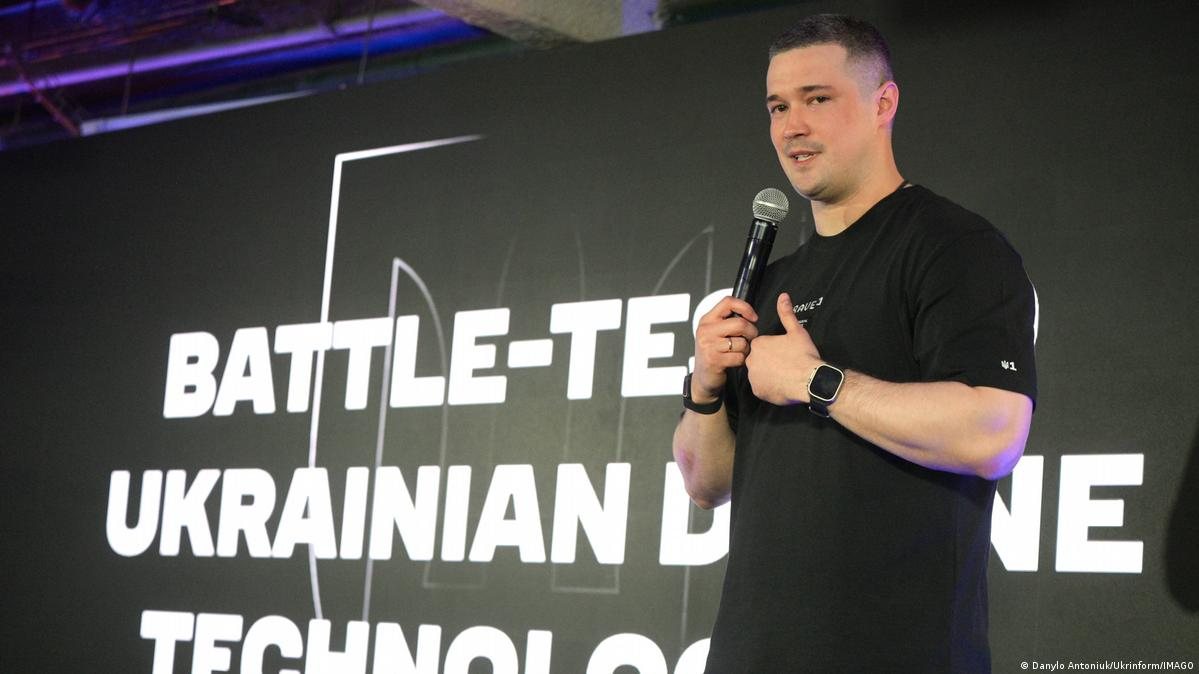
Ukrainian President Volodymyr Zelensky dismissed Defense Minister Mykhailo Fedorov on July 17, 2026, after the minister failed to complete three priority tasks assigned in January, according to a fact sheet compiled from official reports and public statements. The dismissal follows months of tension between Fedorov and the military command, culminating in a failed attempt to replace the commander-in-chief.
Zelensky publicly outlined the three main goals for Fedorov on January 30, shortly after his appointment on January 14. The tasks were: closing the airspace and strengthening air defense; solving the problem of forced mobilization and so-called «busification» — the practice of forcibly conscripting men on the streets; and launching a functioning contract-based army model. Drones and technology were mentioned separately, not as core objectives.
By the time of his dismissal, none of the three priority tasks had been fully completed. The airspace remained partially open, though the ministry reported improved interception rates for drones and cruise missiles — figures that require independent verification. The structural reform of territorial recruitment centers was still in progress, with only the automation of about 90% of deferrals through the «Reserve+» system achieved, which does not equate to ending abuses in mobilization. The new contract system was launched only on June 15–16 as a pilot project scheduled to run until 2028, far from a fully functional contract army.
Fedorov’s final report, published on July 15, listed 22 achievements, the vast majority focused on drones, robotic systems, the Brave1 Market platform, procurement, grants to manufacturers, long-range strikes, missile programs, defense exports, and artificial intelligence. Only one item addressed service conditions and contracts. The report did not mention territorial recruitment centers or the «busification» problem. In a Telegram post, Fedorov said his team redirected funds originally allocated for end-of-year cash allowances to drones and technology, a move that requires financial scrutiny regarding legal authority and decision-making.
The scale of the technological and financial infrastructure built under Fedorov is significant. According to ministry data, in less than a year, more than 400 units ordered equipment worth over 33 billion hryvnias through the Brave1 Market, with over 500,000 drones ordered and more than 800 products in the catalog. Payment and delivery are handled by the state via the DOT-Chain Defense system. Data from DELTA, Mission Control, and other systems feed into centralized procurement needs. This infrastructure connects combat effectiveness data, point allocation, product selection, manufacturers, state payment, and future procurement. While not evidence of corruption, its scale mandates audits of algorithms, conflicts of interest, manufacturer access, and state fund distribution.
Fedorov’s report also claimed credit for operational achievements that are normally attributed to the General Staff, military command, unmanned systems forces, the Security Service of Ukraine, military intelligence, the navy, and individual units. These included the «logistical lockdown» of the Russian army, the isolation of Crimea, improved interception rates, the «Ashan» operation that allegedly halted a mechanized offensive for six months, returning the initiative to Ukraine on the battlefield, and record drone unit results. The fact sheet notes that these outcomes are the product of many actors, not a single minister, and that comments from the General Staff, Commander-in-Chief Oleksandr Syrskyi, and other commanders are needed to verify each claim.
On July 16, Fedorov publicly confirmed that he had proposed replacing Syrskyi as commander-in-chief, but Zelensky refused. After that, Fedorov said most ministry initiatives faced resistance, and the conflict ended with an ultimatum from Syrskyi. Fedorov acknowledged Syrskyi’s role in the defense of Kyiv, the Kharkiv operation, and the liberation of Kherson. The confrontation was not a personal feud but a confirmed struggle over military policy direction and personnel control. According to sources cited by Ukrainska Pravda, the constant conflict between the Defense Ministry and the military command was the main reason for not keeping Fedorov in the new government.
Fedorov’s July 15 report, published at 18:17, garnered millions of views. A separate text about what was not achieved, ending with «To be continued,» appeared at 18:18, followed by a video at 19:13. The rapid publication sequence suggests a coordinated media campaign. The dismissal reflects a broader management decision by Zelensky to prioritize the stability of the military command chain over retaining a minister who had built a powerful independent public profile but failed to deliver on core tasks.
105