Memorandum
- From
- Connor Quincy via Fast Company
- Date
- Filed
- Business·5 min to read
- Re
Spotify Founder's Body Scan Startup Opens First U.S. Clinic in New York
ReSpotify Founder's Body Scan Startup Opens First U.S. Clinic in New York
Neko, the full-body scanning company co-founded by Spotify's Daniel Ek, has opened its first U.S. clinic in New York City's Soho neighborhood, betting that spa-like design and preventive care can reshape how Americans approach their health.
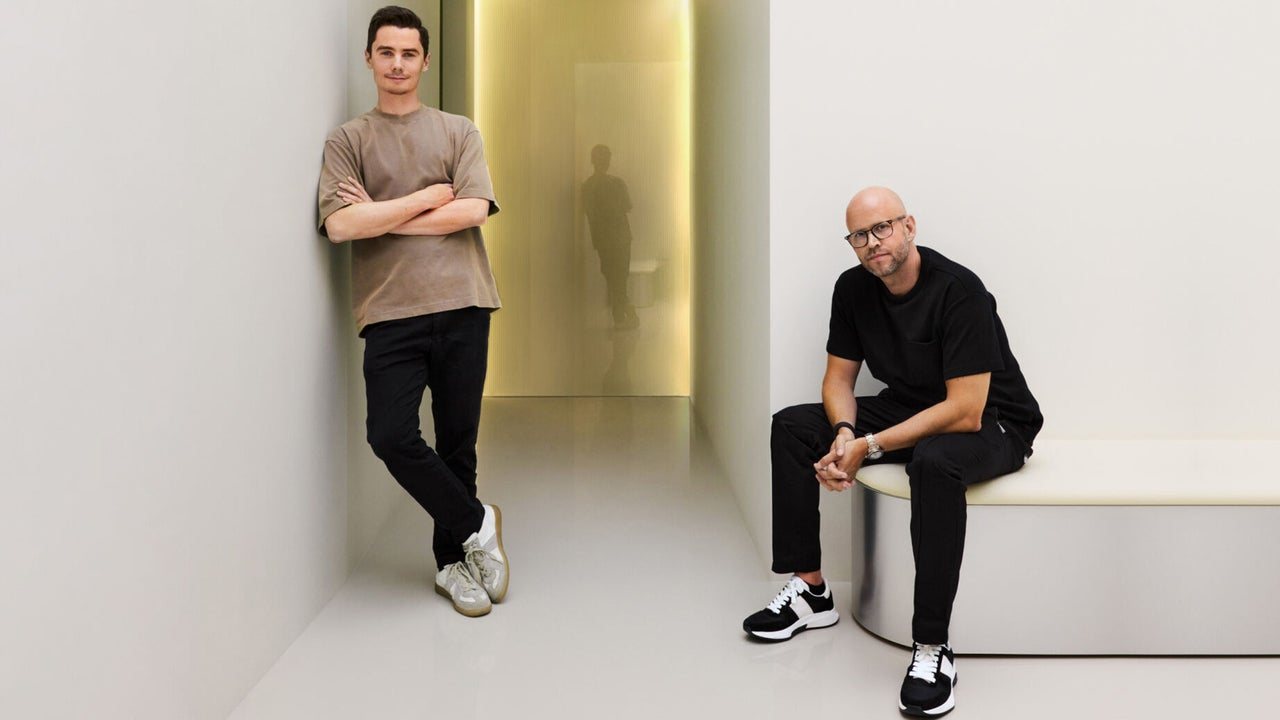
Neko, the full-body scanning startup co-founded by Spotify's Daniel Ek, has opened its first U.S. clinic in New York City's Soho neighborhood, betting that carefully designed spaces and preventive care can convince Americans to rethink how they manage their health.
The company has been operating clinics since 2003 and has performed more than 100,000 of its $499 radiation-free scans. It recently raised $700 million in Series C funding and is treating the New York location as a beachhead for the U.S. market, with additional clinics planned for Miami, San Francisco, and Washington, D.C.
At the center of Neko's strategy is a simple premise: traditional healthcare is reactive, built around treating people after they become sick. Neko wants to catch problems earlier, and it believes the physical environment plays a major role in getting people through the door in the first place.
The design of the New York clinic was led by Franquibel Lima, an architect and former global head of WeWork's design studios who has worked on Neko's other locations in Stockholm, London, and Manchester, England. Lima describes the company's approach as a deliberate departure from conventional medical settings.
«For us to move from reactive healthcare into proactive healthcare, it requires a real mindset shift,» Lima said.
The clinic's aesthetic reflects that shift. With gently lit rooms, spare walls, and soft pastel accents, the space blends the feel of a high-end spa with a fashion boutique. At street level, the storefront is a simple door emanating an amber glow. Inside, visitors descend a brushed stainless steel stairwell into a white-walled waiting area, where a small greeting podium leads to a plush U-shaped seating area. Fluted wall coverings with backlighting give the space a cloudlike quality, and underlighting beneath the seats adds to a sense of floating.
Lima said Neko drew inspiration from Apple stores and science fiction films. The clinical area, by contrast, is all white, with brighter lighting that guides visitors into one of six scanning rooms. Pastel yellow lights and paint emerge from the doorways, which Lima describes as a calming tone.
«We look at lighting not as an overlay to materials and finishes. We look at lighting as almost like a building component,» he said. «It's a multisensorial experience that really prepares you to know more about your health.»
Lima contrasted Neko's approach with the cluttered feel of many traditional healthcare environments, which he said are designed around the average person rather than the individual.
«If you think about traditional healthcare, it's typically cluttered. You have posters on the wall like here's your skeleton, and it's all about the average person,» he said. «But we now have the technology to be able to be very personal and very individual.»
Neko positions its service as a premium offering meant to complement primary care and other traditional health services. That positioning allows the company to invest in design touches that would be difficult for conventional providers to justify. But Neko has broader ambitions: it wants to become a bigger part of how people stay healthy and catch problems before they escalate.
Creating spaces that people want to visit again and again is central to that goal. Lima said the company sees consumers, rather than policymakers, as the primary drivers of change in healthcare.
«Because we are a consumer brand, because we believe that consumers are the ones that drive change typically, instead of trying to do it through policy, then it's really important that we create environments where people walk into and think this doesn't feel like anything else that I felt before,» he said.
Whether that approach translates into lasting change in the U.S. market remains to be seen. Neko's expansion plans will test whether Americans are willing to pay out of pocket for preventive scans and whether the clinic's distinctive atmosphere can turn a medical appointment into a habit rather than an obligation.
4